

Daily Dose Of Jazz…
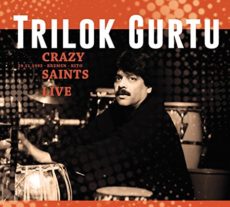
Trilok Gurtu was born in Mumbai, India on October 30, 1951 to Hindu Brahmin parents and attended Don Bosco High School. His mother, singer Shobha Gurtu, encouraged him to learn playing tabla, and he studied playing the instrument under Shah Abdul Karim. He didn’t begin playing western drum kit in the 1970s and developed an interest in jazz, and played played with Charlie Mariano, John Tchicai, Terje Rypdal, and Don Cherry.
One of Trilok’s earliest recordings was around 1977 in the record Apo-Calypso in an album of the German ethnic fusion band, Embryo. His mother also sang in that record, and later joined him in his first solo CD, Usfret. In the 1980s, Gurtu played with Swiss drummer Charly Antolini, John McLaughlin, Jonas Hellborg, Kai Eckhardt, Dominique DiPiazza and opened for Miles Davis in Berkeley, California in 1988. He went on to play and record three albums with Oregon after the death of drummer Collin Walcott. In the early 1990s he resumed his career as a solo artist and a bandleader.
In 1999, Zakir Hussain and Bill Laswell founded a musical group, Tabla Beat Science, bringing Trilok, Karsh Kale and Talvin Singh into the fold. Before going dormant in late 2003 they released three albums. He went on to record the album, Miles Gurtu, with Robert Miles, collaborate with the Arkè String Quartet and perform with Ricky Portera, Nick Beggs, Mario Marzi, Terl Bryant, John De Leo.
Percussionist, drummer and composer Trilok Gurtu has won awards from DRUM! Magazine, Carlton Television Multicultural Music Awards, Down Beat’s Critics Poll and has been nominated for the BBC Radio 3 World and continues to perform, compose, record and tour.

More Posts: drums,percussion,tabla
Daily Dose Of Jazz…
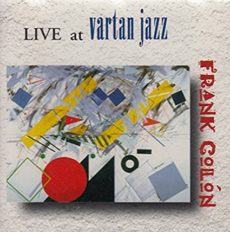
Frank Colón was born October 13, 1951 of Puerto Rican descent in Washington, D.C. but moved to Puerto Rico with his parents at the age of five. His musical instruction began at age eleven, beginning with classical piano lessons, under the guidance of Angelina Figueroa and Rafael Figueroa, both members of Puerto Rico’s most prestigious classical music family.
Colón kept up his piano studies throughout his teenage years, trying his hand at pop guitar, electric bass, and trap drums, as well as being very active in municipal and collegiate sports, martial arts, and amateur theater. Throughout this period in his life he worked with various local pop music groups throughout the island of Puerto Rico.
Moving back to Washington, D.C. in 1970 he attended college at American University, where Frank majored in Political Science. During this time, his musical orientation changed from melodic instruments to percussion and upon completion of his university requirements, he turned full-time to his music.
In 1976, Colón moved to New York City, on a call to work with his friend and mentor, the legendary drum master, Julito Collazo. Through Julito’s guidance, he became proficient at playing the Batá drums, sacred to the Orisha in the Santería religion.He has played Brazilian percussion since the time he lived in Washington, D.C.
Frank was performed and recorded with The Manhattan Transfer, Wayne Shorter, Weather Report, Mary J. Blige, Harry Belafonte, Gato Barbieri, Chet Baker, Pat Metheny, Aretha Franklin, Herbie Hancock, Gilberto Gil, Larry Coryell, Jimmy Smith, Milton Nascimento, Tania Maria, Ernie Watts, Paquito D’Rivera, Dave Valentin, Jon Lucien, João Bosco, Michael Wolff, Billy Taylor, Gal Costa, Dianne Reeves, Michel Camilo, Nestor Torres, Felix Cavalieri, Airto, and George Benson, among numerous others..
Percussionist Frank Colón has released two albums as a leader and continues to perform, record and tour.

More Posts: percussion
Daily Dose Of Jazz…
Sameer Gupta was born July 1, 1976 in San Francisco, California and is a percussionist, tabla player, and composer. He is the founder of the jazz ensemble The Supplicants and drummer for the Marc Cary Focus Trio.
Gupta has performed with Kosmic Renaissance, vidyA, Grachan Moncur III, Victor Goines, Vincent Gardner, Sekou Sundiata, Sonny Simmons, Marcus Shelby, Calvin Keys, Richard Howell, Dayna Stephens, and Julian Lage.
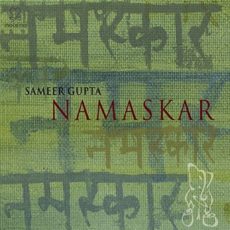
With his playing has been described as kinetic, bass-heavy, and tender, he made his recording debut in 2006 with Marc Cary on Focus, adding Marc Cary and Focus Trio Live in 2010. He released his debut album as a leader, Namaskar that same year, and has also recorded with Srinivas Reddy and Ross Hammond. Percussionist Sameer Gupta continues to compose, perform and record.
Sponsored By


#preserving genius
More Posts: drums,percussion,tabla
Daily Dose Of Jazz…
Arif Mardin was born on March 15, 1932 in Istanbul, Turkey into a family of privilege that included statesmen, diplomats, leaders and business owners of the Ottoman Empire and the Turkish Republic. He grew up listening to Bing Crosby and Glenn Miller, met jazz critic Cuneyt Sermet, who turned him onto this music and eventually became his mentor. After graduating from Istanbul University in Economics and Commerce, he studied at the London School of Economics. Though never intending to pursue a career in music, influenced by his sister’s music records and jazz, he became an accomplished orchestrator and arranger.
In 1956 fate took him down a different path when he met Dizzy Gillespie and Quincy Jones at a Ankara concert. He sent three demo compositions to his radio friend Tahir Sur who subsequently took these compositions to Jones and Mardin became the first recipient of the Quincy Jones Scholarship at the Berklee College of Music in Boston, Massachusetts. Two years later with fiancé Latife, he relocated to Boston. After graduating in 1961, he taught at Berklee for one year and then moved to New York City to try his luck.
His career began at Atlantic Records in 1963 as an assistant to Nesuhi Ertegün. He rose through the ranks quickly, becoming studio manager, label house producer and arranger. In 1969, Arif became the Vice President and later served as Senior Vice President until 2001. He worked closely on many projects with co-founders Ertegün and Jerry Wexler, as well as noted recording engineer Tom Dowd. The three of them, Dowd, Mardin, and Wexler, became legendary and were responsible for establishing the Atlantic Sound.
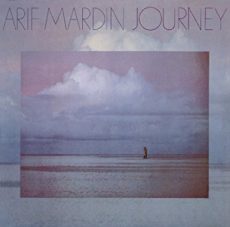
He recorded two solo albums in the Seventies, Glass Onion and Journey, the latter wearing the hats of composer, arranger, electric pianist and percussionist. Mardin performed with Randy and Michael Brecker, Joe Farrell, Gary Burton, Ron Carter, Steve Gadd, Billy Cobham and many others. He composed, arranged, conducted and produced The Prophet in 1974, an interpretation of Kahlil Gibran’s The Prophet voiced by Richard Harris.
Arif produced George Benson, The Manhattan Transfer, Vince Mendoza, and the Modern Jazz Quartet, but not limited to jazz he also produced, among others, Margie Joseph, Roberta Flack, Donny Hathaway, Raul Midón, Patti Labelle, Aretha Franklin, Barbra Streisand, Bette Midler, Diana Ross, Queen, Jeffrey Osborne, and numerous others. In 1975 he discovered Barry Gibb’s distinctive falsetto that became the Bee Gees trademark.
Over a 40 year career Mardin produced forty gold and platinum albums, 11 Grammy Awards, was inducted into the National Academy of Recording Arts and Sciences Hall of Fame, and was a trustee of Berklee and awarded an honorary doctorate
Pianist, percussionist, producer, arranger, studio manager and vice president Arif Mardin passed away at his home in New York City on June 25, 2006 following a lengthy battle with pancreatic cancer.
Sponsored By

#preserving genius
More Posts: arranger,percussion,piano,producer
Daily Dose Of Jazz…
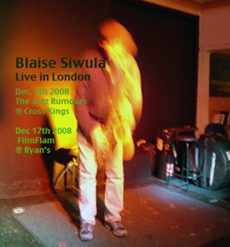
Blaise Siwula was born in Detroit, Michigan, on February 19, 1950 and grew up in a working/middle-class Black neighborhood. His next-door neighbor practiced saxophone in the afternoon and occasionally allowed him inside to watch him play. He began studying the alto saxophone at the age of 14, playing in the middle-school concert band. But, upon hearing John Coltrane’s Om in 1969, he was compelled to take the tenor saxophone and make it his voice.
He attended college on and off for an extended period from 1968-1980, studying theory and composition at Wayne State University and earning his B.F.A. degree. Siwula’s first personal encounters with jazz musicians came around 1971 with drummer Doc Watson, while both were living in a hotel near the downtown campus of Wayne State. Then the saxophonist got married, moved to San Francisco, California and started playing free improvised music in coffee houses and writing poetry.
Influenced by hearing Art Pepper in San Francisco, as well as Ornette Coleman, Sonny Stitt, Archie Shepp, Pharoah Sanders, Sun Ra, Blue Mitchell, Elvin Jones, and Miles Davis in memorable live performances around the Detroit area in the early ‘1970s. After spending four years in Northern California, Blaise moved back to Detroit, then headed for Europe in 1989, working and traveling as a street musician for three months, then returning to the States and settling in New York City.
Active on the metro New York improvisation scene, he worked with Amica Bunker, the Improvisers Collective, and the Citizens Ontological Music Agenda (COMA) series. During the decade of the 2000s, he concentrated his efforts as a spontaneous composer incorporating traditional musical scoring techniques with visual/graphic and performance-oriented presentations.
Over the course of his career he has played or collaborated with Doug Walker’s Alien Planetscapes, Cecil Taylor’s Ptonagas, William Hooker’s ensembles, Judy Dunaway’s Balloon Trio, Dialing Privileges with Dom Minasi and John Bollinger, Karen Borca, William Parker, Jeff Platz, Adam Lane, Wilber Morris, Vincent Chancey, Theo Jörgensmann, Rashid Bakr, Tatsuya Nakatani,, Jay Rosen, Sarah Weaver, Fala Mariam, Ernesto Rodrigues, Hilliard Greene, Joe McPhee, Ernesto Diaz-Infante, Maria De Alvear, Vattel Cherry, and Jeff Arnal, among others.
Avant-garde alto saxophonist Blaise Siwula also plays the clarinets, flutes, percussion and string instruments and continues to perform and record free jazz and curate.
Sponsored By

www.whatissuitetabu.com
#preserving genius
More Posts: clarinet,flute,percussion,saxophone,strings