

Daily Dose Of Jazz…
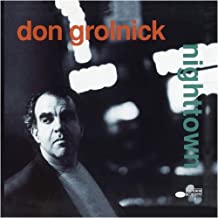
Don Grolnick was born on September 23, 1947 in Brooklyn, New York and grew up in Levittown, New York. Musical life for him started on accordion but later he switched to piano. A childhood Count Basie concert sparked his interest in jazz and soon after they also saw Erroll Garner perform at Carnegie Hall. Attending Tufts University he opted for a major in philosophy rather than music.
After he left Tufts, he formed the jazz-rock band Fire & Ice with guitarist Ken Melville and bassist Stuart Schulman, his friend since childhood. They opened for B.B. King, The Jeff Beck Group, and the Velvet Underground at Boston clubs like the Boston Tea Party and The Ark. This was Grolnick’s first foray into rock and blues as a performer, and began writing within the medium.
Moving back to New York City in 1969 he joined Melville in the jazz fusion band “D”. Pianist Don Grolnick passed away at the age of 48 on June 1, 1996 from non-hodgkin lymphoma.

More Posts: bandleader,composer,history,instrumental,jazz,music,piano
Daily Dose Of Jazz
Fred Hunt was born Herbert Frederick Hunt was born in London, England on September 21, 1923. As the younger son of a pianist mother and a cellist father, he enjoyed thorough musical education from his distinguished parents. A self-taught pianist, he started playing piano at the age of 13 and played local gigs before joining the Royal Air Force.
After his discharge, Hunt began his musical career playing semi-professionally with Mike Daniels and the Cy Laurie Four in 1951. Becoming professional and went on to join Alex Welsh’s band from 1954 to 1962 and again from 1964 to 1974.
As Welsh’s primary pianist, and often a featured soloist, he became one of Britain’s leading trad jazz musicians and recorded with Eddie Davis, Bud Freeman, Eddie Miller, and Ben Webster in 1967. Accompanying visiting Americans, he recorded with the four-tenor group, Tenor Of Jazz, featuring Webster and Eddie “Lockjaw” Davis, which toured in the late 60s.
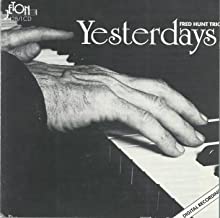
Departing Welsh in 1974, he played in Copenhagen and South Africa, however, after 1976 he split his time between Britain, Denmark, and Germany. He led a trio featuring drummer Lennie Hastings beginning in 1978 and the following year the German label Erus Records released a direct cut LP called Yesterdays which featured his trio with bassist Brian Mursell and drummer Roger Nobes in front of a live audience.
He toured with Wild Bill Davison in the latter part of the 1970s and played with Welsh once more in the early 1980s before retiring due to failing health after being incapacitated and confined to a wheelchair. He worked frequently at London’s PizzaExpress Jazz Club until 1986. Pianist Fred Hunt, who became a top pianist in both modern jazz and trad jazz musical settings, passed away on April 25, 1986. in Weybridge, Surrey aged 62.
More Posts: history,instrumental,jazz,music,piano
Daily Dose Of Jazz…
Dimitar Bodurov was born on September 17, 1979 in Bulgaria and studied at the Conservatory of Sofia and the Rotterdam Conservatory, where he graduated in 2004 jazz piano and in 2006 jazz composition.
In 2000 Dimitar moved to Amsterdam, Netherlands and began performing throughout the country and Europe. He recorded his debut recording as a leader in 2004 titled Melatonic on the Acoustic Records label followed by his live sophomore release the same year titled Resumption Suite. He would go on to record solo and trio albums on both Dutch and Norwegian labels.
Bodurov ventured into composing for theater, opera, and orchestra. He has received several jazz awards, receiving a mention at the Martial Solal Jazz Solo Piano Competition in Paris. He has released a number of CD and digital albums as a leader, producer, and guest for Dutch and Norwegian labels. In 2012 he founded his own label Optomusic.
As an active event organizer, Dimitar has initiated several events: Jazz and Vino ~ a series of concerts with charity purpose in Varna, Bulgaria; Keys and Stix Festival ~ celebrating duets of piano and drums in collaboration with Bimhuis, Amsterdam & Unterfahrt, Münich; and since 2013, he has been the artistic leader of Radar Festival, Varna, Bulgaria.
Pianist and composer Dimitar Bodurov, who has worked with Randy Brecker, Didier Lockwood, Theodosii Spassov, Claron Mcfadden and Svetlin Rouseev, continues to compose, perform and record.
More Posts: bandleader,composer,history,instrumental,jazz,music,piano
Daily Dose Of Jazz…
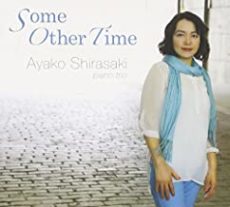
Ayako Shirasaki was born on September 16, 1969 in Tokyo, Japan and started classical piano lessons at age five, and was intrigued by her father’s professional trombone-playing. By age twelve she began her professional career playing gigs at the “J” jazz club in Tokyo.
After attending the Tokyo Metropolitan High School for Arts, Shirasaki majored in classical music at the Tokyo National University of Fine Arts and Music and gave concerts as a classical pianist for several years after graduating before returning to play jazz.
Her 1997 move to New York City saw her pursuing a master’s degree at the Manhattan School of Music, studying with pianist Kenny Barron. Landing in the Park Slope neighborhood of Brooklyn, Ayako operates the Brooklyn location of the Sakura Music School, which specializes in teaching music to small children with an emphasis on those of Japanese ancestry.
Performing regularly in the New York area, she tours internationally, in addition to recording. Her debut trio album Existence brought drummer Lewis Nash and bassist Marco Panascia together in 2003. She has since recorded four addition albums, has been featured on Marian McPartland’s National Public Radio show Piano Jazz, and was a finalist in the Mary Lou Williams Women In Jazz Piano Competition in 2005 and 2006 and the Great American Jazz Piano Competition in 2004, 2005 and 2006. Pianist and educator Ayako Shirasaki continues to perform, tour, record, and teach.
More Posts: bandleader,educator,history,instrumental,jazz,music,piano
Daily Dose Of Jazz…
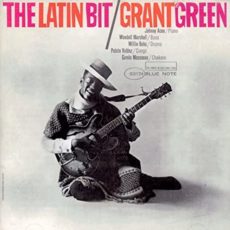
John Adriano Acea was born September 11, 1917 in Philadelphia, Pennsylvania to Adriano Acea of Cuba and Leona Acea of Virginia. One of six children, he was stricken with rheumatic fever and wasn’t expected to live during his first decade of life.
During the 1930s, Acea started out as a trumpeter and saxophonist and after his military service in the Army in 1946, he switched to playing the piano. He later became a session musician with jazz veterans Eddie Lockjaw Davis, Cootie Williams, Dizzy Gillespie, Illinois Jacquet, Dinah Washington, James Moody, Zoot Sims, and Roy Haynes. Between 1951 to 1962 he would record with Grant Green, Dodo Greene, Joe Newman, Leo Parker, Don Wilkerson, and Jesse Powell.
Acea is listed as co-composer of Nice ‘N’ Greasy that was the closing track to Lou Donaldson’s 1962 album, The Natural Soul. He is also credited as a composer on recordings by Gillespie, Jacquet, and Moody.
Pianist Adriano Acea, known as Johnny Acea, passed away on July 25, 1963.
More Posts: history,instrumental,jazz,music,piano,saxophone,trumpet