

Daily Dose Of Jazz…
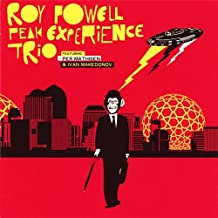
Roy Powell was born on October 2, 1965 in Langham, Rutland, England. His mother was a historian, his father a scientist who moved the family to Canada. His father had given him piano lessons and had been playing the piano for five years. Returning to England when he was ten, he attended New Mills Grammar School at the same time as Lloyd Cole.
In the 1970s, Powell was listening to Duke Ellington and Miles Davis and buying albums through the mail from America. He attended the Royal Northern College of Music, studying piano and classical composition during the day and playing in Manchester jazz clubs at night. After departing school, he started a jazz fusion band and choreographed a ballet. In 1992 he was a member of the Creative Jazz Orchestra. Three years later he moved to Norway to teach.
Powell has been a member of the group InterStatic with Jacob Young, and Jarle Vespestad, and the group Naked Truth with Lorenzo Feliciati, Pat Mastelotto, and Graham Haynes. He recorded the album Mumpbeak with Feliciati, Mastelotto, Bill Laswell, Tony Levin, and Shanir Ezra Blumenkranz. Pianist, organist, composer, and educator Roy Powell has recorded fifteen albums as a leader and continues to perform and record.

More Posts: bandleader,composer,educator,history,instrumental,jazz,music,piano
Three Wishes
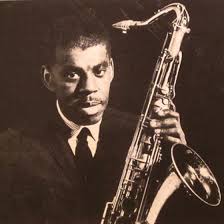
What Roland Alexander told Nica his three wishes were when the inquiry came his way was:
-
-
“Creation.”
-
“Peace.”
- “More creation.”
-
*Excerpt from Three Wishes: An Intimate Look at Jazz Greats ~ Compiled and Photographed by Pannonica de Koenigswarter

More Posts: baroness,history,instrumental,jazz,music,pannonica,piano,saxophone,three,wishes
Daily Dose Of Jazz…
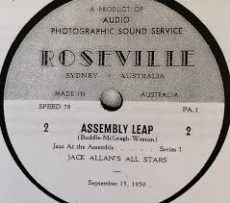
Jack Allan was born on September 28, 1929 in Sydney, Australia. As a child, he began playing accordion before switching to the piano in his teens. While working in Sydney cabarets and clubs, he was heavily influenced by swing-era pianists, especially Teddy Wilson. He became one of the few Australian musicians to play the early post-war modern jazz styles.
In 1949 Allan’s recording debut was as a member of the Rex Stewart And His Sydney Six. The following year he made his first recordings as a leader with his group the Katzenjammers. During the early 50s they performed and recorded frequently with a variety of personnel, including Ken Silver, Don Burrows, Errol Buddle, John Bamford and Edwin Duff. The mid-50s had him beginning an acting career and with his generous bulk was often cast as a villain, an amiable bar patron, or playing a musician. His film credits include On The Beach, Ned Kelly, They’re A Weird Mob, and Caddie, as well as numerous television appearances.
Maintaining his musical prowess, Jack’s performances however became spasmodic. In 1983 he recorded with percussionist John Sangster and in the following year made a tasteful, swinging solo album for the Anteater label. Moving north to the Sunshine Coast, he lived in semi-retirement with occasional acting and musical activity.
Pianist Jack Allan, a reliable studio musician with the ABC and a writer/director for musical revues, passed away on February 7, 1995 on the Sunshine Coast, Queensland, Australia.

More Posts: bandleader,history,instrumental,jazz,music,piano
Requisites
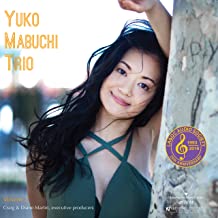
Yuko Mabuchi Trio, Volume 2 | By Eddie Carter
I’d reached the end of a very long day and was ready to relax and unwind with some piano jazz. I went to the library and came across Yuko Mabuchi Trio, Volume 2 (Yarlung Records YAR71621-161V). The second LP from the trio’s live performance at The Brain and Creativity Institute’s Cammilleri Hall with bandmates, Del Atkins on bass and Bobby Breton on drums. The concert honored the 25th Anniversary of The Los Angeles and Orange County Audio Society, plus President and CEO, Bob Levi’s 70th Birthday. My copy used in this report is the 2018 45-rpm Stereo Audiophile release.
Yuko starts Side One with a trio of solo standards, All The Things You Are by Jerome Kern and Oscar Hammerstein II, Take The “A” Train by Billy Strayhorn, and Satin Doll by Duke Ellington, Strayhorn, and Johnny Mercer. She begins with a stunningly beautiful interpretation capturing the song’s romanticism. Yuko then takes a vivaciously playful ride on The “A” Train with zestful excitement. She wraps up the trilogy with an invigorating interpretation of Satin Doll receiving an ovation from the audience at the song’s end.
The ensemble begins a Japanese Medley trilogy next, Hazy Moon by Teiichi Okano, Cherry Blossom, the Japanese folk tune from the Edo period, and Look At The Sky by Hachidai Nakamura. Yuko opens with a gentle introduction developing into a subtle collective theme. The mood of this first melody is incredibly tender, and the soothing splendor of her solo is purely captivating. She also dominates on the second segment, bringing out the musical substance and expressive beauty in an attractive reading culminating with a regal coda. The finale picks up the pace with the trio fitting together like fingers in a glove on the lively theme. Her technique is assured and quite confident in a dazzling exhibition against the backdrop set up perfectly by Del and Bobby.
Side Two starts with Sona’s Song, the pianist’s very touching tribute to a beautiful young girl in her family. The threesome makes the most of this original with seamless pacing and execution. Yuko demonstrates a mature elegance and heartfelt love in every note of her reverently lush performance before a serene summation. The group takes the audience and listener to the Caribbean on Sonny Rollins’ signature song, St. Thomas with a festive holiday atmosphere right from the start. Yuko invites everyone to enjoy the ride on a jubilantly cheerful lead statement with Atkins and Breton sustaining the rhythm. The drummer adds some buoyant brushwork for a propulsive reading before Yuko puts the finishing touches on a memorable, jazz-filled celebration.
Like its companion, Yuko Mabuchi Trio, Volume 2 has an outstanding soundstage across the highs, midrange, and low end, making it a good choice to show off a high-end audio system. This album was engineered by Bob Attiyeh and Arian Jansen, and mastered by Attiyeh, and Steve Hoffman. The 45-rpm remastering is by Bernie Grundman. The trio’s musicianship is excellent throughout the album and they shift gears as smoothly as a sports car. I’ll leave you with what I think is an ideal ending for my report, it comes from an old 1960 LP by The Joyce Collins Trio: Girl Here Plays Mean Piano. Yuko Mabuchi does this very well and if you’re discovering her for the first time, you’re in for a treat!
~ All The Things You Are, Satin Doll, Girl Here Plays Mean Piano (Jazzland JLP 24), Take The “A” Train – Source: Discogs.com
~ St. Thomas – Source: Wikipedia.org © 2020 by Edward Thomas Carter
More Posts: choice,classic,collectible,collector,history,instrumental,jazz,music,piano
Daily Dose Of Jazz…
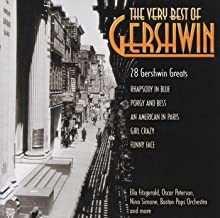
George Gershwin was born Jacob Bruskin Gershowitz on September 26, 1898 in Brooklyn, New York. When his parents bought his older brother Ira a piano, it was the younger George who spent most of his time playing it. He studied piano under Charles Hambitzer and composition with Rubin Goldmark, Henry Cowell, and Joseph Brody.
He began his career as a song plugger but soon started composing Broadway theater works with his brother Ira Gershwin and with Buddy DeSylva. In 1919 he scored his first big national hit with his song Swanee, with words by Irving Caesar.
In the late 1910s, Gershwin met songwriter and music director William Daly and the two collaborated on the Broadway musicals Piccadilly to Broadway in 1920 and For Goodness’ Sake in 1922, and jointly composed the score for Our Nell the following year. This was the beginning of a long friendship and collaboration as Daly was a frequent arranger, orchestrator, and conductor of Gershwin’s music.
Moving to Paris, France intending to study with Nadia Boulanger. Refusing him, he subsequently composed An American in Paris, before returning to New York City and writing Porgy and Bess with Ira and DuBose Heyward. Unfortunately for them, it was initially a commercial failure, however, years later it came to be one of the most important American classic operas of the twentieth century.
After the commercial failure of Porgy and Bess, George moved to Hollywood, California. In 1936, with a commission from RKO Pictures, he wrote the music for the Fred Astaire/Ginger Rogers film Shall We Dance. His extended score, which would marry ballet with jazz in a new way, runs over an hour in length. It took Gershwin several months to compose and orchestrate.
Gershwin had a ten-year affair with composer Kay Swift, whom he frequently consulted about his music. The two never married, but he titled his 1926 musical Oh, Kay for her. His compositions have been adapted for use in film and television, with several becoming jazz standards recorded and covered in many variations.
Composer and pianist George Gershwin, whose compositions spanned both popular and classical genres, passed away at 38 from a malignant brain tumor on July 11, 1937 in Los Angeles, California.