

Daily Dose Of Jazz…
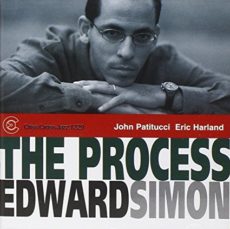
Edward Simon was born July 27, 1969 in Punta Cardón, Venezuela into a musical family as both his brothers, Marlon and Michael Simon are also noted professional musicians. Sent to the United States by his father at the age of fifteen to the University of the Arts in Philadelphia, he studied classical piano with Susan Starr. After that, beginning in 1989 he studied with Harold Danko at the Manhattan School of Music and played with Kevin Eubanks and Greg Osby.
His stay in New York City saw Simon playing with Herbie Mann, Paquito D’Rivera, Bobby Hutcherson, Jerry Gonzalez, John Patitucci, Arturo Sandoval, Manny Oquendo, and Don Byron. He was a member of Bobby Watson’s band Horizon from 1989 to 1994, and since 2002 has been a member of the Terence Blanchard Group.
Recording his debut album as a bandleader in 1994, that same year Edward was a finalist in the Thelonious Monk International Jazz Piano Competition. The following year he composed his Rumba Neurotica for the Relache Ensemble and composed his Venezuelan Suite on behalf of Chamber Music America.
He has since performed on several Grammy-nominated jazz albums. Besides his trio he also leads the Sexteto Venezuela, the Afinidad Quartet, and the group Simon, Simon & Simon, with his brothers, he teaches at the New School for Jazz and Contemporary Music in New York. Pianist Edward Simon is currently an artist in residence at Western Michigan University and continues to compose, record and perform.
Sponsored By


#preserving genius
More Posts: piano

Daily Dose Of Jazz…
James Delano Zollar was born July 24, 1959 in Kansas City, Missouri and studied after high school at San Diego City College, then at the University of California, San Diego . At the same time, he played in various radio and jazz bands and conducted his own quintet. By 1972 he had moved to San Francisco, California to study improvisation with Woody Shaw.
In 1984, he moved to New York City, played in the Cecil McBee band, and was involved in several big band projects by David Murray in the 1990s. During the decade he worked in the big band of Joe Haider & Bert Joris, recorded with Sam Rivers on his Inspiration album, played with JM Rhythm Four of Jürg Morgenthaler in Zurich and played in the Tom Harrell big band on Time’s Mirror.
By the turn of the century he was working on several projects with clarinetist Don Byron such as Bug Music and You Are # 6. He released his debut recording as a leader, Souring with Bird, on the Naxos Jazz label. James worked with Jon Faddis and the Carnegie Hall Jazz Orchestra and with Wynton Marsalis and the Lincoln Center Jazz Orchestra.
Zollar appeared in Robert Altman’s film Kansas City and is known for his use of the plunger effect of the early trumpeters of the Duke Ellington Orchestra, in whose successor bands he also played. He also performed in Madonna’s music video My Baby’s Got a Secret and in Malcolm D. Lee’s film The Best Man. Trumpeter and pianist James Zollar continues to perform and record.

Daily Dose of Jazz…
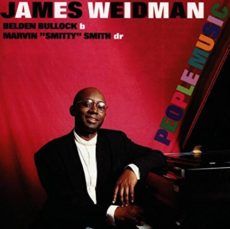
James Edward Weidman, Jr. was born in Youngstown, Ohio on July 23, 1953 to a saxophonist father who led his own band. He began playing piano when he was eight years old and eventually became the electric organist in his father’s group.
Attending Youngstown State University after graduating James spent two years playing locally before he moved to New York City in 1978. There he worked with Pepper Adams, Cecil Payne, Sonny Stitt and Bobby Watson, then became Abbey Lincoln’s pianist in 1982. This association continued into the early Nineties.
He went on to work with Steve Coleman, from 1987 to 1992 replacing Geri Allen in his Five Elements band, and with Jay Hoggard later in the 1980s. Throughout the 1990s he worked with Cassandra Wilson, Talib Kibwe, Kevin Mahogany, Belden Bullock, Max Roach, Woody Herman, Gloria Lynne, Archie Shepp, James Moody, Greg Osby, Slide Hampton, Dakota Staton and Marvin “Smitty” Smith.
Pianist and organist James Weidman who has released several albums as a leader in is a member of Joe Lovano’s Us Five band, continues to perform, tour and record.
Sponsored By

Voices From The Community
#preserving genius
Daily Dose Of Jazz…
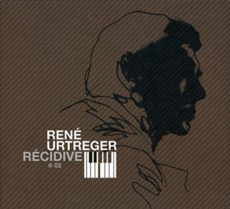
René Urtreger was born July 16, 1934 in Paris, France and began his private piano studies at the age of four, and then at the Conservatory. He studied with an orientation toward jazz, playing in a small Parisian club, the Sully d’Auteil, conducted by Hubert Damisch. The Sully boasted an orchestra of talented students including Sacha Distel and Louis Viale.
In 1953, Urtreger won first prize in a piano contest for amateurs, and from that moment decided to be a professional musician. 1954 saw him accompanying saxophonist Don Byas and trumpeter Buck Clayton in a Parisian concert. Their collaboration in the “Salon du Jazz” became one of the most highly requested French performances by the American musicians that toured the French capital.
After serving in the military from 1955 to 1957, René would play in a club on the left bank of the Seine, the famous Club Saint-Germain and again he collaborated with Miles Davis and Lester Young. His work so impressed the latter that he accompanied Young for a short tour of Europe in 1956, however the following year in December, he was part of Davis’s group which recorded the soundtrack to the film Ascenseur pour l’échafaud (Elevator to the Gallows).
The late 1950s had him working with Lionel Hampton, Stan Getz, Chet Baker, Dexter Gordon, Sonny Rollins and Ben Webster, among others. His canon of jazz work is still widely regarded as sensitive with a full, dense sound of swing. The Academie du Jazz of France formally recognized his accomplishments in 1961 with the Prix Django Reinhardt for outstanding jazz artist of the year. This win subsequently led to him providing soundtracks for films by Claude Berri and others.
Reappearing on the Paris jazz scene he resumed his career as a small-ensemble accompanist with Lee Konitz, Aldo Romano or Barney Wilen. He was featured at “Le Jazz Cool, Le Jazz Hot: A Celebration of Modern Jazz in Los Angeles and France” at the Getty Museum in Los Angeles, California in 2007. Pianist René Urtreger is currently 83 years of age and continues to perform.
Sponsored By
Voices From The Community
#preserving genius
More Posts: piano
Daily Dose Of Jazz…
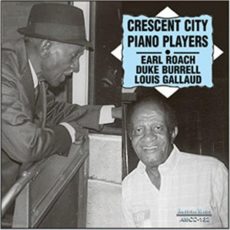
Duke Burrell was born on born July 9, 1920 in New Orleans, Louisiana and worked throughout his career in the Crescent City. He performed and recorded with Louis Jordan, Johnny Otis and on the final recordings of clarinetist Barney Bigard and the Pelican Trio along with Barry Martyn. He would reunite with Bigard for an Ellington segment recording with bassist Bobby Stone, drummer Louis Bellson and trumpeter Ray Nance.
By 1973 Duke became a bandleader and the following year formed the Louisiana Shakers that included Sammy Rimington, Sam Lee, McNeil Breaux and Teddy Edwards in the quintet lineup. He went on to lead four recording sessions between 1973 and 1976.
Pianist, composer, arranger and bandleader Duke Burrell passed away on August 5, 1993 in Los Angeles, California.
Sponsored By

www.whatissuitetabu.com
#preserving genius
More Posts: piano