

Daily Dose Of Jazz…
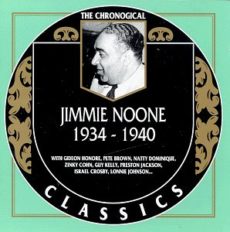
Zinky Cohn was born on August 18, 1908 in Oakland, California. He played in Chicago, Illinois in the late 1920s, including in Jimmie Noone’s Apex Club Orchestra from 1928–30. He recorded extensively with Noone between 1929 and 1934, especially for Vocalion Records. Many of the songs Noone recorded were written and/or arranged by Cohn, including Apex Blues that was previously attributed to Earl Hines.
He recorded as a leader in the early 1930s, with a band that featured Leon Washington on tenor saxophone. Zinky recorded with Frankie Franko & His Louisianans in 1930, and also accompanied blues singers such as Georgia White.
In late 1930s he led the Chicago musicians’ union and continued to play locally. Pianist Zinky Cohn passed away on April 25, 1952 in Chicago, Illinois.

More Posts: piano
Daily Dose Of Jazz…
Bill Dowdy was born August 15, 1932 in Osceola, Arkansas but his family moved to Benton Harbor, Michigan when he was six months old. At a young age he would beat on things as if he were playing the drums, an indication of his future musical career. It was in high school that he learned to play the piano and the drums and in 1949 had a group called Club 49 Trio that group played on the radio in Chicago.
After Dowdy started his own music group, he moved to Battle Creek, Michigan and joined a band before being drafted by the Army. After his discharge he landed in Chicago and took private lessons to improve his musical skills. Over time he became a professional drummer, playing with many blues bands. He continued traveling from New York City to Los Angeles, California to Canada and the South.
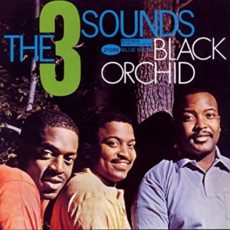
Bill joined the jazz trio, The Three Sounds and recorded over ten jazz albums from the 1950s through the early 1970s. He also played with Lester Young, Lou Donaldson, Nat Adderley, Johnny Griffin, Anita O’Day and Sonny Stitt among others.
Drummer, bandleader and teacher Bill Dowdy, whose idols included Gene Krupa, Max Roach, Roy Haynes, and Tony Williams, passed away on May 12, 2017.

Daily Dose Of Jazz…
Ivon Karel De Bie was born August 13, 1914 in Molenbeek-Saint-Jean, Brussels, Belgium. He received piano lessons from the age of six for ten years and around 1936 he began working as an amateur with Jimmy Turner, George Clais and with the Blue Blythe Players.
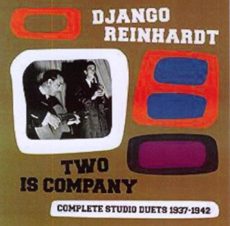
From 1938 onwards he directed his own bands as well as playing and recording beginning in the Forties in the groups of Fud Candrix, Jeff De Boeck and his metro band. In 1942 Ivon recorded his debut with a quartet with Andre Mersch, Gene Kempf and Jeff De Boeck on the Metrophone label. That same year he accompanied Django Reinhardt on a session for the Belgian label Rhythme, recording Vous et moi, Distraction, Blues en Mineur and Studio 24.
He went on to continue recording with Candrix in Berlin, with Hubert Rostaing in Brussels and with members of the Stanbrender Orchestra for the Olympia label. After the World War II De Bie directed a big band recordings for Decca Records, and also played with Robert De Kers.
From the 1950s, Ivon directed the orchestra recordings of the Middelkerke Casino played in bands led by David Bee, as well as with Brother Powell and His Dixie Rag-a-Jazz Band and The Original Syncopators Gang. In 1957 he became the artistic director of the Belgian department of RCA Victor and his last recordings were made in 1983 with the BRT Jazzorkest OLV under the direction of Etienne Verschueren.
Over the course of his career in the field of jazz he was involved in 41 recording sessions between 1941 and 1983. He wrote a series of jazz compositions such as Dixie Souvenir, partly under the pseudonym Don Bayo. His piano style was influenced by Billy Kyle, Bob Zurke, Earl Hines and Art Tatum. Pianist, composer and bandleader Ivon De Bie passed away in 1989 in Brussels.

More Posts: piano
Daily Dose Of Jazz…
Claude Thornhill was born on August 10, 1909 in Terre Haute, Indiana and as a youth was recognized as an extraordinary piano talent and along with clarinet and trumpet prodigy Danny Polo, formed a traveling duo. While a student at Garfield High School he played with several theater bands before entering the Cincinnati Conservatory of Music at age sixteen.
He and clarinetist Artie Shaw started their careers together at the Golden Pheasant in Cleveland, Ohio playing in the Austin Wiley Orchestra. By 1931 they were in New York City and in 1935 he was playing on sessions with Glenn Miller, Paul Whiteman, Benny Goodman, Ray Noble, Billie Holiday and arranged Loch Lomond and Annie Laurie for Maxine Sullivan.
Later in the decade he moved out to the West Coast with the Bob Hope Radio Show and arranged for Judy Garland in Babes in Arms. In 1939 he founded the Claude Thornhill Orchestra with his old friend Danny Polo was his lead clarinetist. Although the band was a sophisticated dance band, it became known for its superior jazz musicians and for his and Gil Evans’s arrangements.
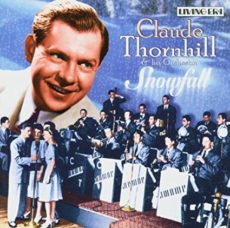
Encouraging the musicians to develop cool-sounding tones, the band played without vibrato. The band was popular with both musicians and the public and Miles Davis’s Birth of the Cool nonet was modeled in part on Thornhill’s sound and unconventional instrumentation. The band’s most successful records were Snowfall, A Sunday Kind of Love, and Love for Love.
1942 saw him enlisting in the Navy and playing across the Pacific Theater with Jackie Cooper as his drummer and Dennis Day as his vocalist. After his discharge in ‘46 he reunited his ensemble and Danny Polo, Gerry Mulligan and Barry Galbraith returned with new members, Red Rodney, Lee Konitz, Joe Shulman, and Bill Barber. For a brief time in the mid 1950s, Claude was briefly Tony Bennett’s musical director.
Pianist, arranger, composer, and bandleader Claude Thornhill passed away on July 1, 1965. A large portion of his extensive library of music is currently held by Drury University in Springfield, Missouri and in 1984 he was inducted into the Big Band and Jazz Hall of Fame.
Sponsored By


#preserving genius
More Posts: piano
Daily Dose Of Jazz…
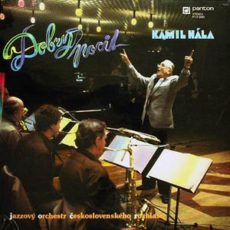
Kamil Hála was born on August 1, 1931 in Most, Bohemia, Czechoslovakia and during his musical career he worked as a pianist and arranger with a number of renowned jazz and dance orchestras, among them he starred in the Zdeněk Barták Orchestra.
As a composer and arranger he spent time collaborating with the Karel Vlach Orchestra and also directed his own jazz big band. Together with Josef Vobruba, they worked as conductors at the Czechoslovak Radio Dance Orchestra and the Jazz Orchestra of Czechoslovak Radio .
Pianist, composer, conductor and arranger Kamil Hála, brother of trumpeter and music composer Vlastimila Hala, passed away on October 28, 2014 in Prague, Czechoslovakia.

More Posts: piano