

Daily Dose Of jazz…
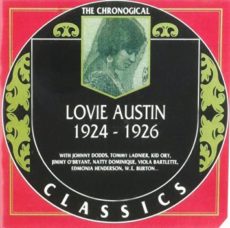
Lovie Austin was born Cora Calhoun on September 19, 1887 in Chattanooga, Tennessee and grew up with eight brothers and sisters. She studied music theory at Roger Williams University and Knoxville College which was uncommon for African American woman and jazz musicians alike during the time.
In 1923, Lovie Austin decided to make Chicago, Illinois her home, living and working there for the rest of her life. She was often seen elegantly dressed, racing around town in her Stutz Bearcat with leopard skin upholstery. Her early career was in vaudeville, playing piano and performing in variety acts. Accompanying blues singers was Lovie’s specialty, and can be heard on recordings by Ma Rainey – Moonshine Blues, Ida Cox – Wild Women Don’t Have the Blues, Ethel Waters – Craving Blues, and Alberta Hunter – Sad ‘n’ Lonely Blues.
She led her own band, the Blues Serenaders, which usually included trumpeters Tommy Ladnier, Bob Shoffner, Natty Dominique, or Shirley Clay on cornet, Kid Ory or Albert Wynn on trombone, and Jimmy O’Bryant or Johnny Dodds on clarinet, along with banjo and occasional drums. The Blues Serenaders developed their own unique sound within the jazz genre, straying away from the typical jazz band paradigm.
Austin worked with many other top jazz musicians of the 1920s, including Louis Armstrong. They worked on a song together that was called Heebie Jeebies. Her skills as songwriter can be heard in the classic Down Hearted Blues, co-written with Alberta Hunter. Singer Bessie Smith turned the song into a hit in 1923. She was also a session musician for Paramount Records and recorded with the Blues Serenaders in 1923.
When the classic blues craze waned in the early 1930s, Lovie became the musical director for the Monogram Theater in Chicago where all the T.O.B.A. acts played. She worked there for 20 years and during wartime, she was reported to be working as a security guard at a defense plant to support herself.
After World War II she became a pianist at Jimmy Payne’s Dancing School at Penthouse Studios, and performed and recorded occasionally.
In 1961, nearly forty years after participating in her first recordings, Lovie recorded Alberta Hunter with Lovie Austin’s Blues Serenaders, as part of Riverside Records’ “Living Legends” series, produced by radio WHAT-FM disc jockey and jazz critic Chris Albertson. Austin’s songs included Sweet Georgia Brown, C Jam Blues and Gallon Stomp.
Pianist Lovie Austin, who is cited as Mary Lou Williams greatest influence and one of the best pianists during the Harlem Renaissance, retired in 1962 and passed away on July 10, 1972 in Chicago.

More Posts: piano
Daily Dose Of Jazz…
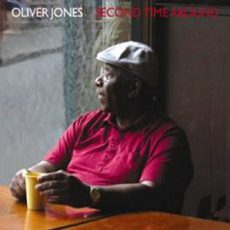
Oliver Jones was born Oliver Theophilus Jones on September 11, 1934 in Little Burgundy, Montreal, Quebec, Canada. He began his career as a pianist at the age of five, studying with Mme Bonner in Little Burgundy’s Union United Church, made famous by Trevor W. Payne’s Montreal Jubilation Gospel Choir. He continued developing his talent through studies with Oscar Peterson’s sister Daisy Peterson Sweeney starting at eight years old. In addition to church, as a child he performed at the Cafe St. Michel, other clubs and theaters in the Montreal area.
He started his early touring in Vermont and Quebec with a band called Bandwagon, and in 1953–63 played mainly in the Montreal area, with tours in Quebec. From 1964 to 1980 Jones was music director for the Jamaican calypso singer Kenny Hamilton, based out of Puerto Rico. By late 1980 he teamed up with Montreal’s Charlie Biddle, working in and around local clubs and became the resident pianist at Charlie’s jazz club Biddles from 1981 to 1986. He recorded his debut album, Live at Biddles in 1983, and was the first record on the Justin Time record label.
By the mid-1980s he was travelling throughout Canada, appearing at festivals, concerts and clubs, either as a solo artist or with the trio of Skip Bey, Bernard Primeau and Archie Alleyne. His travels also took him to Europe during this period, then on to a tour of Nigeria that became the subject of a 1990 National Film Board of Canada documentary, Oliver Jones in Africa.
Oliver is also an educator having taught music at Laurentian University, McGill University and mentored jazz artist Dione Taylor through the Governor General’s Performing Arts Awards Mentorship Program. He was named an Officer of the Order of Canada and has been bestowed the National Order of Québec, with the rank of Chevalier (Knight). He has won a Juno, four Felix awards, voted keyboardist of the year, received the Governor General’s Performing Arts Award and became the second recipient of the Oscar Peterson Award after Oscar himself.
Pianist, composer and bandleader Oliver Jones has recorded twenty-four albums as a leader, worked with Ranee Lee, Herb Ellis, Ray Brown, Clark Terry and Oscar Peterson, among others, and continues to perform and tour.

Take A Dose On The Road

More Posts: piano
Review: Morgan Guerin | The Saga
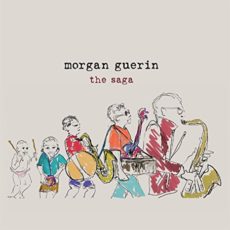
There is a reason for cover art. It speaks in silence for the artist. Thus, the listener should take a moment to immerse him/herself to visually understand the message the artist is attempting to convey. What I found in the artwork was a mini story of the instrumental journey from boyhood to arrive with a full arsenal by manhood. I realized I was viewing the preface of what was to come. Aptly titled The Saga, I knew a journey had taken place to get to this point as I inserted the disc into my computer. What I heard was an unexpected voice of a young man who had traveled far beyond his musical prowess. I was immediately reminded of Herman Hesse and Siddhartha’s sojourn, who left home to discover life through the lens of the world, only to return with greater self-awareness and peace.
To say he is compelling storyteller falls short of the message his music delivers. He is a messenger, come from a long line of griots who has given voice to a generation that unwillingly is forced to take the baton as have generations before him. From deep in the Louisiana culture you will hear the Second Line and rhythm and blues influences in his music. The very first drumbeat of Parallel sets the tone for his acknowledgement of the turbulent ecological and racial times the country is in. I am hearing the protest songs of the Sixties expressed in a rap delivered by Dashill Smith.
Blueprint delivers another message and eases us into a zone where discomfort is our journey foretelling, through the voice of Allana Hudson, the lies to humanity that contradict our ancestor’s wisdom. A fusion of sound that is ethereal beckons us forward in Tabula Rava, reminiscent of Mahavishnu, Santana, Zawinul and Return to Forever. Beginning with an Eastern calling and announcement of something majestic approaching, it builds to a cacophonous revelry in the spirit. It’s like witnessing something for the very first time that takes your breathe away or gives you pause. That tingly feeling of excitement that leaves you fulfilled for that brief moment in time. In The Saga is the journey of ups and downs, loves and loss, in the varied experiences that greet us along the way.
In Madeira there is settledness I hear when one finds a space that is easy and comfortable. This is where find solace With A Peace Of Mind that remains constant throughout our lives if we only allow it. Sharynwood Drive is my return home with all that has been discovered and learned, to be passed on to a new generation of explorers.
The Saga is a simple story told through the complexities of the music. The voices used to tell his story vary in emotion but the message is consistent. Listen carefully and you will see he has taken on a journey through the history of jazz, incorporating his youthful sensibilities within the standard language of jazz. One can feel the pulse of the music and there is beauty in the nuances throughout with the able assistance of his 11 accomplices. This was my musical journey with this young man of infinite wisdom, yet to be fully unleashed upon the world.
For those legions of jazz enthusiasts following the music trends, we await patiently for each decade to spew forth those chosen few who will humbly add their talent to the lexicon of the music. We guard the bastion for the rise of the exceptional to step forth onto the global stage. To our delight, our stalwart diligence has revealed just such a young man from amongst his peers. Hailing out of the birthplace of jazz, the name is familiar to us. It is Guerin… Morgan Guerin.
His Instruments: Drums, Alto & Tenor Saxophones, Piano, Fender Rhodes, EWI, EWI Vocoder, Organ, Flute, Moog Bass and Percussion.
The Band: Curtis Olawumi/flugelhorn, Daniel Wytanis/Trombone, Grace Sommer/violin, Julius Rodriguez/organ, Roland Guerin/electric bass, Paul “PapaBear” Johnson/electric bass, Risa Pearl/vocal, Dashill Smith/rap, Allana Hudson/spoken word, Patrick Arthur/electric & acoustic guitar, Brandon Boone/electric & upright bass.
Impressive!
carl anthony | notorious jazz | september 7, 2016
Give A Gift Of Jazz ~ Share
#preserving genius
More Posts: alto & tenor saxophone,drums,ewi,ewi vocoder,fender rhodes,flute,moog bass,organ,percussion,piano,review
Daily Dose Of Jazz…
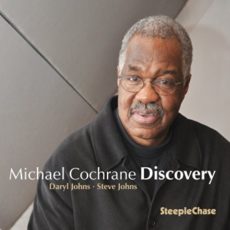
Michael Cochrane was born September 4, 1948 in Peekskill, Westchester County, New York. A pianist by choice, in 1956 he started piano lessons at the age of eight. He continued to perform throughout his high school years in band program under the direction of Vincent Corozine. During these teen years was when he received his first exposure to jazz and the big band sound.
He would go on to enroll at Boston University studying science and math while taking an after school music program at Berklee College of Music. By his junior year in school, the jazz bug had bitten, he switched majors, graduated with a degree in psychology and became a regular on the local Boston jazz scene.
For the next four years Boston was home until he moved to New York City and began a long collaboration with trumpeter Hannibal Marvin Peterson. They toured the world and eventually recorded One With the Wind for Muse Records. He has performed and/or recorded with artists including Sonny Fortune, Jack Walrath, Eddie Gomez, Valery Ponomorev, Paul Nash, John Clark, Clark Terry, Nancy Monroe, Chip White, Michael Brecker, Chico Freeman, Galen Abdur Razzaq, The Spirit Of Life Ensemble, Bob Ferrel, The New World Quintet, Ted Curson, Oliver Lake, Oliver Lake, Sonny Fortune, Tom Harrell, Bob Malach, Dennis Irwin, James Madison and many more.
He has recorded for SteepleChase Records, as well as Soul Note and Landmark Records. Michael has received fellowships from the National Endowment For The Arts, the The Puffin Foundation and the Mid-Atlantic Arts Foundation. Pianist Michael Cochrane has studied with Jaki Byard, Eleanor Hancock and Madame Margaret Chaloff, and is currently a New York University Jazz Piano faculty member and continues to perform, record and tour.
Sponsored By

Voices From The Community
#preserving genius
More Posts: piano
Daily Dose Of Jazz…
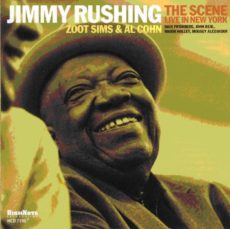
James Andrew Rushing was born on August 26, 1901 in Oklahoma City, Oklahoma into a family with musical talent and accomplishments. His father, Andrew, was a trumpeter and his mother, Cora and her brother were singers. He studied music theory with Zelia N. Breaux at Douglass High School, and was unusual among his musical contemporaries, having attended college at Wilberforce University.
Rushing was inspired to pursue music and eventually sing blues by his uncle Wesley Manning and George “Fathead” Thomas of McKinney’s Cotton Pickers. Touring the midWest and California as an itinerant blues singer in 1923 and 1924, he eventually moved to Los Angeles, California, where he played piano and sang with Jelly Roll Morton. He also sang with Billy King before moving on to Page’s Blue Devils in 1927. He, along with other members of the Blue Devils, defected to the Bennie Moten band in 1929.
When Moten died in 1935 Jimmy joined Count Basie for what would be a 13-year tenure. Due to his tutelage under his mentor Moten, he was a proponent of the Kansas City jump blues tradition as heard in his versions of Sent For You Yesterday and Boogie Woogie for the Count Basie Orchestra. After leaving Basie,, as a solo artist and a singing with other bands.
When the Basie band broke up in 1950 he briefly retired, then formed his own group and his recording career soared. He also made a guest appearance with Duke Ellington for the 1959 album Jazz Party. In 1960, he recorded an album with the Dave Brubeck Quartet, known for their cerebral cool jazz sound. Rushing appeared in the 1957 television special Sound of Jazz, singing one of his signature songs I Left My Baby backed by many of his former Basie band compatriots. In 1958 he was among the musicians included in an Esquire magazine photo by Art Kane, later memorialized in the documentary film A Great Day in Harlem.
In 1958 Jimmy toured the UK with Humphrey Lyttelton and his band, appeared in the 1969 Gordon Parks film The Learning Tree, and by 1971 was diagnosed with leukemia, that sidelined his performing career. On June 8, 1972 vocalist Jimmy Rushing, who was known as a blues shouter, balladeer and swing jazz singer, passed away in New York City. He was one of eight jazz and blues legends honored in a set of United States Postal Service stamps issued in 1994. Among his best known recordings are “Going to Chicago” with Basie, and “Harvard Blues”, with a famous saxophone solo by Don Byas.
Miami