

Daily Dose Of Jazz…
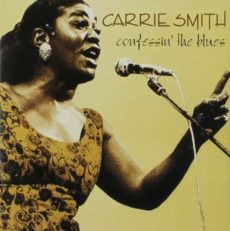
Carrie Louise Smith was born August 25, 1925 in Fort Gaines, Georgia. Her mother moved her to Newark, New Jersey to escape an abusive husband but left her to be raised by an older cousin when she joined Father Divine’s church.
Leaving school after the eighth grade, Carrie taught herself to play piano, began singing in church and worked a number of jobs including train announcer at Newark’s train station. She became a member of the Back Home Choir that performed at the 1957 Newport Jazz Festival. She first gained notice singing with Big Tiny Little in the early 1970s, but became internationally known by 1974 when she played Bessie Smith (no relation) in Dick Hyman’s Satchmo Remembered at Carnegie Hall.
This was when Smith launched a solo career, performing with the New York Jazz Repertory Orchestra, with a sextet led by trombonist Tyree Glenn in 1973, Yank Lawson in 1987, and then with the World’s Greatest Jazz Band. In addition to recording numerous solo albums, she starred in the Broadway musical Black and Blue from 1989 to 1991.
Though not well known in the U. S. she had a cult following in Europe and recorded thirteen albums between 1976 and 2002 as a leader. She also recorded with Art Hodes, Buddy Tate, Doc Cheatham, Hank Jones, Winard Harper, Dick Hyman, Clark Terry, Bross Townsend, Bob Cunningham and Bernard Purdie among others over the course of her career.
Jazz and blues vocalist Carrie Smith, lauded by jazz critics Rex Reed, Leonard Feather, Richard Sudhalter and John S. Wilson, passed away of from complications due to cancer at the age of 86 in Englewood, New Jersey on May 20, 2012.

Uplift Someone’s World

More Posts: piano
Daily Dose Of Jazz…
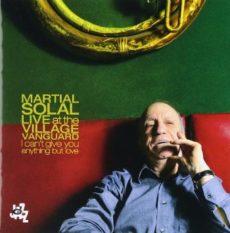
Martial Solal was born on August 23, 1927 in Algiers, French Algeria to an opera singer and piano teacher. He began learning the piano from the age of six. After settling in Paris in 1950, he soon began working with leading musicians including Django Reinhardt and expatriates from the United States like Sidney Bechet and Don Byas. He formed a quartet and also occasionally leading a big band in the late that same year.
Martial began his recording career as a leader in 1953 and began composing film music, eventually providing over twenty scores. By 1963 he appeared at the Newport Jazz Festival in Rhode Island but his Newport ’63 is a studio album recreating the live date. His regular trio featured bassist Guy Pedersen and drummer Daniel Humair and from 1968 he regularly performed and recorded with Lee Konitz in the U. S. and Europe.
Throughout his career Solal has performed solo and during 1993-94 he gave thirty solo concerts for French Radio, releasing a 2-CD set Improvise Pour Musique France on the JMS Records label. Solal has also written a piano method book titled Jazz Works.
In addition, pianist Martial has recorded three-dozen albums and worked with Dave Holland, Jack DeJohnette Francois Moutin, Dave Douglas, Gary Peacock, Peter Erskine, Paul Motian, Marc Johnson, Toots Thielemans, John Scofield, Hampton Hawes, Daniel Humair, Niels Pederson, Joachim Kuhn, Hans Koller and Attila Zoller, among others.
In recent years, Martial Solal, who believes music is a language and each performance is a conversation between the participants, has continued to perform and record with his trio.
Sponsored By

Voices From The Community

More Posts: piano
Daily Dose Of Jazz…
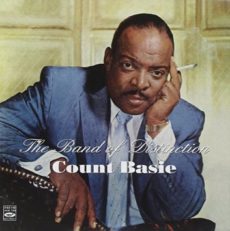
Count Basie was born William James Basie on August 21, 1904 in Red Bank, New Jersey. His father played mellophone, his mother piano and it was she who taught him to play the piano. She paid 25 cents for each piano lesson for him. Not much of a student in school, he finished junior high school before dropping out and spending much of his time at the Palace Theater learning to operate lights for vaudeville and to improvise accompaniment for acts and silent films at the hometown Palace Theater. Though a natural at the piano, he preferred drums but discouraged by the obvious talents of drummer Sonny Greer, who also lived in Red Bank, at age fifteen he switched to piano exclusively. By 16 years old, he increasingly played jazz piano at parties, resorts and other venues.
In 1924, Count went to Harlem, New York City where he met most of the major players including Willie “The Lion” Smith and James P. Johnson. His performing career expanded as he began touring with groups to the major jazz cities of Chicago, St. Louis and Kansas City on the Keith and TOBA vaudeville circuits. He met Fats Waller at Leroy’s cutting contest in Harlem who would teach him to play the organ and Smith gave him tips on piano technique and helped him book rent parties when times were lean. In 1929 he joined Bennie Moten’s band in Kansas City, and played with them until Moten’s death in 1935. Their tune The Moten Swing was an invaluable contribution to the development of swing.
At this point in his career he formed the Count Basie Orchestra and in 1936 they were in Chicago, Illinois for a long engagement and their first recording. Late one night they were improvising and came up with their signature tune One O’Clock Jump that stood for many years until their version of April In Paris.
He would go on to record for producer John Hammond on the Vocalion label with presiding members of the band being Ben Webster, Lester Young and Herschel Evans , Freddie Green, Jo Jones, Walter Page, Earle Warren, Buck Clayton and Harry Edison, Benny Morton and Dickie Wells.
He led the group for nearly 50 years, creating innovations like the use of two “split” tenor saxophones, emphasizing the rhythm section, riffing with a big band, using arrangers to broaden their sound, and others. Many musicians came to prominence under his direction, including Lester Young, Herschel Evans, Buck Clayton, Harry “Sweets” Edison, Paul Campbell, Tommy Turrentine, Johnny Letman, Idrees Sulieman, Joe Newman, Jimmy Wilkins, Benny Powell, Paul Quinichette and Floyd “Candy” Johnson, Marshal Royal, Ernie Wilkins and Charlie Fowlkes, as well as singers Jimmy Rushing, Joe Williams as well as recording with Ella Fitzgerald, Billy Eckstine, Frank Sinatra, Tony Bennett, Sammy Davis, Jr., Bing Crosby, and Sarah Vaughan.
He has won eight Grammy awards, had four recordings inducted into the Grammy Hall Of Fame, and has been inducted into the Long Island Hall of Fame, the Nesuhi Ertegun Jazz Hall of Fame, Down BEat Jazz Hall Of Fame, has been awarded NEA Jazz Master and has a star on the Hollywood Walk of Fame, among other awards. Pianist, organist, bandleader and composer Count Basie passed away pancreatic cancer in Hollywood, Florida on April 26, 1984.
Inspire A Young Mind

More Posts: piano
Daily Dose Of Jazz…
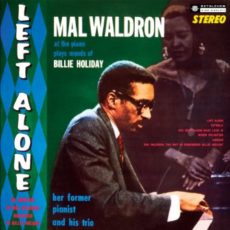
Malcolm Earl Waldron was born on August 16, 1925 in New York City to West Indian immigrants, his father was a mechanical engineer., however they moved out of the city to Jamaica, Long Island when he was four. His parents discouraged his initial interest in jazz, but he was able to maintain it by listening to swing on the radio. He started classical piano lessons around age seven but by 16 he became inspired to play jazz on tenor saxophone after hearing Coleman Hawkins’ 1939 recording of Body and Soul, but unable to afford a tenor he settle for an alto saxophone. He played alto for local bands that performed for dances, bar mitzvahs, Spanish weddings, frequently taking over the pianist’s role when other musicians took their solos.
In 1943 Waldron being called up by the Army was based at West Point, allowing him to listen to the greats of jazz in clubs on 52nd Street. After two years of service he returned as a student to Queens College where he studied under composer Karol Rathaus, making his final decision to switch from saxophone to piano. After college he worked for a short time in rhythm and blues bands, including with Big Nick Nicholas.
In 1950 Mal went on to work with Ike Quebec in New York, made his recording debut with the saxophonist in 1952 and played at Café Society Downtown on Mondays for six or seven months. Over the next couple of years he worked frequently with Charles Mingus, recording on several Mingus albums, including Pithecanthropus Erectus, a key development in the movement towards freer collective improvisation in jazz. He would go on to work with Lucky Millinder and Lucky Thompson, form his own band Idrees Sulieman, Gigi Gryce, Julian Euell, and Arthur Edgehill. This group recorded Waldron’s debut release as a leader, Mal-1, in 1956.
Waldron was Billie Holiday’s regular accompanist from 1957 until her death in 1959, and Introduced by Jackie McLean, he became the house pianist for Prestige Records. Other leaders he worked under at Prestige included Gene Ammons, Kenny Burrell, John Coltrane and Phil Woods. His most famous, Soul Eyes, written for Coltrane, became a widely recorded jazz standard. A prolific composer he has estimated composing more than 400 pieces of music during his time with Prestige.
He went on to perform with Abbey Lincoln, Max Roach, Eric Dolphy and Booker Little, and wrote for is own band, scores for modern ballet, and film scores with his score for The Cool World becoming one of the first attempts to stress improvisation rather than composition in a jazz-based film score. In 1963 Waldron having a major breakdown caused by a heroin overdose causing him to lose the ability to remember his name or play the piano, requiring shock treatments and a spinal tap to bring him back. He had to relearn his skills, in part by listening to his own records. Recovery was a slow process, taking over two years till all his faculties fully returned.
From the mid-1960s on, Waldron lived in Paris, Rome, Bologna and Cologne, before moving permanently to Munich. He scored full-length and short films, for television and Amiri Baraka’s theater production The Slave & Dutchman, and played with Ben Webster and Kenny Clarke. He toured and recorded throughout Europe and Japan, stopping in the U.S. playing solo piano but also with Joe Henderson, Herbie Lewis, Freddie Waits, Charlie Rouse, Calvin Hill and Horacee Arnold and Cameron Brown.
The ‘90s saw Mal recording several albums with vocalist Jeanne Lee. Two of his final recordings were duets with saxophonists David Murray and Archie Shepp. Diagnosed with cancer in 2002 he continued to perform until his death on December 2nd of that year in a hospital in Brussels, due to complications resulting from the cancer. He was 77.
Give The Gift Of Knowledge
More Posts: piano
Daily Dose Of Jazz…
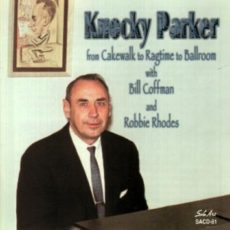
Knocky Parker was born John William Parker, II on August 8, 1918 in Palmer, Ellis County, Texas. By the Thirties he was playing in Western Swing bands such as The Wanderers and the Light Crust Doughboys through the end of the decade before serving in the military during World War II.
After the war Parker worked with Zutty Singleton and Albert Nicholas, then earned a Ph.D in English and taught at Kentucky Wesleyan College and the University of South Florida. While fulfilling his teaching responsibilities he worked with Doc Evans, Omer Simeon, and Tony Parenti, among others, as well as working as a solo artist.
In the early 1960s he recorded every Scott Joplin rag, one of the first to do so. In addition, he recorded the complete works of Jelly Roll Morton. Knocky recorded extensively, for the labels Texstar, Paradox, GHB, London, Audiophile, Jazzology, and Euphonic.
Pianist Knocky Parker, who played primarily ragtime and Dixieland jazz passed away on September 3, 1986 in Los Angeles, California.
Sponsored By

www.whatissuitetabu.com
More Posts: piano