

Daily Dose Of Jazz…
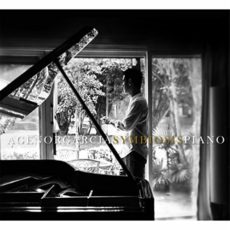
Agenor Garcia was born in Campo Grande, Brazil on October 10, 1967 and received classical training from the age of 12. He eventually moved to Brasilia, the capital of Brazil, in 1995 where he started his composition classes with Professor Bohumil Med in the Music Department at the University of Brazil. He also taught lessons at ArtMed, Bohumil Med’s music school and wrote music scores for movies and theatre plays.
Moving to the United States in 2001 Garcia recorded his debut piano trio album Alabastro. During this period he studied jazz under Cliff Korman and by 2003 he received an invitation to participate in the Jazz Walk Festival in Fort Lauderdale, Florida. 2004 saw him move to Paris, France, teaching music lessons at the Bill Evans Piano Academy and working as a music director and performing solo. Returning to America, in 2009, he started to work with Steinway & Sons performing contemporary piano concerts across the country. His album “The Music of Agenor Garcia” was recorded live while on the Steinway tour.
Pianist, composer, performer and musical director Agenor Garcia has played numerous jazz festival, has received awards including the Spanish Heritage Award for Best Composition, and in 2014 released his album Symbiosis, blending improvisation with his musical influences. He continues to perform, record, tour and educate.

Give A Gift Of Jazz – Share

More Posts: piano

Daily Dose Of Jazz…
Bebo Valdés was born Dionisio Ramón Emilio Valdés Amaro on October 9, 1918 in Quivicán, Cuba. He started his career as a pianist in the nightclubs of Havana during the 1940s, replacing René Hernández as pianist and arranger in Julio Cueva’s band. In 1946 the band recorded Rareza del Siglo, one of his most famous mambos and from 1948 to 1957 he worked as pianist and arranger for the vedette Rita Montaner, who was the lead act in the Tropicana cabaret.
His orchestra, Sabor de Cuba, and that of Armando Valdés, alternated at the Tropicana, backing singers such as Benny Moré and Pío Leyva. Bebo played a role in the adaptation of the mambo into the big band format from the previously performed charangas during the late 1940s and 1950s. He developed a new rhythm to compete with Perez Prado’s mambo, called the batanga. He was also an important figure in the incipient Afro-Cuban jazz scene in Havana, taking part in sessions commissioned by American producer Norman Granz during 1952.
By the late 1950s he was recording with Nat “King” Cole and in 1960, along with Sabor de Cuba’s lead vocalist Rolando Laserie, Bebo defected from Cuba to Mexico. He then lived briefly in the United States before touring Europe, and eventually settled in Stockholm, spreading the techniques of Cuban music and Latin jazz. His career got a late boost in 1994 when he teamed up with saxophone player Paquito D’Rivera to release a CD called Bebo Rides Again. 2000 saw him in the film Calle 54 by Fernando Trueba giving his piano playing a wider audience and in 2003, Valdés and flamenco singer Diego El Cigala, recorded the album Lágrimas Negras (Black Tears).
During his career Bebo won seven Grammy Awards, His last musical production was recorded with his son in 2008, Bebo y Chucho Valdés: Juntos para Siempre (Together Forever). For that recording they won the Grammy for Best Latin Jazz Album.
Pianist, bandleader, composer and arranger Bebo Valdés, who led two famous big bands, was being treated for Alzheimer’s disease, which he had suffered for several years, when he passed away in Stockholm, Sweden, on March 22, 2013 at age 94.
Inspire A Young Mind
More Posts: piano

Daily Dose Of Jazz…
Teddy Brannon was born Humphrey Brannon on September 27, 1916 in Moultrie, Georgia. He began learning piano at age nine and played in dance bands in high school while working locally in Newark, New Jersey nightclubs from 1937 – 1942.
Between 1942 to 1945 he was a member of Benny Carter’s ensemble, after which he freelanced on 52nd Street in New York City. The 1950s and 1960s saw Brannon working in the studios with doo wop groups and though he never recorded as a leader, he recorded as a leader with his orchestra in the late Forties and played extensively in the jazz idiom with but not limited to Don Byas, Roy Eldridge, Buddy Rich, Bennie Green, Johnny Hodges, Jonah Jones, Don Newcomb and Illinois Jacquet.
An accomplished accompanied he performed and recorded with such singers as Dinah Washington, Ruth Brown, Billie Holiday, and Babs Gonzales, who was Brannon’s cousin. Pianist Teddy Brannon passed away on February 24, 1989 in Newark, New Jersey.
Give A Gift Of Jazz – Share
More Posts: piano
Daily Dose Of Jazz…
Rio De Gregori was born on September 22, 1919 in Zurich, Switzerland. He began taking classical piano lessons at the age of seven and at fourteen he began buying records by Duke Ellington and other jazz musicians. Although his parents wanted to make him a classical pianist, his interest were leaning towards jazz.
Rio first played with Willie Mac Allen in 1939, then with James Boucher, The Lanigiros, Jo Grandjean and René Weiss during the early to mid Forties. He was with the big band of Fred Böhler until 1945 when he founded his own dance orchestra bringing with him some of the best Swiss jazz musicians, Stuff Combe, Bob Jaquillard, Jean Pierre Dupuis, Luc Hoffmann, Raoul Schmassmann and Kurt Weil. He also featured Glyn Paque as a guest soloist.
He disbanded his big band and worked in a trio setting or as a soloist. Performing in Ascona, Switzerland, he met vocalist Suzanne Doucet and composed and arranged for her. Moving to Munich, Germany De Gregori played under the name Rio Gregory and opened a nightclub.
Because of his harmonious flair De Gregori enjoyed an excellent reputation as a pianist recordings. As an arranger he was commissioned by Fred Böhler and other orchestral conductors. He recorded four albums as a leader over the course of his career. Pianist and vocalist Rio De Gregori passed away on May 22, 1987 in Munich, Germany.
Sponsored By

Daily Dose Of Jazz…
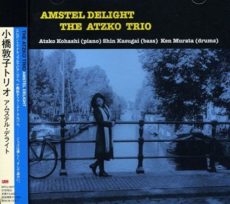
Atzko Kohashi was born on September 21st in Japan and studied classical piano from an early age. Her sights were not set on jazz until her early teens. A self-taught jazz pianist, while studying law at Kelo University in Tokyo, she was a member of the big band, Kelo Light Music Society. Post graduation she began playing in local jazz clubs in quintets until she formed her own trio.
In 1994 Kohashi moved to New York City and studied under Steve Kuhn, who had a big influence on her playing. In 2001 she moved back to Tokyo, played the clubs and composed music for C.G. animation for children and radio dramas. During this period she arranged jazz for the piano-violin duo Rosco.
2005 saw Atzko moving to Amsterdam, Netherlands and releasing her first album as a leader Amstel Delight followed by her 2009 sophomore album Amstel Moments with bassist Frans van der Hoeven. She recorded her third album live titled Turnaround with bassist Yosuke Inoue. In 2012 she went back into the studio with Dutch drummer Sebastiaan Kaptein. Her next duo recording was in 2013 with bassist van der Hoeven, making their critically acclaimed second duo album, Waltz For Debby and garnering success on the concert trail.
Along with van der Hoeven and Kaptein, she has released her latest 2016 record Lujon on the Japanese label Cloud. Pianist Atzko Kohashi, also writes and interviews for a monthly column ‘Amsterdam Report’ on a web magazine for Japanese jazz lovers, continues to compose, arrange, perform and record and is scheduling a Japan tour in November.
Give The Gift Of Knowledge
More Posts: piano