

Daily Dose Of Jazz…
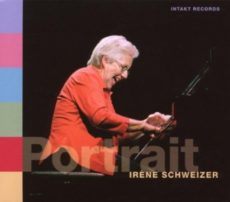
Irène Schweizer was born on June 2, 1941 in Schaffhausen, Switzerland. She studied piano and immersed herself in the free improvisation genre but is adept at playing various jazz styles.
She has performed and recorded numerous solo piano performances as well as performing as part of the Feminist Improvising Group with Lindsay Cooper, maggie Nichols, Georgie Born, and Sally Potter. Schweizer has played a series of duets with drummers Pierre Favre, Louis Moholo, Andrew Cyrille, Gunter Sommer, Han Bennink and Hamid Drake.
Irène has performed in trio and quartet sessions with John Tchicai, Evan Parker, Peter Kowald and with Yusef Lateef, Uli Trepte and Mani Neumeier at the Montreux Jazz Festival.. One of her most enduring collaborations is with the improvising musician Rudiger Carl.
Pianist Irène Schweizer continues to perform and record in the the free jazz, avant-garde and free improvisation genres.

Dose A Day-Blues Away

More Posts: piano
Daily Dose Of Jazz…
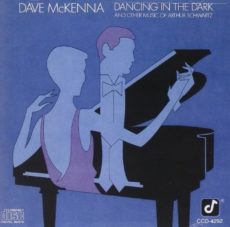
Dave McKenna was born May 30, 1930 in Woonsocket, Rhode Island and started out at the age of 15 playing with Boots Mussulli in 1947. He then worked with Charlie Ventura and Woody Herman’s Orchestra three years later. He went on to spend two years in the military, and re-joined Ventura in 1953.
He worked with a variety of swing and Dixieland musicians including Gene Krupa, Joe Venuti, Stan Getz, Zoot Sims, Al Cohn, Bob Wilbur, Eddie Condon, and Bobby Hackett but became primarily a soloist after 1967 operating nearly exclusively in the Northeast United States. McKenna performed with Louis Armstrong at the 1970 Newport Jazz Festival. He was an accompanist, recording with singers such as Rosemary Clooney, Teddi King, Donna Byrne and Tony Bennett.
During the 1970s his star rose but chose to play in his local area rather than travel extensively playing in clubs and hotels over center stage in major venues. He retired around the turn of the millennium due to increasing mobility problems brought on by his long battle with diabetes. Pianist Dave McKenna passed away in Pennsylvania on October 18, 2008 from lung cancer.
Jazz Is Global – Share
More Posts: piano
Daily Dose Of Jazz…
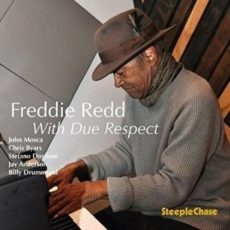
Freddie Redd was born on May 29, 1928 and grew up in New York City and after losing his father when he was a one year old, he was raised by his mother, who moved around Harlem, Brooklyn and other neighborhoods. An autodidact, he began playing the piano at a young age and took to studying jazz seriously upon hearing Charlie Parker during his military service in Korea.
Upon discharge from the Army in 1949 he worked with drummer Johnny Mills, and then in New York played with Tiny Grimes, Cootie Williams, Oscar Pettiford and the Jive Bombers. In 1954 he was playing with Art Blakey, followed with a tour of Sweden in 1956 with Ernestine Anderson and Rolf Ericson. Freddie’s greatest success came in the late 1950s when he was invited to compose the music and perform as actor and musician in both The Living Theatre’s New York stage production of The Connection, which was also used in the subsequent 1961 film. Redd led a Blue Note album featuring his music for the play. which featured Jackie McLean on alto sax. However, his success in the theater production did not advance his career in the United States, and shortly afterwards he moved to Europe living in Denmark and France.
Returning to the West Coast in 1974 he became a regular on the San Francisco scene and recorded intermittently up until 1990. His creative lines, particular voicings and innovative compositions have led him to work with Jackie McLean, Tina Brooks, Paul Chambers, Howard McGhee, Milt Hinton, Lou Donaldson, Benny Bailey, Charles Mingus, Louis Hayes, Al McKibbon, Billy Higgins, Osie Johnson, Gene Ammons, Tommy Potter, Joe Chambers and many more. He contributed organ to James Taylor’s original 1968 recording of Carolina In My Mind.
Over the course of his career hard-bop pianist and composer Freddie Redd, who passed away in New York City on March 17, 2021, aged 92, recorded fourteen albums as leader and was one of the last of the pioneers of the hard-bop golden age.
Sponsored By

Voices From The Community
More Posts: piano
Daily Dose Of Jazz…
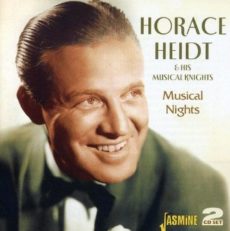
Horace Heidt was born on May 21, 1901 in Alameda, California, He went on to attend the University of California Berkeley as a guard on the football team. But a broken back dashed those dreams and he turned his attention to music, forming The Californians with some classmates.
From 1932 to 1953, he became one of the more popular radio bandleaders beginning on NBC’s Blue Network with Shell Oil’s Ship of Joy and Answers by the Dancers and Horace Heidt’s Alemite Brigadiers. He broadcasted from CBS from 1937-1939.
Horace would employ singer Matt Dennis and singing comedian Art Carney. His recordings were highly successful with Gone With The Wind and Ti-Pi-Tin going to No. 1 and The Man With The Mandolin hitting No. 2 on the charts. His 1941 song, The Hut-Sut Song is heard in the movie A Christmas Story.
He returned to NBC to perform on Pot o’ Gold radio show from 1939-194, portraying himself in the film of the same name starring James Stewart and Paulette Goddard. From 1940 to 1944 he did Tums Treasure Chest, followed by 1943–45 shows on the Blue Network. Lucky Strike sponsored The American Way on CBS in 1953.
On December 7, 1947, NBC launched The Horace Heidt Youth Opportunity Program and accordionist Dick Cortino the first winner of the $5,000 prize, soon had his own show. Heidt’s talent search catapulted a number of performers such as Carney, Frankie Carle, the King Sisters, Alvino Rey, Gordon McRae, Frank DeVol, Johnny Standley and Al Hirt. When the program expanded from radio to television in 1950, it was one of the first talent shows.
Pianist and bandleader Horace Heidt passed away on December 1, 1986 in Los Angeles, California. For his contribution to radio and television he has two stars on the Hollywood Walk of Fame and a Golden Palm Star on the Palm Springs Walk of Stars.
Uplift Someone’s World
More Posts: piano
Daily Dose Of Jazz…
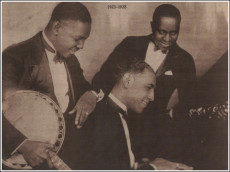
Louis Stanley Hooper was born on May 18, 1894 in North Buxton, Ontario, Canada but was raised in Ypsilanti, Michigan and studied piano at the Detroit Conservatory, playing locally in dance orchestras in the 1910s. Around 1920 he moved to New York City and recorded frequently with Elmer Snowden and Bob Fuller in the middle of the decade. He was known to perform with both of them in Harlem as well as with other ensembles.
Lou served for some time as the house pianist for Ajax Records, accompanying many blues singers on record, including Martha Copeland, Rosa Henderson, Lizzie Miles, Monette Moore and Ethel Waters. He was a participant in the Blackbirds revue of 1928.
In 1932 Hooper returned to Canada, where he played in Mynie Sutton’s dance band, the Canadian Ambassadors. Working locally as a soloist and in ensembles for the next two decades, he was brought back into the limelight by the Montreal Vintage Music Society in 1962.
Lou recorded a two-LP set with Bill Coleman titled UK LIve:Satin Doll, Vol. 1 & 2 in 1967 and released an album as a leader of ragtime piano tunes in 1973 titled Lou Hooper, Piano.
Wearing the educator hat, he taught at the University of Prince Edward Island late in his life and appeared regularly on CBC television in Halifax. Pianist Lou Hooper passed away on September 17, 1977 in Charlestown, Prince Edward Island. His papers, which include unpublished compositions and an autobiography, are now held at the National Library of Canada in Ottawa.
Give A Gift Of Jazz – Share
More Posts: piano