

Daily Dose Of Jazz…
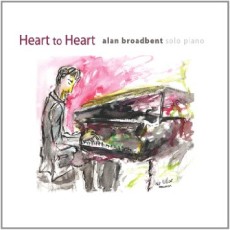
Alan Leonard Broadbent was born on April 23, 1947 in Auckland, New Zealand. He studied piano and music theory in his own country, but in 1966 came to the United States to study at Berklee College of Music.
Broadbent’s first professional gig was in a jazz trio with bassist Kevin Haines and drummer Tony Hopkins at Club 81 in Auckland in the mid-1960s. His first two albums as a leader in 1985, Song of Home and Further Down the Road, were recorded on the Tartar label with bassist Andy Brown and Frank Gibson, Jr. on drums. These two albums showcased his signature of reinterpretation of standards.
His first U.S. release in 1986, Everything I Love, recorded more standards on the Discovery label replaces Brown with bassist Putter Smith replaces Brown on bass; Frank Gibson, Jr. continues with the trio. By the early Nineties Alan was asked to be a part of Natalie Cole’s Unforgettable album, and toured as her pianist and conductor. At this time he wrote an orchestral arrangement for her second video with her father, When I Fall in Love, winning him his first Grammy for Best Orchestral Arrangement Accompanying a Vocal.
During the 1990s Broadbent he joined Charlie Haden’s Quartet West and it was during this period he won his second Grammy, an orchestral accompaniment written for Shirley Horn of Leonard Bernstein’s Lonely Town. As a soloist and with his jazz trio, Broadbent has been nominated for Grammys twice for best instrumental performance, in the company of such artists as Herbie Hancock, Sonny Rollins and Keith Jarrett.
Alan is Diana Krall’s conductor for her occasional orchestra concerts and conducted on her Live in Paris DVD. He has arranged for Glenn Frey, wrote six string arrangements for Paul McCartney with the London Symphony, worked with Warne Marsh, Woody Herman, Chet Baker, Irene Kral, Sheila Jordan, Bud Shank and numerous others and has toured the UK, Poland and France. In 2008 he was appointed a Member of the New Zealand Order of Merit for services to jazz.
Pianist, arranger and composer Alan Broadbent has two-dozen albums out as a leader in trio, duet nd solo performance and another seventeen as a sideman to date. He continues to perform, record and tour.

Give A Gift Of Jazz – Share

More Posts: piano
Daily Dose Of Jazz…
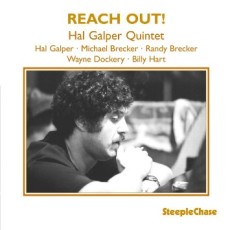
Harold “Hal” Galper was born April 18, 1938 in Salem, Massachusetts. He studied classical piano as a boy, but switched to jazz while studying at Berklee College of Music from 1955 to 1958. He hung out at Herb Pomeroy’s club, the Stable, hearing local Boston musicians such as Jaki Byard, Alan Dawson and Sam Rivers.
He started sitting in and became the house pianist at the Stable and later on, at Connelly’s and Lenny’s on the Turnpike. Eventually, Galper went on to work in Pomeroy’s band.
As his career progressed he worked with Chet Baker, Stan Getz and Nat Adderley and accompanied vocalists Joe Williams, Anita O’Day and Chris Connor. Between 1973-1975, Galper played in the Cannonball Adderley Quintet replacing George Duke.
Performing in New York and Chicago jazz clubs in the late 1970s, around this time, Hal recorded several times with guitarist John Scofield on the Enja label. The decade of the Eighties saw him as a member of the Phil Woods Quintet but left to pursue touring and recording with his own trio with drummer Steve Ellington and bassist Jeff Johnson.
As an educator Galper is internationally known, having theoretical and practical articles appear in six editions of Down Beat magazine. His scholarly article on the psychology of stage fright, originally published in the Jazz Educators Journal, has subsequently been reprinted in four other publications.
Pianist, composer, arranger, bandleader, educator and writer Hal Galper is currently on the faculty of Purchase College and the New School for Jazz and Contemporary Music.
Put A Dose In Your Pocket
More Posts: piano
Daily Dose Of Jazz…
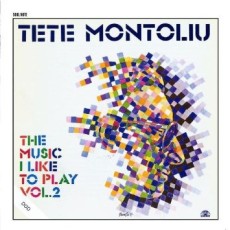
Tete Montoliu was born Vicenç Montoliu i Massana on March 28, 1933 in the Eixample district of Barcelona, Spain. Born blind, he was the only son of Vicenç Montoliu, a professional musician) and Àngela Massana, a jazz enthusiast, who encouraged her son to study piano. He first began piano lessons under Enric Mas at the private school for blind children that he attended from 1939 to 1944. By 1944, his mother arranged for Petri Palou to provide formal piano lessons.
From 1946 to 1953 Montoliu studied music at the Conservatori Superior de Música de Barcelona, where he also met jazz musicians and became familiar with the idiom in jam sessions. During the early stages of his career, Montoliu was particularly influenced by the music of pianist Art Tatum, although he soon developed a distinctive style.
He began playing professionally in Barcelona pubs where noticed by Lionel Hampton in 1956 he began touring with Hampton throughout Spain and France. After the tour Tete recorded Jazz Flamenco, setting off a prolific international career. In the 1960s, he played in various New York City concerts and established collaborations with drummer Elvin Jones and bassist Richard Davis.
The Seventies saw him traveling extensively throughout Europe, consolidating his reputation as a main referent in the hard bop movement. During the 1980s, he played numerous concerts, collaborating with Dexter Gordon, Johnny Griffin, Joe Henderson, Dizzy Gillespie, Chick Corea, Hank Jones, Roy Hargrove and Jess Davis, to name a few.
The man from Catalonia, pianist Tete Montoliu was given a public tribute by Spain in 1996 for his fifty-year career in jazz. He passed away the following year on August 24, 1997 in Barcelona. He left the jazz world an estimated catalogue of 52 albums as a leader and another 21 as a sideman with Anthony Braxton, Nuria Feliu, Dexter Gordon, Eddie Harris, Rahsaan Roland Kirk, Charlie Mariano, Jordi Sabates, Archie Shepp, Lars Gullin, Buddy Tate, and Ben Webster.
Inspire A Young Mind
More Posts: bandleader,composer,history,instrumental,jazz,music,piano
Daily Dose Of Jazz…
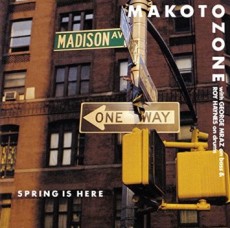
Makoto Ozone 小曽根真 was born on March 25, 1961 in Kobe, Japan. He began playing organ at two and by seven was an improviser. He appeared on Japanese television with his father from 1968 to 1970. Impressed with the playing of Oscar Peterson, at twelve he switched to piano. In 1980 he entered the Berklee College of Music.
Makoto later worked with vibraphonist Gary Burton, recording four albums with him. In 1983 he recorded as a leader his debut in 1983 before returning to his native Japan.
Ozone has collaborated with vocalist Kimiko Itoh, appearing as a duo at the Montreux Jazz Festival and produced her album Kimiko, winning the 2000 Swing Journal jazz disk grand prix for Japanese vocalist. He has recorded with Ellis Marsalis, Chick Corea, Christian McBride, Jeff “Tain” Watts, Randy Brecker, Paquito D’Rivera, Anna Maria Jopek, Jake Shimabukuro, Misuzu Kanno and Gayle Moran Corea, among others.
He has several recordings as a trio leader or co-leader with Burton that are now coveted imports. Pianist Makoto Ozone continues to perform, record and tour.
Give The Gift Of Knowledge
More Posts: piano
Daily Dose Of Jazz…
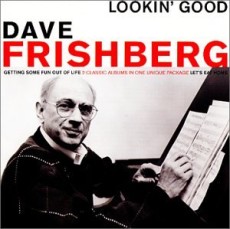
David Frishberg was born March 23, 1933 in Saint Paul, Minnesota. Resisting learning classical piano as a boy, he developed an interest in blues and boogie-woogie by listening to recordings of Pete Johnson and Jay McShann. As a teenager he played in the house band at the Flame in St. Paul where Art Tatum, Billie Holiday and Johnny Hodges appeared. After graduating from the University of Minnesota as a journalism major in 1955, he spent two years in the Air Force.
In 1957, Dave moved to New York City where he played solo piano at the Duplex in Greenwich Village. He first became known for his work with Carmen McRae, Ben Webster, Gene Krupa, Bud Freeman, Eddie Condon, Al Cohn and Zoot Sims.
He later found celebrity writing and performing his own, frequently humorous, songs, including his most famous My Attorney Bernie, and favorites I’m Hip, lyrics only, in collaboration with Bob Dorough, Blizzard of Lies, Do You Miss New York, Peel Me a Grape, Quality Time, Slappin’ the Cakes on Me, and Van Lingle Mungo, the lyrics of which entirely consist of the names of old-time baseball players.
Citing songwriter Frank Loesser as an influence, Frishberg has also worked strictly as a lyricist on a number of occasions collaborating with Johnny Mandel, Alan Broadbent, Al Cohn, Blossom Dearie, David Shire, Julius Wechter, Dan Barrett, Bob Brookmeyer, Gerry Mulligan and Johnny Hodges.
Dave’s tunes have been performed and/or recorded by Blossom Dearie, Rosemary Clooney, Shirley Horn, Anita O’Day, Michael Feinstein, Irene Kral, Diana Krall, Stacey Kent, John Pizzarelli and Mel Torme, among other.
He is also noted for composing the music and lyrics for I’m Just A Bill, the song about the forlorn legislative writ in the ABC Schoolhouse Rock series, as well as Walkin’ on Wall Street, a song that describes how the stock market works, and $7.50 Once a Week, a song about saving and balancing a budget.
Pianist, vocalist, composer and lyricist Dave Frishberg has recorded three albums as a leader, one solo project and has sat in the sideman chair with Jim Goodwin and Rebecca Kilgore on the Arbor Records label.
Uplift Someone’s World