

Daily Dose Of Jazz…
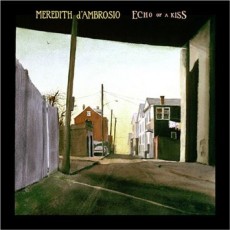
Meredith D’Ambrosio was born into a musical family in Boston, Massachusetts on March 20, 1941. She studied piano and voice from age six and ultimately studied at the Boston Museum School in 1958-59, pursuing a career in painting as well as music.
Meredith was offered the chance to tour Japan with John Coltrane but turned down the offer. Her first major recording for Spring Records didn’t happen for more than a decade later with her husband Eddie Higgins. Two more albums followed her debut recording three years later in the early Eighties for Shiah and Palo Alto Records. She has since released a dozen albums on the Sunnyside Records label from 1985 to 2006. During this period she recorded with Lee Konitz, Fred Hersch, Ben Riley, Erik Friedlander, Jay Leonhart and Gene Bertoncini among others.
She was voted in the Top Five for Talent Deserving Wider Recognition category for Female Vocalist in Down Beat International Critics Jazz Poll from 1982 to 1985 and from 1987-1991. In 1994, D’Ambrosio was the featured guest on Marian McPartland’s syndicated radio program Piano Jazz. Although she worked primarily as a jazz singer and pianist, she is also well known as a composer, lyricist, and teacher.
A respected visual artist, watercolorist, creator of eggshell mosaics and calligrapher, she took off from recording to concentrate on painting, touring, performing at festivals and teaching. She re-emerged in 2012 recording By Myself, a collection of 14 songs by the late composer Arthur Schwartz, her only album of 19 dedicated to a single composer and her solo piano accompaniment. Vocalist Meredith D’Ambrosio continues to perform, record, tour, teach and paint.

Inspire A Young Mind

Daily Dose Of Jazz…
Jessica Williams was born on March 17, 1948 in Baltimore, Maryland. She began her music career young, taking piano lessons at the age of four and began classical training at the Peabody Conservatory of Music when she was seven. She moved to Philadelphia, Pennsylvania during her teens and began playing with the quintet of former Miles Davis drummer, the Philly Joe Jones.
In 1977, moving to San Francisco, California, she played in various house bands, such as Eddie Harris, Dexter Gordon, Tony Williams and Stan Getz. She also became the house pianist for the Keystone Korner. Over the course of her career Williams has recorded for Candid, Fantasy, Timeless, Concord, Jazz Focus, Hep and MaxJazz record labels.
Jessica began her own record label in 1997, called Red and Blue Recordings, to release her own original material. In addition, she established her own publishing company, JJW Music, and runs her own Internet CD mail-order business.
She is a three-time Grammy nominated pianist, was awarded a Fellowship from the John Simon Guggenheim Memorial Foundation for composition and has performed at the 2004 and 2006 Mary Lou Williams Women In Jazz Festivals at the Kennedy Center in Washington, D.C. Pianist and composer Jessica Williams continues to perform, tour and record.
Give The Gift Of Knowledge
More Posts: piano
Daily Dose Of Jazz…
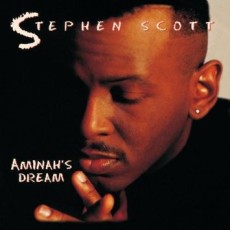
Stephen Scott was born March 13, 1969 in Queens, New York. He started piano at the age of five, and progressed rapidly to the point where he was taking private lessons at Juilliard at 12. Grounded in classical music, he was also exposed to reggae and salsa on the radio. It was in high school that he was introduced to jazz, giving Justin Robinson credit.
By the age of 18, Scott was playing in the Betty Carter band and soon began performing or recording with the likes of the Harper Brothers, Wynton Marsalis, Bobby Watson and Bobby Hutcherson.
Beginning in 1991, as a leader and solo artist, Stephen recorded a stream of mainstream albums for Verve and Enja record labels, using mixtures of fellow young lions Roy Hargrove, Craig Handy, Peter Washington, Christian McBride, Jeff “Tain” Watts, Lewis Nash and esteemed veterans like Joe Henderson, Ron Carter and Elvin Jones as sidemen. Henderson returned the invite on his commercial breakthrough Lush Life, the same year and also recorded with Freddie Hubbard and Sonny Rollins.
Jazz pianist Stephen Scott continues to perform, tour and record fusing his neo-bop music base with soul jazz tendencies with Latin rhythms.
Give A Gift Of Jazz – Share
More Posts: piano
Daily Dose Of Jazz…
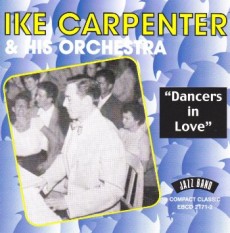
Ike Carpenter was born Isaac M. Carpenter on March 11, 1920 in Durham, North Carolina. He began performing on piano with bands at a very young age, in the mid-1930s. After graduating from college, he performed with a number of successful musicians, including Johnnie Davis.
In 1944, Ike worked briefly as a pianist in Boyd Raeburn’s first influential jazz group, then put together his first band, working gigs on the East coast. In 1947 he relocated to Hollywood where he formed a popular 12-man band that played primarily in the Los Angles area, but touring up the West coast as far as Canada.
By the 1950s, Carpenter left the band scene, and worked as an accompanist for Ice Capades performers. Late in the decade he briefly returned as a bandleader with small groups, before retiring to his hometown in North Carolina.
Recording for the Modern Records label, much of his music was arranged by noted jazz arranger and composer Paul Villepigue. Over the years he played and recorded with Lucky Thompson, Gerald Wilson, Ted Nash, and George Weidler among others. His band was featured in two Hollywood musical films in the 1950s, Rhythm and Rhyme and Holiday Rhythm. Bandleader and jazz pianist Ike Carpenter, popularly active in the post-World War II years on the West Coast, passed away on November 17, 1998 in his hometown of Durham. He was 78.
Dose A Day-Blues Away
More Posts: piano
Daily Dose Of Jazz…
Don Abney was born John Donald Abney on March 10, 1923 in Baltimore, Maryland. He studied piano and French horn at the Manhattan School of Music, playing the latter in an Army band during military service.
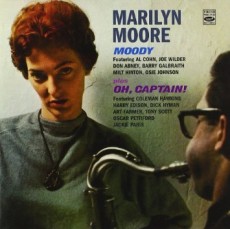
After being honorably discharged from the Army he played in ensembles with Wilbur de Paris, Bill Harris, Kai Winding, Chuck Wayne, Sy Oliver, and Louis Bellson. He had a sustained career as a session musician recording with Louis Armstrong, Benny Carter, Oscar Pettiford, Ella Fitzgerald, Carmen McRae, Sarah Vaughan, Eartha Kitt and Pearl Bailey. His studio work included playing on a large number of recordings for more minor musicians such as Marilyn Moore, as well as on R&B, pop, rock, and doo-wop releases.
After moving to Los Angeles, California and settling in Hollywood, he worked as musical director for Universal Studios/MCA. He appeared as a pianist in the film Pete Kelly’s Blues behind Ella Fitzgerald. Additional credits include recording and arrangements for the film Lady Sings the Blues.
After touring with Anita O’Day in the 1980s he moved to Japan in the early Nineties and toured there with considerable success, and playing weekly at Tokyo’s Sanno Hotel. Upon his return to the United States in 2000, pianist Don Abney, who never recorded as a leader, passed away of complications due to kidney dialysis on January 20, 2000 in Los Angeles, California.
Inspire A Young Mind
More Posts: piano