

Daily Dose Of Jazz…
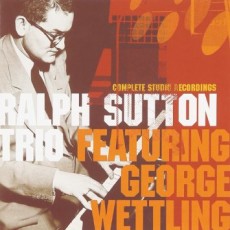
Ralph Earl Sutton was born November 4, 1922 in Hamburg, Missouri. He had a stint as a session musician playing stride piano with Jack Teagarden’s band before joining the US Army during World War II. After the war, he played at various venues in Missouri, eventually ending up at Eddie Condon’s club in Greenwich Village.
In 1956, Ralph relocated to San Francisco, California, where he recorded several albums with Bob Scobey’s Dixieland band. From the 1960s onward, he worked mostly on his own. However, when the World’s Greatest Jazz Band was established in 1968, he was the natural choice for piano. He left that band in 1974 due to the extensive travel involved, and joined an old sidekick, Peanuts Hucko in a quartet in Denver, near his home in Evergreen, Colorado.
He recorded with Ruby Braff, Dick Cary, Kenny Davern, Jay McShann and Johnny Varro. Stride pianist Ralph Sutton, who played in the tradition of James P. Johnson and Fats Waller, passed away on December 30, 2001 of a stroke in Evergreen, Colorado at the age of 79.

Take A Dose On The Road
More Posts: piano
Daily Dose Of Jazz…
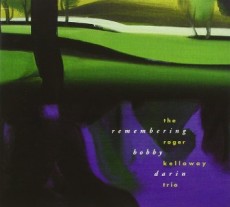
Roger Kellaway was born November 1, 1939 in Waban, Massachusetts. He matriculated through the New England Conservatory and one of his earliest mentors was piano teacher and director of the summer music camp Encore in Marblehead, Massachusetts.
In 1964 Kellaway was a piano sideman for bandleader-producer Boris Midney’s group The Russian Jazz Quartet’s album Happiness on the ABC/Impulse jazz records label. He has written and played the closing theme, Remembering You for the TV sitcom All In The Family and its spinoff Archie Bunker’s Place.
Roger has composed commissioned works for orchestra and jazz big band as well as for film, television, ballet and stage productions. He has served as band leader and pianist for Van Morrison’s Astral Weeks Live at the Hollywood Bowl concerts, been nominated for an Oscar for Best Adaptation Score for the 1976 film A Star Is Born, and a Grammy Award for Best Instrumental Arrangement for Eddie Daniels’ album Memos From Paradise.
He has played with Grady Tate, Jay Berliner, Igor Berukshtis, George Ricci, Ruby Braff, Chuck Domanico, Emil Richards, Edgar Lustgarten, Joe Pass, Red Mitchell, Gene Bertoncini, Jan Allan and Michael Moore among others. He has more than a dozen albums as a leader, and has arranged for Carmen McRae, Diane Schuur, Liza Minelli, Robben Ford, Gary Lemel, Kenny Burrell, J. J. Johnson, Kai Winding, Herbie Mann, Mark Murphy, Oliver Nelson, Clark Terry, Lalo Schifrin, Sonny Rollins, Sonny Stitt, Ben Webster and Jimmy Witherspoon. Pianist Roger Kellaway continues to perform, compose, arrange and record.
Jazz Is Global – Share
More Posts: piano
Daily Dose Of Jazz…
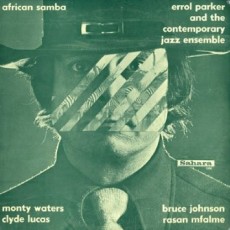
Errol Parker was born Raphaël Schecroun on October 30,1925 in Oran, French Algeria. In 1964, Parker composed the song Lorre, which became a hit in France, and opened his own jazz club called Le Ladybird on Rue de la Huchette.
Following a serious car accident which impaired Parker’s piano playing, he emigrated to New York, where his daughter Elodie Lauten was to begin university in February 1968. It was in America that he started a second career as a record producer, but unable to find a suitable drummer, he started to perform as a jazz drummer, which was not affected by his shoulder injury.
Pianist, composer, record producer and drummer Errol Parker, who played and recorded as a leader and with Django Reinhardt, James Moody, Don Byas and Kenny Clarke among others, passed away of liver cancer at the age of 72 on July 2, 1998 in New York City.
Inspire A Young Mind
Daily Dose Of Jazz…
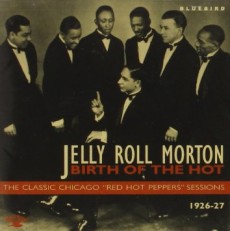
Jelly Roll Morton was born Ferdinand Joseph LaMothe on October 20, 1890 into a common-law creole of color family in the Faubourg Marigny neighborhood of downtown New Orleans, Louisiana. He started playing music as a child, showing early talent. After his parents separated, his mother married a man named Mouton and anglicizing it changed it to Morton.
At the age of fourteen, Morton began working as a piano player in a Storyville brothel, then known as a sporting house. In that atmosphere he often sang smutty lyrics and it was there he took the nickname “Jelly Roll”, which was African American slang for female genitalia. While working there, he was living with his religious, church-going great-grandmother; he had her convinced that he worked as a night watchman in a barrel factory. After Morton’s grandmother found out that he was playing jazz in a local brothel, she kicked him out of her house. However, Tony Jackson, also a pianist at brothels and an accomplished guitar player, was a major influence on his music.
Around 1904, Jelly Roll started touring in the American South, working with minstrel show, gambling and composing. He moved to Chicago in 1910 and New York City the following year where future stride greats James P. Johnson and Willie “The Lion” Smith caught his act, years before the blues were widely played in the North. His works Jelly Roll Blues, composed in 1915, has arguably become the first jazz song ever published. New Orleans Blues, Frog-I-More Rag, Animus Dance and King Porter Stomp followed as they were composed during this period. In 1917, he followed bandleader William Manuel Johnson Johnson’s sister Anita Gonzalez to California, where his tango The Crave, made a sensation in Hollywood. Returned to Chicago in 1923 to claim authorship of his recently published rag, “The Wolverines”, which had become a hit as “Wolverine Blues” in the Windy City. He released the first of his commercial recordings, first as piano rolls, then on record, both as a piano soloist and with various jazz bands.
In 1926, Morton succeeded in getting a contract to record for the largest and most prestigious company in the United States, Victor. This gave him a chance to bring a well-rehearsed band to play his arrangements. These recordings by Jelly Roll Morton & His Red Hot Peppers are regarded as classics of 1920s jazz. They featured Kid Ory, Omer Simeon, George Mitchell, Johnny St. Cyr, Barney Bigard, Johnny Dodds, Baby Dodds and Andrew Hilaire. And the group became one of the first acts to be booked on tour by MCA. Moving to New York City in 1928 he continued to compose and record for Victor with the aforementioned in addition to George Baquet, Albert Nicholas, Wilton Crawley, Russell Procope, Lorenzo Tio, Artie Shaw, Bubber Miley, Johnny Dunn, Henry “Red” Allen, Sidney Bechet,, Paul Barnes and Bud Freeman, Pops Foster, Paul Barbarin, Cozy Cole and Zutty Singleton.
During the Great Depression Morton lost his contract with Victor, struggled financially and took a job with a traveling burlesque show for steady income. In 1935, his 30-year-old composition King Porter Stomp arranged by Fletcher Henderson became Benny Goodman’s first hit and swing standard but Jelly Roll received no royalties from its recordings.
A move to Washington, DC saw him becoming the manager, piano player, master of ceremonies, bouncer and bartender of a bar located at 1211 U Street in the NW Black section of town called Shaw. Unable to make it a success due to the owner’s bad business decisions and being stabbed by a friend of the owner, Morton’s wife demanded they leave DC. Before his departure folklorist Alan Lomax invited him to record music and interviews at the Library of Congress, which ended after eight hours, though Lomax conducted longer interviews but only to notes without recording.
When Morton was stabbed and wounded, a nearby whites-only hospital refused to treat him, as the city had racially segregated facilities. Transported to a black hospital farther away it was several hours before being attended to and his recovery suffered, often he became short of breath. Worsening asthma sent him to a New York hospital for three months at one point and although he continued to suffer from respiratory problems when visiting Los Angeles, California with manuscripts of new tunes and arrangements, planning to form a new band and restart his career, pianist and composer Jelly Roll Morton passed away on July 10, 1941, after an eleven-day stay in Los Angeles County General Hospital. He was inducted into the Rock and Roll Hall of Fame, the Louisiana Hall of Fame and is a charter member of the Gennett Records Walk of Fame.
Dose A Day – Blues Away
More Posts: piano
Daily Dose Of Jazz…
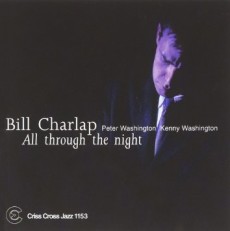
Bill Charlap was born William Morrison Charlap on October 15, 1966 in New York City surrounded by a musical family. His mother was a singer, his father a Broadway composer and his distant cousin was pianist Dick Hyman. He began playing piano at age three and later studied classical music but he has remained most interested in jazz.
Charlap and his mother recorded two duet albums, Love Is Here To Stay and Something To Remember. He’ recorded seven albums as a leader or co-leader for the Blue Note label, including two Grammy nominated CDs: Somewhere, featuring the music of Leonard Bernstein and The Bill Charlap Trio, Live At The Village Vanguard. For Venus Records, the Japanese label, he has recorded two albums as a leader, as well as eight albums as a member of the New York Trio.
He has worked with Gerry Mulligan, Benny Carter, Tony Bennett, Phil Woods, Scott Hamilton Harry Allen, Ruby Braff, Brian Lynch, Warren Vache and numerous others. By the mid-90s, Bill became the musical director of Midnight in the Garden of Good and Evil, A Celebration of Johnny Mercer, part of New York’s JVC Jazz Festival. In 1995 he joined the Phil Woods Quintet.
In 2008, he became part of The Blue Note 7, honoring the 70th anniversary of the label and playing the music of various artists from the label. He has recorded Double Portrait, a piano duets album with his wife Renee Rosnes. Pianist Bill Charlap regularly plays with his trio comprised of bassist Peter Washington and drummer Kenny Washington.
Give A Gift Of Jazz – Share
More Posts: piano