

Daily Dose Of Jazz…
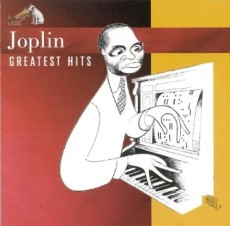
Scott Joplin was November 24, 1867 or 1868 in Northeast Texas into a musical family of railway laborers and developed his musical knowledge with the help of local teachers. Growing up in Texarkana, he formed a vocal quartet, and taught mandolin and guitar. During the late 1880s he left his job as a laborer with the railroad, and travelled around the Southern states as an itinerant musician.
By 1893 he was in Chicago, Illinois for the World’s Fair and played a major part in making ragtime a national craze by 1897. Joplin moved to Sedalia, Missouri in 1894, earned a living as a piano teacher and taught future ragtime composers Arthur Marshall, Scott Hayden and Brun Campbell. He began publishing music in 1895, and publication of his “Maple Leaf Rag” in 1899 brought him fame. This piece had a profound influence on subsequent writers of ragtime and brought the composer a steady income for life. Though he never reached this level of success again, he would frequently have financial problems, causing him to lose a be forever lost, the score to his first opera A Guest of Honor for non-payment of bills.
Joplin moved to St. Louis in 1901, continued composing and publishing music, and regularly performed in the St. Louis community. In 1907, a move to New York City had him searching for a producer for a new opera, Treemonisha, which, went beyond the limitations of his then famous music and was not well received when partially staged in 1915.
In 1916 he descended into dementia as a result of syphilis. He was admitted to a mental institution in January 1917, and died there three months later on April 1st at the age of 49. Scott Joplin death is widely considered to mark the end of ragtime as a mainstream music format, and in the next several years it evolved with other styles into stride, jazz and eventually big band swing. His music was rediscovered and returned to popularity in the early 1970s with the release of a million-selling album recorded by Joshua Rifkin. Several of his compositions including The Entertainer were featured in the Academy Award winning 1973 movie The Sting, and his opera Treemonisha was finally produced in full to wide acclaim in 1972. In 1976, Joplin was posthumously awarded a Pulitzer Prize. During his lifetime her composed 44 original ragtime pieces, one ragtime ballet and two operas.

Give The Gift Of Knowledge
More Posts: piano
Daily Dose Of Jazz…
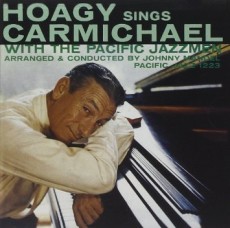
Hoagy Carmichael was born Howard Hoagland Carmichael on November 22, 1899 in Bloomington, Indiana. He was named Hoagland after a circus troupe “The Hoaglands” who stayed at the Carmichael house during his mother’s pregnancy. His mother was a versatile pianist who played accompaniment at silent movies and for parties and by age six, he started to sing and play the piano, easily absorbing his mother’s keyboard skills.
Never having formal piano lessons by high school, the piano was the focus of his after-school life, and for inspiration he would listen to ragtime pianists Hank Wells and Hube Hanna. By eighteen he was living in Indianapolis, working in manual jobs in construction, a bicycle chain factory, and a slaughterhouse to help out the family’s income. During this period he befriended the Black bandleader and jazz pianist Reg DuValle, the elder statesman of Indiana and Rhythm King, who taught his jazz improvisation.
Carmichael went on to attend Indiana University and Indiana University School of Law graduating with a bachelor degree and law degree, respectively. He played with Bix Beiderbecke who introduced him to future collaborator, Louis Armstrong.
He began to compose song like Washboard Blues, Boneyard Shuffle and Riverboat Shuffle. In 1927 Hoagy composed and recorded Stardust, one of his most famous songs. His first major song with his own lyrics was Rockin’ Chair recorded by Armstrong and Mildred Bailey. He recorded it himself in 1930 with Beiderbecke, Bubber Miley, Benny Goodman, Tommy Dorsey, Bud Freeman, Eddie Lang, Joe Venuti and Gene Krupa.
He would go on to team up with Johnny Mercer and Frank Loesser, composing Georgia On My Mind, Up A Lazy River, In The Still Of The Night, Skylark, I Get Along Without You Very Well, The Nearness Of You and Baltimore Oriole among some many other jazz standards.
With his financial and social condition improved dramatically he began hobnobbing with George Gershwin, Fred Astaire, Duke Ellington and other music giants in the New York scene. He appeared in fourteen films, always performing one of his songs, appeared in numerous television roles, hosted musical variety radio and television programs, received Academy Awards for Best Original Song, was awarded an honorary doctorate in music by Indiana University, inducted into the Gennett Records Walk of Fame, recorded with Annie Ross and Georgie Fame, and penned two autobiographies.
Composer, pianist, singer, songwriter and actor, Hoagy Carmichael, passed away of heart failure in Rancho Mirage, California on December 27, 1981.
Jazz Is Global – Share
Daily Dose Of Jazz…
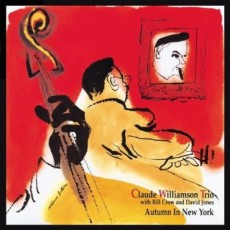
Claude Berkeley Williamson was born November 18, 1926 Brattleboro, Vermont. He studied piano at the New England Conservatory of Music before moving to jazz, influenced mainly by Teddy Wilson, then by Al Haig and Bud Powell.
Moving to California in 1947 he first worked with Teddy Edwards, then with Red Norvo in San Francisco followed by Charlie Barnet in 1949 and June Christy two years later. He would go on to work with Max Roach, Art Pepper, Chet Baker, Maynard Ferguson, Barney Kessel, Dizzy Reece, Ted Curson and others.
Williamson was a longtime member of the Lighthouse All-Stars, often substituting for Russ Freeman, and performing with Bud Shank, Stan Levey, Bob Cooper, Conte Candoli and Howard Rumsey. By 1956 he was the piano player in the Bud Shank Quartet and a little over a decade later he was the pianist for NBC on The Andy Williams Show and then for Sonny and Cher.
In 1978 he went back to the jazz world and released many albums, mainly for Japanese labels, often accompanied by Sam Jones and Roy Haynes. In 1995 he made a trio recording for Fresh Sound Records at the Jazz Bakery and at the age of 88, pianist Claude Williamson currently plays clubs in Los Angeles.
Take A Dose On The Road
More Posts: piano
Daily Dose Of Jazz…
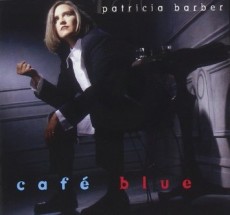
Patricia Barber was born on November 8, 1955 in Chicago, Illinois to professional musician parents and raised in South Sioux City, Iowa. She began playing classical piano at age six and by the time she graduated high school jazz was completely in her blood.
She enrolled in the University of Iowa with a double major of classical music and psychology but the jazz voice in her head grew louder. In 1984 she returned to Chicago and landed a five night week gig at the Gold Star Sandine Bar and since the mid-90s performs regularly at the Green Mill.
Starting her professional career as a pianist, as Barber’s stock rose, she then began to add vocals to her repertoire, centered in a fairly low register and a traditional blues-jazz style. Mixing original compositions and standards with classic rock covers, she has recorded and released a dozen compact discs, including a three CD box set covering her 1994-2007 years. She has released a classic Cole Porter collection of his songbook in her unique way of interpretation.
Vocalist, pianist and songwriter Patricia Barber has been awarded a Guggenheim Fellowship and teaches master classes worldwide in between her performing, touring and recording.
Jazz Is Global – Share
Daily Dose Of Jazz…
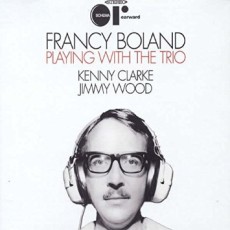
François Boland was born on November 6, 1929 in Namur, Belgium. He was classically trained on piano and first gained notice in 1949 working with Belgian jazz greats like Bobby Jaspar and in 1955 he joined Chet Baker’s quintet.
A move to the United States saw Boland arranging for Count Basie, Benny Goodman, Woody Herman and Dizzy Gillespie. He formed an octet with drummer Kenny Clarke before returning to Europe and becoming Kurt Edelhagen’s chief arranger. In 1961, building from a rhythm section featuring Clarke, Jimmy Woods and himself, he founded the Kenny Clarke Francy Boland Big Band, which rapidly became one of the most noted big bands assembled outside the United States.
Some of band’s collaborators and members over the years included Johnny griffin, Art Farmer, Phil Woods, Ake Persson, Dusko Goykovich, Eddie “Lockjaw” Davis, Muvaffak “Maffy” Falay, Idrees Sulieman, Herb Geller, Benny Bailey and Jimmy Wooden, among others.
After the band broke up in 1972 he concentrated on composing. From 1976 on Francy lived in Europe, primarily Switzerland, arranging music for Sarah Vaughan and others. He was a part of One World, One Peace, an effort that involved Pope John Paul II.
Belgian jazz composer and pianist Francy Boland passed away in Geneva, Switzerland on August 12, 2005.
Inspire A Young Mind
More Posts: piano