

Daily Dose Of Jazz…
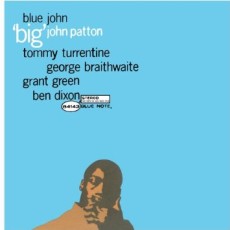
Big John Patton was born on July 12, 1935 in Kansas City, Missouri. His mother, a church pianist, taught him how to play the fundamentals. When he was about 13 years old, in 1948, he began to teach himself. He was inspired by the music he heard in Kansas City, but he wanted to play beyond his hometown jazz scene.
In 1954 after high school, he headed east and found professional work in Washington D.C., he found out that R&B star Lloyd Price was playing at the Howard Theater, that he had just fired his pianist and needed a new player. John played a few bars from the introduction to “Lawdy, Miss Clawdy” and was given the job.
It was a five-year relationship that gave him an education he couldn’t have gotten elsewhere. He was Lloyd’s “straw boss” and the leader, he recruited top players including drummer Ben Dixon, who encourage him to check out the Hammond B-3 organ when they played in clubs that had one. A man called Butts first showed Patton how to set up the organ and find the right registrations. When he moved to New York in late 1959, it was his friend Herman Green who played with Lionel Hampton who helped him learn how to play it.
That same year Big John formed his own Hammond organ trio. Blue Note artist Ike Quebec became his mentor, introducing him into Blue Note and to one of the most important relationships in his career, with guitarist Grant Green. He went on to work as a sideman for Lou Donaldson for three and a half years. During the 1960s he became one of the most recognizable figures on the jazz scene and was a driving force of the sound of electric organ.
Over the years he recorded for Blue Note with Harold Alexander, George Coleman, George Braith, Don Wilkerson, Clifford Jordan, Harold Vick, Johnny Griffin, Grachan Moncur III, Ron Carter, Black Star, James “Blood” Ulmer, John Gilmore, John Zorn, Jimmy Ponder, Johnny Lytle, Red Holloway, Art Blakey and Marshall Allen to name a few.
Patton’s style has been resistant to imitation because of its space and economy, often being called minimalist. But he claimed that he emulated the sounds of his favorite trumpet and reed players. By the time the Acid Jazz movement emerged in the 1980s there was a resurgence in interest in his music in the UK and he made several trips to England where he was embraced by the Acid Jazz community.
Patton continued recording until the late Nineties and he developed a loyal following in both Japan and Europe, both of which he toured in addition to his dates in the United States. He recorded as a part of the Red Hot Organization’s compilation album Red Hot + Indigo in tribute to Duke Ellington. He recorded 16 albums as a leader and another twenty-six as a sideman.
Pianist and organist Big John Patton, a major figure in the development of the funk and blues rooted jazz known as soul jazz and considered the inspiration for the Acid Jazz movement, passed away from complications arising from diabetes in Montclair, New Jersey on March 19, 2002.

Put A Dose In Your Pocket
Daily Dose Of Jazz…
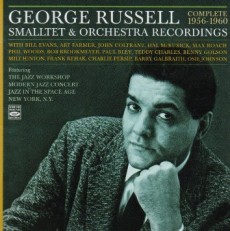
George Allen Russell was born on June 23, 1923 in Cincinnati, Ohio, the adopted only child of a nurse and a chef on the B & O Railroad. He sang in the choir of the African Methodist Episcopal Church and listened to the Kentucky Riverboat music of Fate Marable and made his stage debut at age seven, singing “Moon Over Miami” with Fats Waller.
Surrounded by the music of the black church and the big bands played on the Ohio Riverboats, he started playing drums with the Boy Scouts and Bugle Corps, receiving a scholarship to Wilberforce University. There he joined the Collegians, a band noted as a breeding ground for great jazz musicians including Ben Webster, Coleman Hawkins, Charles Freeman, Frank Foster and Benny Carter. He was a member noted jazz composer, Ernie Wilkins. When called up for the draft at the beginning of WWII he was hospitalized with tuberculosis where he was taught the fundamentals of music theory by a fellow patient.
Following his release from the hospital, he played drums with Benny Carter’s band, but after hearing Max Roach decided to give up drumming as a vocation. Inspired by hearing Thelonious Monk’s Round Midnight, George moved to New York in the early Forties and became a member of a coterie of young innovators who frequented the 55th Street apartment of Gil Evans. This clique included Miles Davis, Charlie Parker, Gerry Mulligan and John Lewis.
Back to the hospital in 1945 for 16 months with another bout of tuberculosis Russell worked out the basic tenets of what was to become his Lydian Chromatic Concept of Tonal Organization. This was his theory encompassing all of equal-tempered music which has been influential well beyond the boundaries of jazz. At that time, Russell’s ideas were a crucial step into the modal music of John Coltrane and Miles Davis on his classic recording, Kind Of Blue, and served as a beacon for other modernists such as Eric Dolphy and Art Farmer.
George would go on to compose Cubano Be,Cubano Bop for the Dizzy Gillespie Orchestra, becoming the pioneering experiment of fusing bebop and Cuban jazz elements. The following year he composed A Bird In Igor’s Yard in tribute to Charlie Parker and Igor Stravinsky and recorded at a session led by Buddy DeFranco. He would start playingpiano and go on to work with Artie Shaw, Bill Evans, Art Farmer, Hal McCusick, Barry Galbraith, Milt Hinton, Paul Motian, Paul Bley, Jon Hendricks, Bob Brookmeyer, Steve Swallow, Dave Baker, Eric Dolphy, Sheila Jordan, Tom Harrell, Ray Anderson and numerous and others.
Russell recorded his debut album as a leader, Jazz Workshop, playing very little but masterminding the events of the session in the same vein as Gil Evans. He was to record a number of impressive albums over the next several years, sometimes as primary pianist.
Over the course of his career he would be commissioned to compose a piece for Brandeis University and Swedish Radio for the Radio Orchestra, tour Europe, live in Scandinavia, assume the presidency of the New England Conservatory of Music and was appointed to teach the Lydian Concept in the newly created jazz studies department. He continued to compose major orchestral and chorus works, earned two Grammy nominations for his 45-minute opus The African Game, and toured with a group of American and British musicians, resulting in The International Living Time Orchestra, a group comprised of Dave Bargeron, Steve Lodder, Tiger Okoshi, Brad Hatfield, and Andy Sheppard, who still tour and perform today.
He received a MacArthur Foundation Genius Grant, NEA American Jazz Master Award, two Guggenheim Fellowships and a British Jazz Award. He taught throughout the world, and was a guest conductor for German, Italian, Danish, Finnish, Norwegian, and Swedish radio groups. Pianist, composer, arranger and theorist George Russell died of complications from Alzheimer Disease in Boston, Massachusetts on July 27, 2009.
Give The Gift Of Knowledge
More Posts: piano

Daily Dose Of Jazz…
Pepsi Auer was born Josef Auer on June 14, 1928 in Munich, Germany. He first played accordion in a youth orchestra, then he taught himself to play the vibraphone in 1936. A move to America in 1945 saw him performing in jazz clubs and by 1949 he moved to the piano. He would go on to work in the combo of Freddy Christmann in 1954, ultimately taking leadership two years later.
Pepsi worked with Freddie Brocksieper in 1958, the German All Stars in ’58, worked and toured from 1958 to 1960 with Albert Mangelsdorff jazz ensemble and then with Kurt Edelhagen. By the Sixties his style of approach mimicked Bud Powel and Horace Silver and in 1962 he worked in the Bayerischen Rundfunks.
Auer accompanied Stan Getz, Eric Dolphy and Benny Bailey on their tours of Germany, as well as with Miriam Klein. He would team up once again with Freddie Brocksieper from 1955-1964 and participate in recording sessions as well as with the German All Stars. From the mid-1960s he worked as a studio musician and increasingly composed music for television such as “A Summer With Nicole”.
In 1967 he took part in the Montreux Jazz Festival as a member of the Jazz Orchestra of the Bayerischer Rundfunk, where he and Don Manza were co-leaders. Pianist, vibraphonist and composer Pepsi Auer passed away on March 29, 2013.
Jazz Is Global – Share
More Posts: piano,vibraphone
Daily Dose Of Jazz…
Eddie Beal was born June 13, 1910 in Redlands, California. He started on drums but switched to piano in his teens. Early in the 1930s he worked in the orchestras of Earl Dancer and Charlie Echols and 1933 to 1936 he toured China with Buck Clayton. Following that stint he freelanced in California with Maxine Sullivan and others until 1941.
After military service from 1941–43, Beal accompanied Ivie Anderson and then led his own trio accompanying Billie Holiday at one point. He also worked in the Spirits of Rhythm. As a composer, he penned the tunes “Softly” (covered by Holliday) and “Bye and Bye”, a hit for The Turbans. He plays on the soundtrack to the 1951 film The Strip, he also makes an appearance in the film.
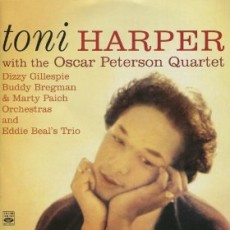
His later recording credits included but not limited to work with Toni Harper, Jimmy Mundy, Herb Jeffries, Helen Humes and Red Callender. He led his own group in Las Vegas, Nevada in 1973-74, and in 1974-75 he played with Tommy Dorsey.
Pianist Eddie Beal passed away on December 15, 1984 in Los Angeles, California.
Give A Gift Of Jazz – Share
More Posts: piano
Daily Dose Of Jazz…
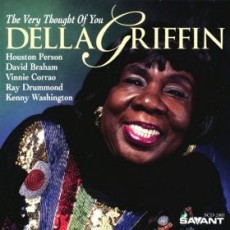
Della Griffin was born June 12, 1925 in Newberry, South Carolina but grew up in New York, the 19th of 20th children. She greatly admired and was influenced by Count Basie, Charlie Barnet, and most specifically Billie Holiday. She began singing when she was 12 and a few years after her graduation in 1943 from Jamaica High School in Queens, New York, she began singing professionally.
1950 found Griffin and Frances Kelley forming one of the first all female R&B singing group that played in small clubs whenever they could for about a year. In 1951, Della invited Jerry Blaine, the owner of Jubilee Records, to hear the group perform. So impressed by the group that he signed them the next day and in January 1952 Jubilee released “The Enchanters” first record, they began touring, dropped their second record and two members left the group.
Della and Kelley were determined to continue their careers and replaced the two members becoming the “Dell-Tones” after lead singer and drummer Della. They went on to record with Brunswick and Rainbow record labels, and toured with Jimmy Forrest. By 1957 the Dell-Tones slowly began to drift apart and Della left to perform on her own.
Over the years Griffin migrated towards jazz touring with and playing in support to many artists including Sonny Stitt, Benny Green, Illinois Jacquet, and Etta Jones. She began performing again in New York City clubs including the Blue Note and The Blue Book where she stayed for years.
In 1984, Della was hit by a car and took a break from singing. She came back as a featured singer that garnered her more attention than her drumming. Recording with Houston Person, she began performing overseas at age 88, she has since all but ceased her performances and appearances. While singing remained her passion, vocalist Della Griffin, who was also proficient on the drums, alto saxophone, and piano, transitioned in New York City on August 9, 2022, at the age of 100..
Inspire A Young Mind