

Daily Dose Of Jazz…
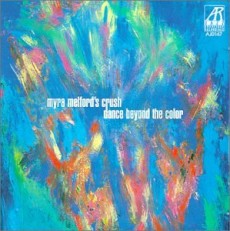
Myra Melford, born on January 5, 1957 in Evanston, Illinois is an avant-garde and post bop jazz pianist and composer. Raised in a house designed by Frank Lloyd Wright, at 3 she started playing the piano on her own, climbing onto the piano bench and improvising. She began taking lessons when she was in kindergarten and developed a strong relationship with her teacher, classically trained boogie-woogie player Erwin Helfer. He introduced her to classical composers such as Bach before moving on to contemporary composers, such as Bartok. He would later teach her to play the blues.
High school saw Myra attending Northwestern University extension program, enrolling in Evergreen State College in Olympia, Washington and studying environmental science. Although she wasn’t listening to jazz she knew it involved improvisation and a sign in a local restaurant for jazz piano lessons sparked her interest in music again. Shortly thereafter she changed her major to music and in 1980 attended Cornish College of the Arts under the tutelage of Art Lande and Gary Peacock.
While living in Olympia, Melford met prominent avant-garde musicians including Oliver Lake, Anthony Braxton Marty Ehrlich and Leroy Jenkins, whose performance with Amina Claudia Myers and Pharaoh Sanders intensified her commitment to improvisation.
A move in 1984 landed Medford in New York City where she studied composition with saxophonist Henry Threadgill, also studied privately with pianists Jaki Byard and Don Pullen, performed with Threadgill Jenkins and Butch Morris. In the late 80s she performed and recorded with flutist Marion Brandis, forming a trio and accelerating her career in the 90s as part of the first Knitting Factory tour of Europe. She recorded three albums with Lindsay Horner and Reggie Nicholson – Jump, Now & Now, and Alive in the House of Saints.
Later in the 90s, Myra moved toward larger groupings with diverse instrumentation, added trumpeter Dave Douglas and reed player Marty Ehrlich and created a quintet, the Myra Melford Extended Ensemble. She also formed a second five-piece, the Same River, and the self-titled debut album was released on Gramavision in 1996, followed by 1999’s Above Blue on Arabesque. She has performed with the Art Ensemble of Chicago, and with Equal Interest, playing harmonium instead of piano.
Since 2000, Melford has formed and recorded as a trio, spent time in India studying harmonium, formed another ensemble to present her Indian studies, relocated to Berkeley, California accepting a professorship at UC Berkeley in contemporary improvisation. She formed Trio M and released another debut album in 2007 followed by a sophomore project in 2012
Myra has received a Guggenheim Fellowship, Doris Duke Charitable Foundation’s Performing Artist Award, and Alpert Award in the Arts for Music, Jazz Journalist Association Pianist and Composer of the Year among others and has a small but impressive catalogue of eight albums and continues to perform, record and educate.

Inspire A Young Mind
Daily Dose Of Jazz…
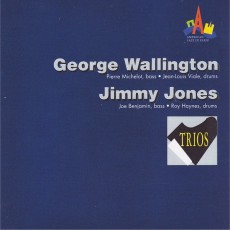
Jimmy Jones was born James Henry Jones on December 30, 1918 in Memphis, Tennessee and learned guitar and piano as a child. By the late 1920 he was playing in various orchestras in Chicago and played a trio with Stuff Smith in the mid 40s.
Following this period Jones would play with Don Byas, Dizzy Gillespie, J.C. Heard, Buck Clayton, Etta Jones and Sarah Vaughan into the early Fifties. He recorded with Clifford Brown in 1954 and toured Europe. During the Sixties he would play with Anita O’Day, Helen Merrill, Gil Evans, Dakota Staton, Morgana King, Harry Belafonte, Johnny Hodges, Clark Terry, Duke Ellington, Kenny Burrell and Cannonball Adderley on the short list.
Jimmy had a prolific career also as an arranger, working with Wes Montgomery, Nancy Wilson, Shirley Horn, Joe Williams, Billy Taylor and Chris Connor and recorded with Harry “Sweets” Edison, Ben Webster, Coleman Hawkins, Frank Wess, Milt Jackson and others. His recording catalog was limited as a leader releasing two album for the Riverside label in 1946. Jimmy Jones passed away on April 29, 1982 in Los Angeles, California.
Take A Dose On The Road
More Posts: piano

Daily Dose Of Jazz…
Danilo Pérez was born on December 29, 1965 in Panama and started his musical training at 3 years old on bongos with his father Danilo Sr., a professional bandleader and singer. By age 10 he was studying the European Classical Piano repertoire at the National Conservatory in Panama, eventually transferring to the Berklee College of Music to study Jazz composition.
During the yeas 1985 to ’88 while at Berklee, Danilo played with Jon Hendricks, Terence Blanchard, Claudio Roditi and Paquito D’Rivera. He would go on to tour Poland in ’95 and play the Summer Olympics in Atlanta in ‘96 with Wynton Marsalis, be a part of the Grammy winning album Danzon, perform at President Clinton’s Inaugural Ball and played piano on the Bill Cosby theme song.
Perez has had the fortune to play and record with such luminaries as Charlie Haden, Michael Brecker, Jack DeJohnette, Dizzy Gillespie, Tito Puente, Joe Lovano, Gary Burton, Wayne Shorter, Tom Harrell, Roy Haynes, Steve Lacy and many others.
Pianist and composer Danilo Perez, whose primary influence of style and thought was Dizzy Gillespie, but as a child gleaned from the recordings the styles of Gershwin, Ellington, Coltrane and Monk. He has recorded over a dozen albums, served as a professor at the New England Conservatory of Music, and serves as the artistic director of the Berklee College of Music Global Jazz Institute.
Dose A Day – Blues Away
More Posts: piano
Daily Dose Of Jazz…
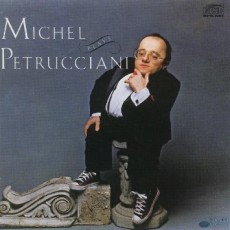
Michel Petrucciani was born on December 28 1962 in Orange, Vaucluse, France into a musical family with father playing guitar and brothers playing bass and guitar. He came into the world with a genetic disease that caused brittle bones and short stature. Due to this illness, throughout his career Michel was often carried to and from the piano when he performed.
Enthusiastic of Duke Ellington, his desire to be a pianist was driven by his main interest in jazz but trained for years as a classical musician giving his first professional concert at the age of 13. By the age of 18 he was part of a successful trio and in 1982 he moved to the US where he successfully encouraged Charles Lloyd to resume playing actively. Three years later, on February 22, 1985, with Petrucciani cradled in his arms, Lloyd walked onto the stage at Town Hall in New York City and sat him on his piano stool for what would be an historic evening in jazz history: the filming of One Night with Blue Note.
The following year Petrucciani recorded a live album with Wayne Shorter and Jim Hall and throughout his career has played with other greats like Dizzy Gillespie, Stephane Grappelli, Joe Lovano, Stanley Clark, Lenny White, Gil Goldstein and many others. He has recorded over thirty albums, wrote a biography, has a mosaic in the 18th district of Paris and in 1994 was granted a Legion d’honneur.
Michel Petrucciani, whose style is reminiscent of Bill Evans and Keith Jarrett, died on January 6, 1999 from a pulmonary infection, nine days after his 36th birthday. He was posthumously honored in 2009 with a special broadcast event on the French music channel Mezzo.
Inspire A Young Mind
More Posts: piano
Daily Dose Of Jazz…
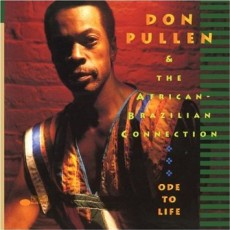
Don Pullen was born on December 25, 1941 and was raised outside Roanoke, Virginia and learned to play the piano at an early age. He played with the choir in his local church, was heavily influenced by his jazz pianist cousin, Clyde “Fats” Wright and took some lessons in classical piano. He knew little of jazz, concentrating mainly on church music and the blues.
Leaving Roanoke for Johnson C. Smith University in North Carolina to study for a medical career, Pullen soon realized that his true vocation was music. After playing with local musicians and being exposed for the first time to albums of the major jazz musicians and composers he abandoned medical studies for music.
By 1964 he was in Chicago with Muhal Richard Abrams, then moved to New York City and immersed in the avant-garde recording with Giuseppi Logan. Along with band mate Milford Graves formed a duo, started a small label and recorded his first sessions that did great in Europe. He turned to more profitable organ and during the 60’s and 70s played trio dates and backed such vocalists as Arthur Prysock, Irene Reid, Ruth Brown, Jimmy Rushing and Nina Simone. He held a brief position with Art Blakey and the Jazz Messengers in 1972.
Over the course of his career he would play with Charles Mingus, lead his own groups, form the George Adams/Don Pullen Quartet, put together the African Brazilian Connection, worked with Native American drummers and choir, and played with Nilson Matta, Carlos Ward, Gary Peacock, Tony Williams, Hamiet Bluiett, Bill Cosby, Jack Walrath, Maceo Parker, Roy Brooks, Jane Bunnett and David Murray among others.
Don Pullen jazz pianist, organist and composer of blues to bebop, who recorded over 30 albums as a leader and more than three dozen as a sideman, passed away of lymphoma on April 22, 1995.
Put A Dose In Your Pocket