

Daily Dose Of Jazz…
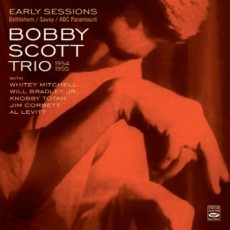
Bobby Scott was born Robert William Scott on January 29, 1937 in Mount Pleasant, New York and began his studies at the La Follette School of Music under Edvard Moritz at age 8, and by 11 was working professionally. He became a pianist, vibraphonist and singer, but could also play the accordion, cello, clarinet and double bass.
In 1952 he began touring with Louis Prima, and also performed with Gene Krupa and Tony Scott in the 1950s. In 1956 he hit the U.S. Billboard Hot 100 with the song “Chain Gang”, peaking at #13. (not the same Sam Cooke song) It sold over one million copies, and was awarded a gold disc.
As a bandleader, he recorded sessions for Verve, ABC-Paramount, Bethlehem and Musicmasters. Booby won a Grammy Award for Best Instrumental Composition for the song “A Taste of Honey”, and co-wrote the song “He Ain’t Heavy, He’s My Brother”.
In the 1960s he became a music teacher and studied again under Moritz, but occasionally recorded as well, including a Nat King Cole tribute album released in the 1980s. He also arranged for jazz and easy listening musicians.
Musician, songwriter and record producer Bobby Scott died of lung cancer on November 5, 1990, at the age of 53. He left a catalogue of twenty-seven recordings from 1953 to 1990 that include performing on soundtracks such as The Pawnbroker, Joe, Slaves, In The Heat of the Night and The Color Purple.

Take A Dose On The Road
More Posts: piano,vibraphone,vocal
Daily Dose Of Jazz…
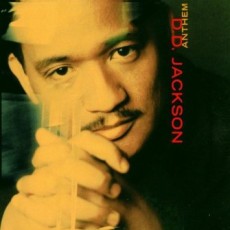
D.D. Jackson was born on January 25, 1967 in Ottawa, Canada. He started playing piano as a child, eventually graduating from the Manhattan School of Music. He would go on to become an alumnus of the Lehman Engel BMI Advanced Musical Theatre Workshop.
Jackson performs all over the world with his groups and has also appeared and recorded with some of the most distinguished names in jazz and beyond including: David Murray, Art Davis, Ray Drummond, James Spaulding, James Carter, Dewey Redman, Oliver Lake, Billy Bang, Regina Carter, Dafnis Preto, Cindy Blackman, Billy Hart, Andrew Cyrille, Mor Thiam, Mino Cinelu, Ahmir “Questlove” Thompson and others.
He is also an accomplished classical pianist, released a recording of Gershwin’s “Rhapsody in Blue”, he wrote a regular column “Living Jazz” for Downbeat magazine and the related “D.D. Jackson Living Jazz Podcast”.
Jackson is an alumnus of the Manhattan Producers Alliance, was a composers for The Wonder Pets and 3rd & Bird; scored the entire 26-episode season of The Ocean Room, won a Juno Award, is currently based in New York City teaching at Hunter College and the Harlem School of the Arts and has recorded twelve CDs as a leader and co-leader.
Jazz Is Global – Share
More Posts: piano
Daily Dose Of Jazz…
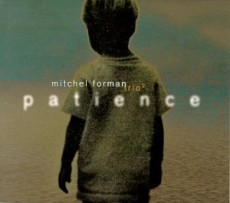
Mitchel Forman was born January 24, 1956 in Brooklyn, New York and began studying classical piano at the age of seven. At 17 he entered the Manhattan School of Music for three years of study and began working with bands in New York. Shortly after graduation he began touring and recording with Gerry Mulligan’s big band and quartet, followed by a stint with Stan Getz.
In 1980 Mitchel began a solo career with a piano performance at the Newport Jazz Festival and the subsequent recording became his first album, Live at Newport. He went on to work with Phil Woods, Carla Bley, Mel Torme and Astrud Gilberto; record for Soul Note Records and tour Europe regularly.
He joined guitarist John McLaughlin for a year and a half, recorded Mahavishnu and Adventures in Radioland. Then he joined Wayne Shorter and in between touring, contributed to and recorded Phantom Navigator.
In 1985, Forman began leading his own band and recorded his group debut for Magenta Records “Train of Thought”. At the same time he continued to work with other well-known jazz and music figures, including John Scofield, Mike Stern, Janis Siegel, Dave Samuels, Diane Schuur, Gary Burton, Pat Metheny, “Freddie Hubbard and numerous others.
Pianist Mitchel Forman continues to record and play under his own name and has recently started his own record label, Marsis Jazz. His move to California has him co-leading the band Metro with guitarist Chuck Loeb and performing around Los Angeles with his own bands.
Put A Dose In Your Pocket
More Posts: piano
Daily Dose Of Jazz…
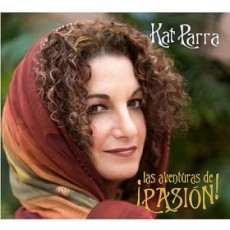
Kat Parra was born on January 13, 1962 in San Francisco, California and spent part of her teenage years in Chile. Upon her return, she move to southern California to attend University of California at Los Angeles where she studied classical flute and voice for a year. Moving to the Silicon Valley area she shifted her educational focus to jazz, studying voice at San Jose State University alongside singer Patti Cathcart of Tuck & Patti, who was a major influence.
Kat spent five years as a lead vocalist for the Bay area salsa band Charanga Nueve, and they opened for the likes of Celia Cruz and Los Van Van of Cuba. But despite all that musical activity, she still had a “day gig” working for the tech giant Cisco Systems. In 2006 she left Cisco to be a full-time singer and concentrate on music exclusively.
That very same year Parra recorded her first solo album, Birds In Flight produced by Bay Area-based trombonist Wayne Wallace on JazzMa Records. After that, she signed with Wallace’s indie label, Patois Records, releasing her second solo album, Azucar de Amor (Sugar of Love) in 2008.
Kat is a flexible and broad-minded jazz vocalist who has very strong Latin leanings but has also been affected by Middle Eastern, Arabic, and North African music as well as greatly influenced by Afro-Cuban jazz. She has also combined jazz with everything from Brazilian samba to Afro-Peruvian music. She plays flute, guitar, and piano, and continues to perform in several different languages, including English, Spanish (which she speaks fluently), Portuguese, French, and Ladino, which is the language of Sephardic Jews and is considered one of the romance languages.
Dose A Day – Blues Away

Daily Dose Of Jazz…
George Kahn was born on January 7, 1952 and grew up in New Rochelle, New York, studying classical music from the age of nine. He began composing while in high school and was always interested in improvisational music. As a Composition Major at Brandeis University, he studied the music of Charles Ives, John Cage and Karlheinz Stockhausen.
In his last years at Brandeis, being particularly affected by John Coltrane’s Kulu Se Mama, which opened his mind towards what was possible in music. After graduating, he lived on Cape Cod for a couple of years, did some gigs in Boston, toured the East Coast with a disco band and eventually moved to California in 1976.
Kahn worked in an improvising New Age group for a few years, studied arranging with Spud Murphy, and performed in a variety of settings. In the latter half of the 1990s he made his move, forming the Playing Music label and Sudhana Music Publishing. Since then he has released six CDs.
George performs frequently in the Los Angeles area, including an annual Jazz For The Homeless fundraiser for the charity PATH (People Assisting The Homeless) and benefits for public school music programs and looks forward to touring again in the near future.
Consistently creative, pianist George Kahn has received critical acclaim for his 2008 “Cover Up!” and continues to perform, subsequently releasing “Jazz & Blues Revue”, an 8–piece band with three vocalists in 2014.
Take A Dose On The Road
More Posts: piano