

Daily Dose Of Jazz…
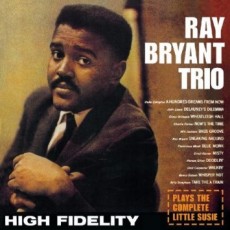
Ray Bryant was born Raphael Homer Bryant on December 24, 1931 in Philadelphia, Pennsylvania and began playing piano at age six. He played bass in junior High School. Turning professional before his age of maturity, he made a name for himself in his hometown playing a steady gig at the Blue Note Club.
From the late 1950s, he led a trio, performing throughout the world, and also worked solo. He recorded his first album with Betty Carter in 1955 titled “Meet Betty Carter and Ray Bryant” that marked his initial ascent. His first solo piano album “Alone With The Blues” in 1958 became the precursor to many more solo projects.
A noted jazz composer, with well-known themes such as “Cubano Chant,” “Monkey Business,” “Little Susie” and “The Madison Time,” the latter being resurrected in the 1988 movie Hairspray and subsequently used in the Broadway show.
Ray has performed and recorded with such players as Miles Davis, Sonny Rollins, Melba Liston, Coleman Hawkins, Charlie Parker, Carmen McRae and Aretha Franklin. Along with his brother Tommy and Oz Perkins he formed a trio as the back-up band in 1964 for the off-Broadway run of the comedy show Cambridge Circus starring John Cleese.
Ray Bryant, sensitive yet firm pianist who was comfortable with tonalities of gospel and blues and excelled as both sideman and leader passed away at age 79 on June 2, 2011.

Give The Gift Of Knowledge
More Posts: piano
Daily Dose Of Jazz…
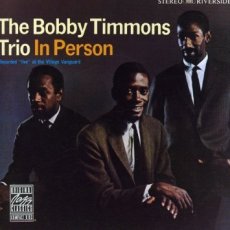
Bobby Timmons was born Robert Henry Timmons on December 19, 1935 in Philadelphia, Pennsylvania. Studying piano from the age of six by the age of 19 he was moving to New York, playing with the likes of Kenny Dorham’s Jazz Prophets, Chet Baker, Sonny Stitt and Maynard Ferguson. He became a member of Art Blakey’s Jazz Messengers from 58-59 touring Europe and became well known for his composition “Moanin”.
He joined Cannonball Adderley for a year, recorded two soul-jazz compositions that became hits “This Here” and “Dat Dere” and rejoined Blakey for a brief stint in the Sixties. Over the course of his career he recorded some 16 albums for Riverside, Milestone and Prestige record labels and recorded another twenty-three as a sideman with Art Blakey, Hank Mobley, Lee Morgan, Donald Byrd, Curtis Fuller, Nat Adderley, Kenny Burrell and the Young Lions.
However sophisticated and versatile a pianist he proved to be, Timmons’ success of his compositions, which have become jazz standards, could not compensate for his artistic frustrations and his battle with alcoholism. Pianist and composer Bobby Timmons passed away from cirrhosis at the age of 38 on March 1, 1974.
Jazz Is Global – Share
More Posts: piano,vibraphone
Daily Dose Of Jazz…
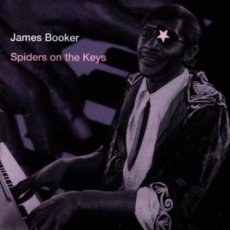
James Carroll Booker III was born on December 17, 1939 in New Orleans, Louisiana to piano playing Baptist ministers. He spent most of his childhood on the Mississippi Gulf Coast, where his father pastored and got a saxophone from his mother. However his interest lay stronger with the keyboard and he started playing organ in his father’s church.
Returning to New Orleans in his early teens, Booker attended the Xavier Academy Preparatory School, learning some elements of his keyboard style and playing Bach and Chopin among other classical composers, in addition to memorizing solos by Errol Garner and Liberace. He became a masterful interpreter of jazz and other pop music styles combining performance elements of stride, blues, gospel and Latin piano styles.
Booker made his recording debut in 1954 on the Imperial label, with “Doin’ the Hambone” and “Thinkin’ ‘Bout My Baby.” This led to some session work with Fats Domino, Smiley Lewis and Lloyd Price. In 1958, when just 18, James had the opportunity to play and astonish Arthur Rubenstein who revealed he could never play at that tempo. He would go on to matriculate through Southern University, record a few moderately successful singles, hit the Billboard charts, and venture into the drug world ultimately serving a brief sentence.
By the 70s he was recording for Paramount, then Island Records, performing at the Nice, Montreux and New Orleans Jazz & Heritage Festivals, touring Europe, house pianist at the Maple Leaf Bar, played and toured with Jerry Garcia, and his “Let’s Make A Better World” would be the last record produced in the former East Germany.
James Booker died on November 8, 1983, while seated in a wheelchair, waiting to be seen at the emergency room at New Orleans Charity Hospital. The cause of death was renal failure due to his life-long struggle with drug abuse and alcoholism.
Give The Gift Of Knowledge
Daily Dose Of Jazz…
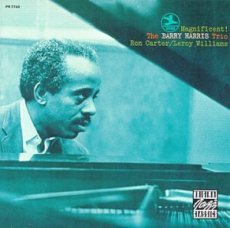
Barry Doyle Harris was born in Detroit, Michigan on December 15, 1929 and learned to play piano as a child. Mainly influenced by Art Tatum, Coleman Hawkins, Charlie Parker and Thelonious Monk, his playing style is similar to Bud Powell.
Moving to New York City in 1960, Harris played with Cannonball Adderley, Sonny Stitt, Coleman Hawkins, Illinois Jacquet, Dexter Gordon and Max Roach. During the 1970s, Harris lived with Monk and his family at the Weehawken, New Jersey home of the jazz patroness Baroness Pannonica de Koenigswarter. He performed piano duets with Tommy Flanagan in the 1989 Clint Eastwood documentary Thelonious Monk: Straight No Chaser and in 2000, he was profiled in the film Barry Harris – Spirit of Bebop.
As an educator Barry established the Jazz Cultural Theater teaching group music and piano lessons and hosting performances. Since 1991 he has collaborated with Toronto-based pianist and teacher Howard Rees in creating a series of videos and workbooks documenting his unique harmonic and improvisational systems and teaching process.
Barry Harris continues to perform and teach worldwide and holds weekly music workshop sessions in New York City for vocalists, students of piano and other instruments when not on the road.
Dose A Day – Blues Away
More Posts: piano
Daily Dose Of Jazz…
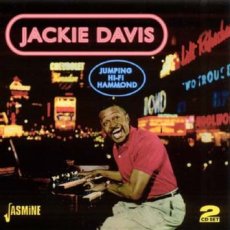
Jackie Davis was born on December 13, 1920 in Jacksonville, Florida. He first learned to play by spending hours poking at his grandmother’s piano. By the age of eight, he was playing with a local dance band. By the age of eleven, he’d earned enough from playing to buy his own piano, and music enabled him to pay his way through Florida A&M College, graduating in 1943.
After serving time in the Army, he worked as a pianist, usually as an accompanist for singers such as Dinah Washington, Sarah Vaughan, and Billy Daniels. Although he was attracted to the organ, he was intimidated at the prospect of playing jazz on it, particularly when his idol at the time was the lightning-fast Art Tatum. However, the Hammond Organ Company began selling electric organs in the late 40s, and in 1951 he bought his first organ. He appeared at Club Harlem in Philadelphia, and a two-week gig turned into nearly five months. Jackie became the first musician to popularize jazz on the Hammond organ, years before Jimmy Smith’s name became synonymous with organ jazz.
Davis signed with RCA to record a couple of 45s but no album so he went to Trend Records in Los Angeles and released a 10” album. He joined Louis Jordan’s outfit and learned stage presentation and in 1956 signed with Capitol Records, became their leading performer on the organ at a time when relatively few mainstream labels were willing to put a black musician on the cover of an album and released a total of nine albums. He went on to sign with Warner but that proved to be the end of his recording career.
Over the next thirty years of his career he performed in clubs from Vegas to Atlantic City, jazz festivals and restaurants, produced Ella Fitzgerald records, and was hired by Norman Granz for her Lady Time session, and was a regular fixture at a Hilton Head, South Carolina club. He worked with the likes of Paul Quinichette, Junior Mance, Eddie “Lockjaw” Davis, Clark Terry, Ray Brown, Keter Betts, Max Roach and many others.
In 1992 Hurricane Andrew wiped out his home in Florida causing a financial and physical strain on his health and he suffered a series of strokes. He attempted to perform but his health didn’t hold up and on November 15, 1999 pianist and organist Jackie Davis passed away in his hometown of Jacksonville.
Give A Gift Of Jazz – Share