

Daily Dose Of Jazz…
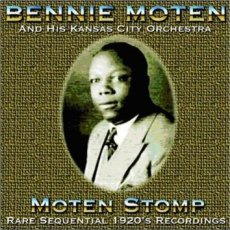
Bennie Moten was born on November 13, 1894 in Kansas City, Missouri. By the time he reached his mid-twenties he was leading the Kansas City Orchestra that was the most important of the itinerant, blues-based orchestras active in the Midwest at the time. The band helped develop the riffing style that would come to define many of the 1930s Big Bands.
Moten first recorded with Okeh Records in 1923 influenced by New Orleans and ragtime. His Victor Records sessions had a more sophisticated sound similar to Fletcher Henderson but featured a hard stomp popular to Kansas City.
By 1928 Bennie’s piano was showing some Boogie Woogie influences, but the real revolution came in 1929 when he recruited Count Basie, Walter Page and Oran “Hot Lips” Page. Walter Page’s walking bass lines gave the music an entirely new feel compared to the 2/4 tuba, colored by Basie’s understated, syncopated piano fills.
Their final session comprised of 10 recordings made in 1932 were made during a time when the band was suffering significant financial hardship but had added Ben Webster and Jimmy Rushing as their primary vocalist. These recordings showed the early stages of what became known as the “Basie Sound” some four years before Basie would record under his own name.
Pianist and bandleader Bennie Moten passed away after an unsuccessful tonsillectomy on April 2, 1935.

Jazz Is Global – Share
More Posts: piano
Daily Dose Of Jazz…
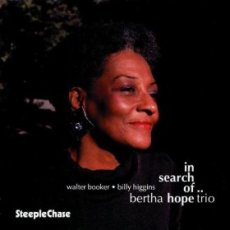
Bertha Hope was born Bertha Rosemond on November 8, 1936 and raised in Los Angeles, California. At age three she began studying classical piano and at a young age she was playing and learning from other young musicians in her neighborhood such as Richie Powell and Elmo Hope. Hope attended Manual Arts High School, performed in numerous nightclubs around town and went on to study piano at the Los Angeles Community College, finally receiving a B.A. in early childhood education from Antioch College.
In 1957 she married Elmo and relocated to the Bronx, New York, working at the telephone company during the day and performing at night. After her husband’s passing ten years later, Bertha continued to present his music and remained an active force in improvised music within the New York jazz scene. Her second husband, Walter Booker Jr., worked with her to keep the music of Elmo Hope alive through their tribute ensemble called “ELMOllenium” and The Elmo Hope Project.
The composer and arranger has recorded for Steeplechase, Minor and Reservoir record labels, has toured extensively through Japan, plays with the group, Jazzberry Jam in addition to leading The Bertha Hope Trio with Walter and Jimmy Cobb and has taught an advanced jazz ensemble at the Lucy Moses School in NYC, and an introduction to jazz program at Washington Irving High, sponsored by Bette Midler.
Inspire A Young Mind
More Posts: piano
Daily Dose Of Jazz…
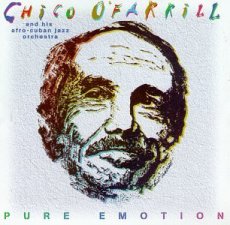
Arturo “Chico” O’Farrill was born on October 28, 1921 in Havana, Cuba of Irish/German heritage. Attending military school in Georgia he learned to play trumpet and was exposed to big band jazz.
Although he played trumpet early in his career, he became a sought-after composer and arranger, and was one of many leading the emergence of the Afro-Cuban jazz movement in the ‘50s dubbed Cubop.
Best known for his work in the Latin idiom, Chico also composed straight-ahead jazz pieces and even symphonic works. He composed works for Machito’s Afro-Cuban Suite with Charlie Parker and Benny Goodman’s Bebop Orchestra’s Undercurrent Blues and composed the Manteca Suite for Dizzy Gillespie and arranged for Stan Kenton and David Bowie, among others.
Over the course of his career he has recorded for Norman Granz’s label, with Todd Barkan at Fantasy, worked with the count Basie, Gato Barbieri, and Cal Tjader and has recorded and performed as a leader in small configurations, a bandleader and a sideman on more the two dozen albums. His music has been featured in the film Calle-54 and in the ‘90s he led a big band that took up residence at Birdland in New York.
Chico O’Farrill, Grammy nominee, passed away on June 27, 2001 in New York City and eventually his son Arturo took over the band.
Take A Dose On The Road
More Posts: piano
Daily Dose Of Jazz…
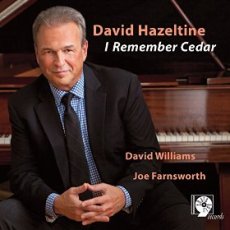
David Hazeltine was born October 27, 1958 in Milwaukee, Wisconsin and studied music with local pianist Will Green, He started playing gigs at age 13 but didn’t seriously consider a life in music until right before college.
Upon entering the jazz world David was encouraged by Chet Baker to move to New York City where he eventually became the house pianist for national acts at the former Jazz Gallery. His greatest influences have been Charlie Parker, Sonny Rollins, Bud Powell and Miles Davis and while he works within and across the constrains of bebop he is constantly seeking the beauty in harmony, melody, rhythm and never straying too deeply from his roots.
Hazeltine has played and recorded with the likes of Jon Hendricks, Louis Hayes, George Mraz, Joe Locke, Nat Reeves, Joe Farnsworth, Don Braden, Chris Potter, Peter Washington, Louis Hayes and One For All among numerous others.
A gifted arranger and composer, David has done an impressive amount of innovation in his arrangements of pop tunes, which appear on most of his CDs. He helped retool the Wisconsin Conservatory of Music’s jazz program, has recorded some two dozen albums as a leader and sideman and continues to be a major player on the New York and Japan jazz scene.
Dose A Day – Blues Away
More Posts: piano
Daily Dose OF Jazz…
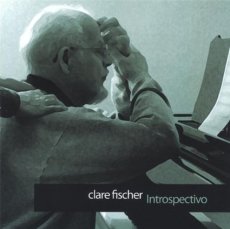
Clare Fischer was born October 22, 1928 in Durand, Michigan and started general music study in grade school with violin and piano as his first instruments. By age 7 he was picking out four-part harmony on the piano and by 12 was composing classical music and creating instrumental arrangements for dance bands.
In high school he added cello, clarinet and saxophone to his arsenal of instruments and studied music theory, harmony and orchestration privately. He started his own band at 15, writing all the arrangements, went on to college studying music composition and theory as a piano major. After graduation and a stint in the Army as the arranger for the U.S. Military Academy Band at West Point, N.Y., he returned to Michigan State and received his Masters in 1955.
He went on to arrange for the vocal quartet Hi-Lo’s that would later become a major influence on Herbie Hancock, would record under his own name in 1962 for Pacific Jazz, play with Bud Shank, Joe Pass and Cal Tjader among others, arrange for Sergio Mendes and Willy Ruff, began playing organ and composed his most famous compositions, Pensativa and Morning.
By the mid-‘70s Fischer was pioneering the electric keyboard, reconnected with Tjader started his group Salsa Picante, won a Grammy for his album 2+2 and Free Fall, forayed into R&B doing orchestral sweeteners, worked with Rufus with Chaka Khan, The Jacksons, Earl Klugh, The Debarges, Shot-gun and Atlantic Starr and pop artists such as Paul McCartney, Prince, Celine Dion and Robert Palmer, picking up numerous gold records.
From the Eighties on Clare has been commissioned to score symphonic work using Duke Ellington and Billy Strayhorn themes, working with Branford Marsalis, the Netherlands Metropole Orchestra, arranged for Spike Lee’s Girl 6, has conducted clinics and master classes at numerous universities, and continued to record in small group and orchestral settings until his death in Los Angeles, California on January 26, 2012 at age 82..
Take A Dose On The Road
More Posts: arranger,bandleader,composer,keyboard,piano,saxophone,synthesizer