

Daily Dose Of Jazz…
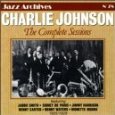
Charlie “Fess” Johnson was born on November 21, 1891 in Philadelphia, Pennsylvania. He led an ensemble called the Paradise Ten and played in Harlem clubs like Small’s Paradise between 1925 and 1935.
Though Charlie was an accomplished pianist very rarely did he eve solo on his recording sessions and as a unit never achieved the reputation is so deserved. It was noted later that the band rivaled Duke Ellington and anyone else and employed a number of notables like Sidney DeParis, Charlie Irvis, Dicky Wells, Benny Waters and Benny Carter, who also wrote arrangements for the band.
He led the ensemble until 1938 then his musical endeavors freelancing in various ensembles around New York City until he retired in the 1950s due to health issues. Pianist and bandleader Charlie Johnson, who nickname “Fess” it is assumed was shortened from Professor, passed away in Harlem Hospital on December 13, 1959 in New York City.

Give A Gift Of Jazz – Share
More Posts: piano
Daily Dose Of Jazz…
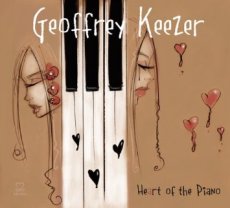
Geoffrey Keezer was born in Eau Claire, Wisconsin on November 20, 1970 to music teachers. He began studying piano at the age of three and by 1989 at 18, after one year of study at Berklee College of Music he joined Art Blakey’s Jazz Messengers.
His professional career has spanned many projects and genres such as performing Gershwin’s Rhapsody In Blue with the Hollywood Bowl Orchestra, composing commissioned pieces for the Carnegie Hall Jazz Band, Saint Joseph Ballet, Mainly Mozart Festival in San Diego, Scottish National Jazz Orchestra, and the Nancy Zeltsman Marimba Festival all while releasing a dozen albums as a leader and touring.
Geoffrey has received the Chamber Music America’s 2007 New Works grant, has appeared as a sideman on countless recording sessions, has played bass in a rock band, contributed artwork to David W. Mack’s comic “Kabuki”, and has performed with world-class musicians Joshua Redman, Diana Krall, Christian McBride, Barbara Hendricks, Kenny Barron, Chick Corea, Benny Green, Joe Locke and Mulgrew Miller.
Keezer’s “Live in Seattle”, a collaboration with vibes player Joe Locke, won the Golden EarShot Award for “Concert of the Year” and his latest musical adventure, Áurea, is a Grammy nominated, multinational Afro-Peruvian jazz recording featuring the hottest players from New York City and Lima, Peru. In 2013 he released his latest solo project Heart Of The Piano, continues to lend his talents to educate at such institutions of higher learning as the New School, the Brubeck Institute, Indiana University, the Thelonious Monk Institute of Jazz and others, all while continuing to arrange, perform, record and tour both as a leader and sideman.
Jazz Is Global – Share
More Posts: piano
Daily Dose Of Jazz…
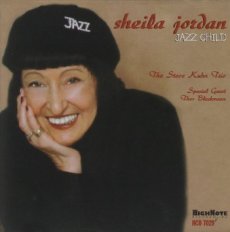
Sheila Jordan was born Sheila Jeanette Dawson on November 18, 1928 in Detroit, Michigan but grew up in Summerhill, Pennsylvania. By the age of 28 she returned to Detroit and began playing piano and singing semi-professionally in jazz clubs. She worked a trio that composed lyrics to Charlie Parker’s arrangements, who influenced her greatly.
In 1951, she moved to New York and started studying harmony and music theory with Lennie Tristano and Charles Mingus and married pianist Duke Jordan a year later. By the 60s she was gigging and doing session work in Greenwich Village and around town in various clubs; and in 1962 was discovered and recorded by George Russell on his album The Outer View. That led to her recording Portrait of Sheila in 1962 that was sold to Blue Note.
Over the next decade Sheila withdrew from music, supported herself as a legal secretary but by the mid 70s was working again with musicians like Don Heckman, Roswell Rudd, Lee Konitz and Steve Kuhn. She has had a notable career as a solo artist since then with her ability to improvise entire lyrics, although success has been limited.
Jordan has been an Artist In Residence teaching at City College, worked in an advertising agency, recorded for Steeplechase, ECM, Home Eastwind, Grapevine, Palo Alto, Blackhawk and Muse record labels. She has performed and recorded with George Gruntz, Steve Swallow, Carla Bley, Harvie Swartz and Bob Moses among others and as a songwriter continues to work in both bebop and free jazz mediums.
Give The Gift Of Knowledge
Daily Dose Of Jazz…
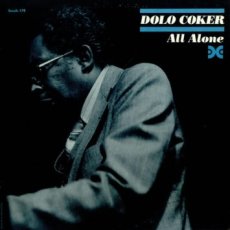
Dolo Coker was born Charles Mitchell Coker on November 16, 1927 in Hartford, Connecticut but was raised in Florence, South Carolina and Philadelphia, Pennsylvania. The first musical instruments Coker played in childhood were the C-melody and alto saxophones, learning them at a school. By age thirteen he was starting to play piano and after moving to Philadelphia he studied piano at the Landis School of Music and at Orenstein’s Conservatory.
During his Philadelphia years Coker played piano with Jimmy Heath, then became a member of Frank Morgan’s quartet, but it wasn’t until 1976 that he recorded as a leader. Signing with Xanadu Records he cut four albums and worked extensively as a sideman for Sonny Stitt, Gene Ammons, Lou Donaldson, Art Pepper, Philly Joe Jones and Dexter Gordon.
For the next several years pianist Dolo Coker continued to work as a sideman until he passed away of cancer at the age of fifty-five on April 13, 1983.
Dose A Day – Blues Away
More Posts: piano
Daily Dose Of Jazz…
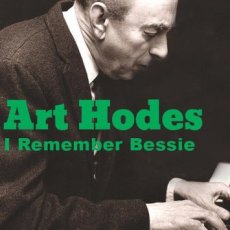
Art Hodes was born Arthur W. Hodes on November 14, 1904 in Ukraine, Russia but his family emigrated to the U.S. and settled in Chicago, Illinois when he was just a few months old. Although he gained wider attention once he moved to New York City in 1938, He began his career as a pianist in Chicago playing with Sidney Bechet, Joe Marsala and Mezz Mezzrow.
In the 1940s Art led his own big band that would be associated with his hometown of Chicago, playing mostly in that area for the next forty years. By the late 1960s he starred in a series of TV shows on Chicago style jazz called “Jazz Alley” appearing with greats like Pee Wee Russell and Jimmy McPartland. During this period he also wrote for jazz magazines like Jazz Record and remained an educator and writer in jazz.
He toured the UK in 1987 recording with drummer John Petters, and then returned the next year to play the Cork Jazz Festival with Petters and Wild Bill Davison, followed by a tour with the Legends of American Dixieland.
Over the course of his career he performed and recorded with Louis Armstrong, Wingy Manone, Gene Krupa, Mugsy Spanier, Alert Nicholas and Vic Dickerson among others. Pianist Art Hodes passed away on March 4, 1993 in Harvey, Illinois and was posthumously inducted into the Big Band and Jazz Hall of Fame in 1998.
Give A Gift Of Jazz – Share
More Posts: piano