

Daily Dose Of Jazz…
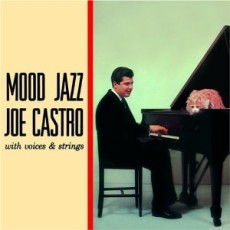
Joe Castro was born Joseph Armand Castro on August 15, 1927 in Miami, Arizona. He went to school in Pittsburgh, California in the bay area north of Oakland. He began playing piano professionally at the age of 15, enrolled at San Jose State University but matriculation was interrupted twice—first by a stint in the army from 1946 to 1947 and then when he formed his first jazz trio working on both the West Coast and in Hawaii.
In 1956 Castro moved to New York City where his trio successfully appeared in the city’s top jazz clubs—Basin Street, The Embers, The Hickory House and Birdland, receiving critical acclaim from Leonard Feather and Dave Brubeck. In 1958, he moved to Los Angeles to be associated almost exclusively with Teddy Edwards, Billy Higgins and Leroy Vinnegar.
Castro recorded his debut album “Mood Jazz” in 1956 and would go on to perform extensively with The Teddy Edwards Quartet while also making two of his own recordings as a leader for Atlantic Records.
In the early 1960s, tobacco heiress/jazz enthusiast Doris Duke and her long-term boyfriend, Castro, along with silent partner and friend Duke Ellington, formed record company Clover Records and music publishing company Jo-Do. Castro’s third album as a leader, entitled Lush Life was the only album released on Clover Records. Clover also released a 45-rpm single of the tracks “Lush Life” and “Bossa Nova All The Way” both taken from the same album.
By 1966, Jo-Do, Clover, and the Castro-Duke relationship had failed, and all three were shortly dissolved and the sides remain unreleased to this day. Renowned bassist Oscar Pettiford recorded an original entitled “The Pendulum at Falcon’s Lair” in 1956.
From 1959 to 1960 Castro also backed vocalists Anita O’Day and June Christy and was music director for Tony Martin from 1961 to 1963. Other sidemen for Castro’s trios and quartets included Chico Hamilton, Red Mitchell, Ed Shonk and Howard Roberts.
Castro moved to Las Vegas in the 1970s and continued to accompany vocalists and play in Las Vegas pit bands until he became the musical director for the Tropicana Hotel’s Folies Bergere. After Castro retired from the Tropicana, he continued to perform in jazz combos in Las Vegas and California until his death on December 13, 2009.

Jazz Is Global – Share
More Posts: piano

Daily Dose Of Jazz…
Roberta Piket was born on August 9, 1966 in Brooklyn, New York. Her father, the composer Frederick Piket, gave her first piano lessons when she was seven. She began playing jazz in her early teens, studying jazz piano with Walter Bishop, Jr and classical piano with Vera Wels. After graduating from prestigious Hunter College High School, she entered the joint double-degree program at Tufts University and the New England Conservatory of Music, earning a Bachelor’s Degree in Computer ScienceAll Postsfrom the former and a Bachelor’s Degree in Jazz Studies from the latter. She studied privately with Fred Hersch, Stanley Cowell, Jim McNeely, Bob Moses, Richie Beirach and Sofia Rosoff.
Roberta’s swinging and inventive straight-ahead jazz playing as well as her powerful and sensitive work in creative improvised music has gained her the respect of the jazz community. She has been a side woman performing or recording with David Liebman, Rufus Reid, Billy Hart, Michael Formanek, Lionel Hampton, Mickey Roker, Billy Mintz, Harvey Wainapel, Eliot Zigmund, Benny Golson, Ratzo Harris and the BMI/NY Jazz Orchestra.
Having appeared twice on Marian McPartland’s Piano Jazz, Piket has performed in Europe and japan as well both as a side woman and leader of her own trio and was a finalist in the Thelonious Monk BMI Composers’ Competition. She has released ten albums under her own name and frequently make the “best of” lists of the major jazz magazines and earning rave reviews in Jazz Times, Downbeat, the Washington Post, and Jazziz. A musical pioneer in several ways, Roberta is the first and only woman leader with a release on the prestigious Criss Cross label.
As an educator Roberta hold master classes at the Eastman School of Music, Rutgers University, Cal Arts, Duke University, the Northwestern University Composers’ Colloquium, among others around the world; has taught at the Litchfield Jazz Camp and the Vermont Jazz Center and has coached ensembles at Long Island University and maintained several private students.
Pianist and composer Roberta Piket occasionally performs on B3 organ, as she continues to record, perform and tour throughout Europe America and Japan.
Give A Gift Of Jazz – Share
Daily Dose Of Jazz…
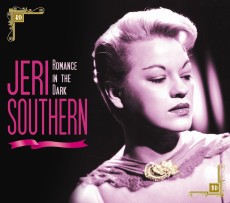
Jeri Southern was born Genevieve Hering on August 5, 1926 in Royal, Nebraska and began playing piano at age three. At age six she started formal study in classical piano and studying classical piano and voice at Sacred Heart in Omaha, Nebraska. It was during this period that her interest in jazz developed.
Southern began her career at the Blackstone Hotel in Omaha, then joined a United States Navy recruiting tour during WWII. In the late 1940s, she worked the Chicago club scene, once playing piano for Anita O’Day and where she became known for torch songs.
Signing with Decca Records in 1951, Jeri became known both for jazz and pop, rising to the height of her career during the decade. In 1955 her recording of “An Occasional Man”, reached #89 in the Billboard pop chart and in 1957 she had a Top 30 hit with “Fire Down Below”, that also hit #22 on the UK Singles Chart.
After her switch to Capitol Records, Southern found more success performing interpretations of Cole Porter with Billy May arrangements of some of the more humorous examples. She also sang in a few films
By the 1960s Jeri gave up the performing side of the music industry opting to teach instead, leaving a catalogue of more than two-dozen recordings. She would later move to Hollywood, California and work on film composing with Hugo Friedhofer. She wrote Interpreting Popular Music At The Keyboard during her final years.
Pianist and vocalist Jeri Southern passed away in Los Angeles, California of pneumonia on August 4,1991, at the age of 64.
Take A Dose On The Road
Daily Dose Of Jazz…
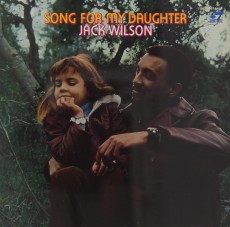
Jack Wilson was born in Chicago, Illinois on August 3, 1936 but grew up in Fort Wayne, Indiana from the age of seven. From 1949-54, he studied piano with Carl Atkinson at the Fort Wayne College of Music where he was introduced to the music of George Shearing.
Wilson later picked up the tenor saxophone and played in the Central High School band. He began performing locally leading small combos. By his fifteenth birthday, he had become the youngest member ever to join the Fort Wayne Musicians Union, Local 58. At 17, James Moody hired him to play a two-week stint as a substitute pianist.
After graduating from Central High, Jack spent a year-and-a-half at Indiana University, where he met Freddie Hubbard and Slide Hampton. Then touring with a rock ‘n roll band, he wound up in Columbus, Ohio and connecting with then unknown Nancy Wilson and Rahsaan Roland Kirk.
After a year in Columbus, he moved to Atlantic City and led the house band at the Cotton Club, adding organ to his musical arsenal. At the Club he met Dinah Washington and worked with her from 1957-58.
A return to Chicago, Wilson was playing with Gene Ammons, Sonny Stitt, Eddie Harris and Al Hibbler and holding down the gig at the Persian Lounge. Drafted into the Army, he went to Fort Stewart, GA. and became the first Black music director for the Third Army Area, playing tenor saxophone in the army band.
In 1961, jack received an honorable medical discharge due to diabetes, returned to Dinah Washington’s band for a year and encouraged by Buddy Collette moved to Los Angeles, California. It was here he worked with Gerald Wilson, Lou Donaldson, Herbie Mann, Johnny Griffin, Sammy Davis Jr., Sarah Vaughan, Lou Rawls, Eartha Kitt, Julie London, as well as Sonny & Cher. He composed and recorded the title track for Earl Anderza’s debut album Outa Sight!
Wilson recorded his debut as a leader for Atlantic Records with The Jack Wilson Quartet featuring Roy Ayers followed by a sophomore project, then three for the label’s subsidiary Vault Records and three albums for Blue Note including the classic Easterly Winds in 1967. From there he focused on work with vocalist Esther Phillips, went back to the studio for Discovery Records, and returned to be a sideman with Lorez Alexandria, Tutti Camarata and Eddie Harris.
His final recording session simply titled In New York, took place on June 4, 1993 and featured legendary drummer Jimmy Cobb. Composer and pianist Jack Wilson died on October 5, 2007 due to complications from his life with diabetes.
Inspire A Young Mind

Daily Dose Of Jazz…
Gaspare “Gap” Mangione was born July 31, 1938 in Rochester, New York and learned to play the piano as a child. Along with his Grammy-winning flugelhornist brother Chuck, they started performing together as the Jazz Brothers in 1958 and eventually recorded three albums for Riverside Records.
In 1968, Gap Mangione released his first solo album, “Diana in the Autumn Wind”, featured new compositions and arrangements, and was conducted by Chuck Mangione. The 1970s brought more solo albums along with tours with his own group and many as featured pianist in his brother’s orchestral performances.
By the Eighties, Gap began spending less time on the road and more time playing in and around Rochester. In 1990, he formed the Gap Mangione New Big Band, which remains the premier dance and concert big band in the Rochester area. The New Big Band has released four recordings since 1998.
Many major rappers and producers, including Jaylib, Talib Kweli, Guerilla Black, Ghostface Killah, Slum Village and People Under The Stars have sampled Gap’s “Diana in the Autumn Wind” for their recent works.
Gap Mangione has received the Artist of the Year Award from the Arts & Cultural Council of Greater Rochester, continues to make regular appearances at Rochester locations, among them the Woodcliff Hotel and Spa, Pier 45 at the Port, as well as the Rochester International Jazz Festival. The composer, arranger, bandleader and pianist continues to play with his brother.
Put A Dose In Your Pocket
More Posts: piano