


Daily Dose Of Jazz…
Jim McNeely was on born May 18, 1949 in Chicago, Illinois. After graduating from the University of Illinois he moved to New York City in 1975. By ’78 he joined the Thad Jones/Mel Lewis Big Band, spending six years as a featured soloist.
In 1981 Jim joined Stan Getz’s quartet and for the next four years served as pianist/composer. The early part of the ‘90s he held the piano chair with the Phil Woods Quintet, and from 1996 to the present day McNeely holds the position as pianist/composer-in-residence for the Vanguard Jazz Orchestra.
Jim has been the chief conductor for the Danish Radio Big Band in Copenhagen, Denmark, is currently artist-in-residence with the HR Big Band in Frankfurt, Germany and continues to appear as guest with many of Europe’s leading jazz orchestras such as The Metropole Orchestra in The Netherlands and The Stockholm Jazz Orchestra in Sweden.
The Grammy award winning jazz pianist, composer and arranger has recorded more than a dozen CDs under his own name, earning nine Grammy nominations between 1997 and 2006. In 2008, he was awarded a Grammy with the Vanguard Jazz Orchestra for their album Monday Night Live at the Village Vanguard.
Grammy-winning pianist Jim McNeely leads his own tentet, his own trio, and appears as soloist at concerts and festivals worldwide while serving on the faculties of The Manhattan School of Music, William Patterson University and is musical director of the BMI Jazz Composers Workshop.

Jazz Is Global – Share
More Posts: piano
Daily Dose Of Jazz…
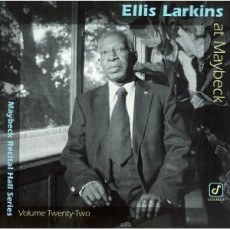
Ellis Larkins was born in Baltimore, Maryland on May 15, 1923. The pianist was the first African American to attend the Peabody Conservatory of Music in Baltimore and began his professional playing career in New York City after moving there to attend the Julliard School. Following school Larkins performed with Billy Moore and Edmond Hall.
He recorded with Coleman Hawkins, Mildred Bailey and Dickey Wells in the 1940s, Ruby Braff and Ella Fitzgerald in the Fifties recording “Ella Sings Gershwin” and “Songs In A Mellow Mood” with the latter. His 1960s work included recordings and/or performances with Eartha Kitt, Joe Williams, Helen Humes, George Gibbs and Harry Belafonte.
Though he was best known as an accompanist, Larkins recorded several solo albums in the 1950s. In the 1970s he performed regularly at several New York venues, including Gregory’s, a small bar in the east 70s. Next to Jimmy Jones, traditional jazz fans regard him as one of the most lyrical and romantic pianists in jazz history. Ellis Larkins passed away on September 30, 2002.
Take A Dose On The Road
More Posts: piano
Daily Dose Of Jazz…
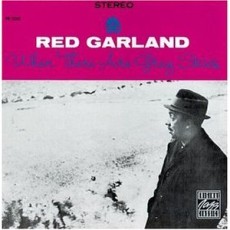
William “Red” Garland was born in Dallas, Texas on May 13, 1923. Showing an early interest in music, he began his musical studies on the clarinet and alto saxophone but switched to the piano. Garland spent copious amounts of time practicing and rapidly developed into a proficient player. A short early career as a welterweight boxer did not seem to hurt his playing hands and he fought a young Sugar Ray Robinson before making the switch to a full-time musician.
Garland’s trademark block chord technique, a style that would influence many forthcoming pianists in the jazz idiom and a commonly borrowed maneuver in jazz piano today, was unique and differed from the methods of earlier block chord pioneers such as George Shearing and Milt Buckner. His block chords were constructed of three notes in the right hand and four notes in the left hand, with the right hand one octave above the left. The right hand played the melody in octaves with a perfect 5th placed in the middle of the octave.
After WWII he performed with Roy Eldridge, Coleman Hawkins, Charlie Parker and Lester Young. He found steady work in Boston, New York and Philadelphia and by the late 40s he was touring with Eddie Vinson at the same time that John Coltrane was in Vinson’s band. His creativity and playing ability continued to improve, though he was still somewhat obscure. By the time he became a pianist for Miles Davis he was influenced by Ahmad Jamal and Charlie Parker’s pianist Walter Bishop.
Red Garland found fame in 1955 when he joined the Miles Davis Quintet along with John Coltrane, Philly Joe Jones and Paul Chambers and together they recorded several Prestige albums such as Workin’, Steamin’ Cookin’ and Relaxin’, that would later influence the free jazz movement. He would go on to play on ‘Round About Midnight and Milestones but would be eventually be fired by Miles.
In 1958 Garland formed his own trio. Among the musicians the trio recorded with Pepper Adams, Nat Adderley, Ray Barretto, Kenny Burrell, Eddie “Lockjaw” Davis, Jimmy Heath, Harold Land, Leroy Vinnegar and many others to numerous to list.
Red released some 46 albums as a leader, recording sessions for Prestige, Fantasy, Galaxy, Jazzland, Keystone, Xanadu, Alfa, Moodsville and New Jazz record labels. He sat in as a sideman for such greats as Arnett Cobb, Art Pepper, John Coltrane and Phil Woods.
Stopping his playing professionally for a number of years in the 1960s when jazz lost popularity to rock and roll, he returned to Dallas to care for his mother. Pianist Red Garland recorded sparsely through the 70s but continued recording and performing until his death of a heart attack on April 23, 1984 at the age of 61.
Inspire A Young Mind
More Posts: piano
Daily Dose Of Jazz…
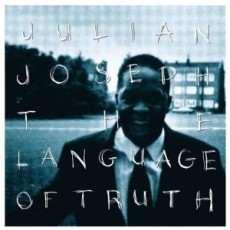
Julian Joseph was born May 11, 1966 in London, England. As a jazz pianist, bandleader, composer, arranger and broadcaster he has worked solo, in his all-star big band, trio, quartet, forum project band or electric band.
Joseph’s style combines a respect for the modern developments in jazz piano with its history and works in both contemporary and traditional situations with his music. He is also active in jazz education helping to form the jazz syllabus for the Associated Board of the Royal Schools of Music in Great Britain.
Starting with his first album The Language of Truth in 1991, Julian has a total of seven albums to date, one single, and a soundtrack to his credit, and a baker’s dozen as a sideman. He has focused on live performance such as, at the London Jazz Festival, also broadcasting as he hosts several radio shows on BBC Radio 3, including Jazz Line-up and the celebrated Jazz Legends as well as composing and teaching.
He has also made two jazz television series for Meridian, a jazz series for Sky TV’s Artsworld Channel and the documentary A Festival of Jazz Piano for the BBC in Wales directed by Celia Lowenstein. He continues to perform and record.
Jazz Is Global – Share
More Posts: arranger,broadcaster,composer,educator,piano
Daily Dose Of Jazz…
Mike Melvoin was born on May 10, 1937 in Oshkosh, Wisconsin and began playing piano at age three. He studied English at Dartmouth College but after graduating decided to pursue a career in music.
In 1961 he moved to Los Angeles and began playing with Frank Rosolino, Leroy Vinnegar, Gerald Wilson, Paul Horn, Terry Gibbs, Joe Williams, Peggy Lee, Tom Waits and others.
He worked extensively as a studio musician, in addition to playing Los Angeles clubs, accompanying singer Bill Henderson and playing with Herb Ellis and Plas Johnson on concord Jazz releases. As a composer he lent his scoring talents to the Partridge Family, Fame and MacGyver.
Pianist, composer and arranger Mike Melvoin served as chairman and president of The Recording Academy, was nominated for a Grammy for Best Jazz Instrumental Solo from his album It’s Always You, played between the jazz, rock and pop genres. A prolific studio musician he associated with among numerous others Frank Sinatra, Natalie Cole, The Jackson 5, The Beach Boys, Barbra Streisand, John Lennon, and The Wrecking Crew, passed away at the age of 74 in Burbank, California on February 22, 2012.
Put A Dose In Your Pocket