

Daily Dose Of Jazz…
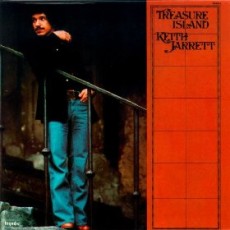
Keith Jarrett was born on May 8, 1945, in Allentown, Pennsylvania and had significant early exposure to music. He possessed absolute pitch and displayed prodigious musical talents as a young child. He began piano lessons just before his third birthday, and at age five he appeared on a TV talent program and by seven had given his first classical piano recital. During his teens he began leaning towards jazz, turned down classical training in Paris and attended Berklee College of Music
He started his career with Art Blakey and after his tenure as a Jazz Messenger moving on to play with Charles Lloyd and Miles Davis. Since the early 70s he has enjoyed a great deal of success in jazz, jazz-fusion, and classical music; as a group leader and a solo performer. His improvisations draw not only from the traditions of jazz but from other genres as well, especially Western classical music, gospel, blues, blues and ethnic folk music.
Jarrett has received the Polar Music Prize, the Leonie Sonning Music Prize, was inducted into the Down Beat Down Beat Hall of Fame, played with Jack DeJohnette, Charles Lloyd, Charlie Haden, Paul Motian, Dewey Redman, Airto Moreira, Palle Danielson and Jan Garbarek among others.
Jarrett’s compositions and the strong musical identities of the group members gave this ensemble a very distinctive sound. The quartet’s music is an amalgam of free jazz, straight-ahead post-bop, gospel music, and exotic, Middle-Eastern-sounding improvisations. He has played as a soloist, trio, returned also to classical music, incorporates vocalizations of grunts, squeals and tuneless singing. He continues to compose, record, perform and tour.
In 2003, Jarrett received the Polar Music Prize, the first (and to this day only) recipient not to share the prize with a co-recipient,[1] and in 2004 he received the Leonie Sonning Music Prize. In 2008, he was inducted into the Down Beat hall of Fame in the magazine’s 73rd Annual Readers’ Poll. He continues to tour and record.

Take A Dose On The Road
Daily Dose Of Jazz…
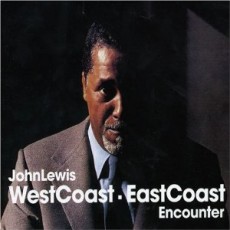
John Aaron Lewis was born in LaGrange, Illinois on May 3, 1920 but was raised in Albuquerque, New Mexico. He learned classical music and piano from his mother starting at the age of seven, then continued his musical training at the University of New Mexico and also studied anthropology. He served in the Army stationed in France during World War II and during his three-year tour of duty he met and performed with Kenny Clarke. Together they formed a band and in the bop style, John composed and arranged.
After the war he went to New York where he found work in the 52nd Street clubs with Allen Eager, Hot Lips Page and others. This led to him joining dizzy Gillespie’s bop-style big band and further developing his skill as a composer and arranger while matriculating through the Manhattan School of Music. He soon returned to Europe on tour, remained a continued to write and study piano. By ’48 he was back in the States playing with Charlie Parker, Illinois Jacquet, Lester Young, Miles Davis and Ella Fitzgerald.
Lewis, vibraphonist Milt Jackson, drummer Kenny Clarke, and bassist Ray Brown had been the small group within the Gillespie big band that played their own short sets when the brass and reeds needed a break. This led to the foursome forming a full-time working group in 1950, known at first as the Milt Jackson Quartet. After replacing Brown with Percy Heath the name was changed to the Modern Jazz Quartet and assuming the role of musical director from 1954 to 1974, John oriented it toward a quiet, chamber style of music that found a balance between his gentle, almost mannered compositions and Jackson’s more elemental writing and playing.
Over a long and illustrious career, John directed the School of Jazz at the Music Inn, was musical director for the Monterey Jazz Festival from 1958 to 1982, taught at City College of New York and Harvard University, rejoined the re-formed MJQ, led his own sextet, founded the American Jazz Orchestra, participated in Re-Birth of the Cool, was involved in various Third Stream Projects all while continuing to teach, compose and perform.
John Lewis, conservative bop pianist, composer, arranger and musical director for the Modern Jazz Quartet passed away in New York City on March 29, 2001.
Give A Gift Of Jazz – Share
More Posts: piano
Daily Dose Of Jazz…
Rodney Kendrick was born April 30, 1960 in Philadelphia, Pennsylvania and grew up in Miami, Florida where his parents moved soon after his birth. Growing up in a musical and Pentecostal church-going family, his mother is a gospel singer named Juet and his father is pianist James “Jimmy Kay” Kendrick, who worked with saxophonist Illinois Jacquet for seven years and played with saxophonist Sonny Stitt and Sam Rivers.
At eighteen Rodney turned professional, touring and playing keyboards with R&B and funk bands, traveling internationally with Harold Melvin & the Blue Notes, James Brown and George Clinton. Three years later Kendrick began to primarily focus on jazz and moved to New York in 1981. He played keyboards for Freddie Hubbard, Terence Blanchard, Stanley Turrentine, Clark Terry, J.J. Johnson and numerous others.
Studying with pianist Barry Harris, who remained his teacher and mentor for over 20 years, Kendrick cites Randy Weston and Sun Ra as influences. In the early Nineties he served as Abbey Lincoln’s musical leader for seven years. In 1994 he signed a contract with Verve Records and released his debut album “The Secrets of Rodney Kendrick”, and a year later his sophomore project “Dance World Dance”. Both recordings showcase his arranging skills as well as his compositions and feature Houston Person, Graham Haynes, Arthur Blythe and Bheki Mseleku among his guests.
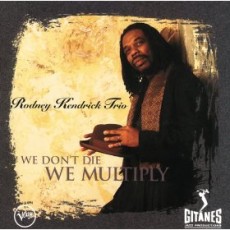
He went on to record his next album “We Don’t Die, We Multiply” with his wife Rhonda composing “Led Astray” and several tracks featuring saxophonist Dewey Redman. Rodney has produced several albums, including a solo piece titled “Thank You”, a duo-piano piece with his mentor Randy Weston, an album with his wife titled “Rhonda Ross Live: Featuring Rodney Kendrick”, as well as a project with his father, Jimmy Kay, titled “Black is Back”.
Rodney Kendrick, jazz pianist, bandleader, composer and producer who has been described as one who swings hard with a Monkish wit and drive, continues to perform, compose and record.
Give The Gift Of Knowledge
More Posts: bandleader,piano
Daily Dose OF Jazz…
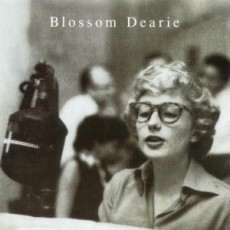
Blossom Dearie was born April 28, 1924 in East Durham, New York and as a child she studied Western classical piano but switched to jazz in her teens. After high school Dearie moved to New York City to pursue a music career and began to sing in groups such as the Blue Flames with the Woody Herman Orchestra and the Alvino Rey’s Blue Reys before starting her solo career.
She moved to Paris in 1952 and formed a vocal group, the Blue Stars of Paris, which included Michel Legrand’s sister Christine and Bob Dorough. In 1954 the group had a hit in France with a French version of “Lullaby of Birdland”. The Blue Stars would later evolve into the Swingle Sisters. Interestingly, on her first solo album released two years later, she plays the piano but does not sing.
After returning to the U.S. Blossom, Dearie made her first six American albums as a solo singer and pianist for Verve Records in the late 1950s and early 1960s, mostly in a small trio or quartet setting. In 1962, she recorded a radio commercial for Hires Root Beer. Through the Sixties she recorded with orchestra, performed in supper clubs around New York, appeared at Ronnie Scott’s in London and recorded four albums in the UK.
After a period of inactivity, by the ‘’70s she established her own label, Daffodil Records, lent her voice to “Mother Necessity” and “Figure Eight” on “Schoolhouse Rock!” and she collaborated with Johnny Mercer on one of his final songs “My New Celebrity Is You”. Her voice and songs have been featured in such films as Kissing Jessica Stein, The Squid and the Whale, My Life Without Me and The Adventures of Felix.
Blossom Dearie, vocalist, pianist and one of the last remaining supper-club performers, continued to perform in clubs until shortly before she passed away on February 7, 2006 at age 84 in Greenwich Village, New York.
Dose A Day-Blues Away
Daily Dose Of Jazz…
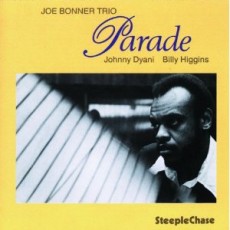
Joe Bonner was born on April 20, 1948 in Rocky Mount, North Carolina. He studied and earned a B.S. in Classical Music from Virginia State College in Petersburg. His early influences were McCoy Tyner and Art Tatum but he cites that he learned much from the musicians he worked with in the ‘70s including Freddie Hubbard, Billy Harper, Pharoah Sanders and Roy Haynes, who hired Bonner to replace Chick Corea.
Joe’s musical travels led him to Denmark where he joined or accompanied traveling jazz artists. Bonner has appeared on a long list of recordings as a bandleader or sideman, with titles released on Evidence, Muse, Capri, and ABC/Impulse! He has over a dozen sides out on the Steeplechase label recorded during his twelve-year stint in Europe, especially Copenhagen.
Since the turn of the new century Bonner has put out more fine records as his “Monkisms” and the highly acclaimed “The Art of Jazz Piano” that display his amazing knowledge of jazz piano structure and his ability to navigate the lucid joining of passionate solos, soulful harmonies, driving rhythms and orchestrating spirited improvised journeys into a celebration of rich modern jazz textures, rooted in bebop, gospel and blues.
Pianist Joe Bonner is known for playing hard bop and modal jazz, this enigmatic pianist has become a Denver jazz scene staple, currently leading the jazz quartet, The Bonner Party and for the past two decades has thrilled audiences with his virtuoso sensibility.
Inspire A Young Mind
More Posts: piano