

Daily Dose Of Jazz…
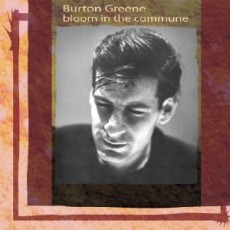
Burton Greene was born June 14, 1937 in Chicago, Illinois and rose to popularity in the Sixties on New York’s free jazz scene gigging with Alan Silva and Marion Brown. He credited the Free Form Improvisation Ensemble in 1963, then joined Bill Dixon’s and Cecil Taylor’s Jazz Composers Guild in ’64.
During this period he gigged with Rashied Ali, Albert Ayler, Gato Barbieri, Byard Lancaster, Sam Rivers, Patty Waters and others while recording two albums as a leader. Burton moved to Europe in 1969, first to Paris then to Amsterdam delving into the Klezmer medium and recording with several different group configurations into the 90s.
Since the mid-1990s Greene has often performed and recorded in New York and along the East Coast with a modest catalogue that includes eleven recordings.. His autobiography written over 20 years, Memoirs of A Musical Pesty-Mystic, was published in 2001. His recent performances and recorded groups based in New York include duets, trios, quartets and quintets with Mark Dresser, Roy Campbell, Lou Grassi, Adam Lane, Ed and George Schuller, Russ Nolan and Paul Smoker.

Take A Dose On The Road
More Posts: piano
Daily Dose Of Jazz…
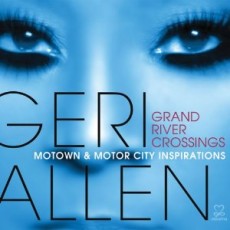
Geri Allen was born on June 12, 1957 in Pontiac, Michigan and received her early jazz education at Cass Technical High School in Detroit and the Jazz Development Workshop under the mentorship of Marcus Belgrave. In 1979 she graduated fro Howard University with a jazz studies degree, moved to New York and studied with Kenny Barron. She went on to get a degree in ethnomusicology from the University of Pittsburgh, returned to New York and joined the Brooklyn based M-Base crowd, recording several albums with Steve Coleman, beginning in 1985.
Geri’s 1984 debut album “The Printmakers” showcased the pianist’s more avant-garde tendencies, followed by “Etudes” and “Twenty-One” in 1995 in which she was the first recipient of Soul Train’s Lady of Soul Award for jazz album of the year. She has played with a luminous list of musicians not the least Ron Carter, Tony Williams, Charlie Haden, Anthony Cox, Betty Carter, Ornette Coleman, Jack DeJohnette, Mary Stallings and Charles Lloyd.
Geri Allen currently teaches as Associate Professor of Jazz Piano & Improvisation Studies at the University of Michigan as well as recording and touring with Charles Lloyd; and in 2007 participated in the documentary film titled “Live Music, Community & Social Conscience” that looks at how music connects us to our humanity, and to each other regardless of borders, politics, culture economics, or religion. She was the 2008 recipient of a Guggenheim Fellowship.
Allen has received many awards such as the “African-American Classical Music Award”, “A Salute to African-American Women: Phenomenal Woman”, nominations in 2011 for the NAACP Image Award for Best Jazz Album, “Geri Allen & Timeline Live” and for both The 10th Annual Independent Music Awards for “Live Performance Album” and for “Best Jazz Pianist”, by the Jazz Journalists Association.
As an educator Geri has taught Jazz & Contemporary Improvisation at the School Of Music Theatre & Dance, at the University Of Michigan and was a curator in New York City at the STONE. Since 2013 she’s been teaching at her alma mater, the University of Pittsburgh, as an Associate Professor of Music and as the Director of the Jazz Studies Program.
Pianist Geri Allen continued to perform, tour and record until she passed away on June 27, 2017, two weeks after her 60th birthday in Philadelphia, Pennsylvania after losing her battle with cancer..
Inspire A Young Mind
More Posts: piano
Daily Dose Of Jazz…
Marty Napoleon was born on June 2, 1921 in Brooklyn, New York and studied piano as a child. His early years in 1946 he worked with Gene Krupa and went on to work with his uncle, trumpeter Phil Napoleon in his Original Memphis Five.
He is perhaps best known for replacing Earl Hines in Louis Armstrong’s All Stars in 1952. During the decade of the 50s he also worked with his brother Teddy Napoleon, also a pianist. From 1966-1971 Marty was once again reunited and performing with Louis Armstrong.
Napoleon recorded as a sideman with Kai Winding, Charlie Ventura, Rex Stewart, Carl Barry, Herbie Fields, Teddy Reig, Cozy Cole and Allen Eager.
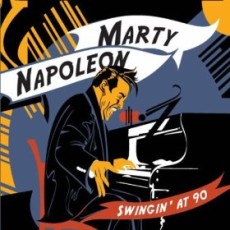
Marty Napoleon released one album as a leader for Bethlehem Records titled Marty Napoleon Swings and Sings, recorded with his trio “The Big Three”, “Jazz From Then Till Now” and “We 3” for other labels, and in 2012 recorded and released “Swingin’ at 90. At age 93 he currently resides in New York.
Jazz Is Global – Share
More Posts: piano
Daily Dose Of Jazz…
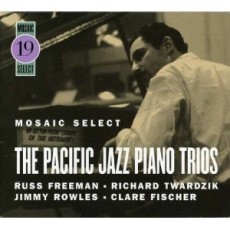
Russell Donald Freeman was born on May 28, 1926 in Chicago, Illinois. He was initially classically trained, but later turned toward jazz of a largely bop style. His reputation as a jazz pianist grew in the 1940s when he worked with Art Pepper, Shorty Rogers and Chet Baker. Among his best work is his extensive collaboration with Shelly Manne, especially in the 1950s and 1960s.
Freeman wrote “The Wind” with original lyrics by Jerry Gladstone and was performed as an instrumental piece during the 1950s and 1960s by the likes of Chet Baker, Leo Wright and Stan Getz as well as sung by vocalist June Christy. Russ’s piano is featured on the 1954 recording of “The Wind,” which has since become a jazz standard, for the album Chet Baker With Strings and Deep I A Dream: The Ultimate Chet Baker Collection, the latter he is featured on seven cuts. In 1991, Mariah Carey wrote her own lyrics to Freeman’s “The Wind” for her album Emotions.
Russ Freeman, bebop and cool jazz pianist, remained busy in music throughout his life, transitioning from jazz pianist to film scoring and composition before his death on June 27, 2002 in Las Vegas, Nevada.
Dose A Day-Blues Away
More Posts: piano
Daily Dose Of Jazz…
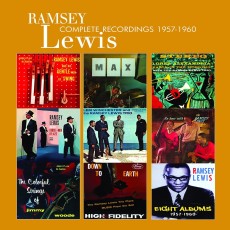
Ramsey Emmanuel Lewis, Jr. was born on May 27, 1935 in Chicago, Illinois and began taking piano lessons at the age of four. By 15 he joined his first jazz band, The Cleffs. The seven-piece group provided Lewis his first involvement with jazz and he would later join Cleffs drummer Isaac “Redd” Holt and bassist Eldee Young to form the Ramsey Lewis Trio.
The trio started as primarily a jazz unit and released their first album, Ramsey Lewis And The Gentlemen of Swing, in 1956. Following their 1965 single hit “The In Crowd” that reached #5 on the pop charts and the album #2 they concentrated more on pop material. Young and Holt left in 1966 to form Young-Holt Unlimited and were replaced by Cleveland Eaton and Maurice White.
By 1966, Lewis was one of the nation’s most successful jazz pianists, topping the charts in addition to “The In Crowd” with Hang On Sloopy” and “Wade In The Water”. All three singles each sold over one million copies and were awarded gold discs. Many of his recordings attracted a large non-jazz audience and in the 1970s, he often played electric piano, although by later in the decade he was sticking to acoustic and using an additional keyboardist in his groups.
In addition to recording and performing, Lewis hosted a syndicated morning show on Chicago “smooth jazz” radio station WNUA. His weekly syndicated Legends of Jazz, featured recordings from artists such as David Sanborn, George Duke, Herbie Hancock, Charlie Parker, Dizzy Gillespie, Kurt Elling, Al Jarreau and Miles Davis.
Ramsey has appeared on the Red Hot Organization’s compilation album, Stolen Moments: Red Hot + Cool, his Ramsey Lewis Morning Show became part of Broadcast Architecture’s Smooth Jazz Network, his Legends of Jazz became a television series, he is the artistic director of Jazz at Ravinia, serves on the Board of Trustees for the Merit School of Music and The Chicago High School for the Arts. His Ramsey Lewis Foundation helps connect at-risk children to the world of music. He continues to perform, record and tour.
Inspire A Young Mind
More Posts: piano