

Daily Dose Of Jazz…
Fletcher Allen was born on July 25, 1905 in Cleveland, Ohio and began his career in the mid-’20s as a member of Lloyd Scott’s Band in New York City. In 1927, he was off to Europe for the first time in a group under the direction of Leon Abbey, a bandleader whose pioneering efforts with jazz eventually led to a 1936 tour of India which he also participated in. In between, he went to Budapest with the Benny Peyton group in 1929 and hung out in Europe the following decade. While in Europe he performed on several collaborations with guitarist Django Reinhardt, among others.
Reinhardt recorded some of his arrangements and compositions, including the intoxicating Viper’s Dream. Allen also took advantage of the European base to take part in several tours involving top American performers such as Louis Armstrong, Freddy Taylor and Leon Abbey in the ’30s. It was during this time that he began leading his own band.
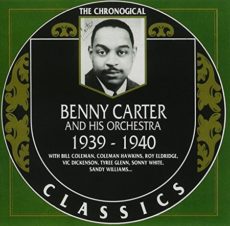
By 1938, he began performing with Benny Carter, something of a doppelgänger in that both men played alto saxophone and clarinet and had excellent reputations as arrangers and shows up several times in the extensive Carter discography. He went on to Later that year, Allen went to Egypt as a member of the Harlem Rhythmakers group during an era when American jazz musicians held court at swank Cairo hotels, a situation that would be quite inconceivable in modern times.
As World War II escalated Fletcher returned home to the States and at first found little work but eventually left the docks when he found that his new skills on baritone sax meant work filling in the sections of various New York big bands. His last job of any notoriety began in the early 70s with the big band of Fred “Taxi” Mitchell, meaning he was one New Yorker who always managed to find a taxi.
Saxophonist, clarinetist and composer Fletcher Allen, whose composition Viper’s Dream has become a jazz staple, passed away on August 5, 1995.
Sponsored By


#preserving genius
Daily Dose Of Jazz…
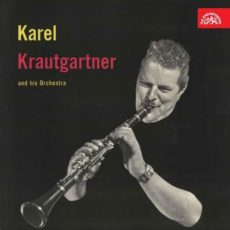
Karel Krautgartner was born on July 20, 1922 in Mikulov, Moravia and began to play piano at the age of eight. In 1935, after moving to Brno, he found interest mainly in the radio broadcasting and especially in jazz. He began to study clarinet privately with Stanislav Krtička, acquiring necessary skills and inherited a fanatic passion for clarinet construction and its components.
In 1936 Krautgartner founded the student orchestra Quick Band and six years later signed his first professional contract as a saxophonist in the Gustav Brom Orchestra in the hotel Passage in Brno. In 1943 he gradually created Dixie Club and started to arrange in the Benny Goodman and Glenn Miller styles. During 1945 – 1955, the core of the Dixie Club moved gradually to Prague and became a part of Karel Vlach orchestra. Karel became leader of the saxophone section and started to contributing his own compositions.
1956 saw him founding the Karel Krautgartner Quintet along with Karel Velebný. The group played in various line-ups modern jazz, swing, dixieland and accompanied popular singers. From 1958 to 1960 he performed with the All star band, an orchestra playing in west-coast style, and dixieland with Studio 5. Between 1960 and 1968 he became the head of the Taneční Orchestr Československého Rozhlasu (Dance Orchestra of Czechoslovakia Radio), renamed to Karel Krautgartner Orchestra in 1967.
Following the Soviet invasion of Czechoslovakia, he emigrated to Vienna, Austria in 1968 and became the chief conductor of the 0RF Bigband. Later he moved to Cologne, Germany. Clarinetist, saxophonist, arranger, composer, conductor and teacher Karel Krautgartner passed away on September 20, 1982 in Germany.
Sponsored By

#preserving genius
Daily Dose Of Jazz…
Nicole Glover was born on July 18, 1991 in Portland, Oregon. Her journey in music began when her father introduced her to improvised music at a young age. She began playing the clarinet at the age of ten, transitioning to tenor saxophone the following year. Blossoming in high school, she was one of 19 students from across the nation to be selected for the Next Generation Jazz Orchestra national tour. The performances had her playing with Bobby Watson, Julian Lage and with Wynton Marsalis at the Monterey Jazz Festival.
After studying at William Paterson University, Nicole returned to Portland in 2011 and was invited to record on Esperanza Spaulding’s Grammy winning album Radio Music Society. She has since performed and recorded with George Colligan, Alan Jones Storyline Sextet, Thomas Barber’s Spiral Road and the Kerry Politzer Quintet, as well as her own jazz trio. Not limiting herself to jazz, her work as a member of Ural Thomas and Pain, won them Willamette Weekly’s Best New Band of 2013 and received an Emmy Award for their feature episode of Oregon Art Beat, and they have opened for Parliament Funkadelic and Booker T. Jones.
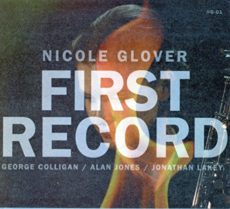
In 2015, Nicole released her debut album First Record featuring George Colligan on piano and trumpet, bassist Jonathan Lakey and Alan Jones on drums. A move to New York City in 2017 has seen her recording and touring with Gene Perla, Steve Wilson, Rodney Green, Winard Harper, Jeff “Tain” Watts, Bill Goodwin, Mulgrew Miller, Kenny Garrett, Geoffrey Keezer, Bennie Maupin, Bobby Watson, Mike Clark, Bill Stewart, Mel Brown, Rob Scheps, Terell Stafford, Helen Sung, Boris Kozlov, Dana Hall, and Scotty Barnhart. Tenor saxophonist Nicole Glover continues to perform and record across musical genres and expand her career.
Sponsored By

#preserving genius
More Posts: saxophone
Daily Dose Of Jazz…
Chico Freeman was born Earl Lavon Freeman Jr. on July 17, 1949 in Chicago, Illinois to saxophonist Von Freeman. His initial outing on his musical path came from his brother Everett who introduced him to the trumpet and began playing, inspired by Miles Davis. In 1967 he attended Northwestern University on scholarship for mathematics and played the trumpet in the school, but did not begin playing the saxophone until his junior year.
Changing his major to music, he graduated in 1972, proficient playing saxophone, trumpet, and piano. After graduation, Freeman taught at the Association for the Advancement of Creative Musicians School of Music in Chicago and started taking classes as a graduate student at Governors State University, earning a master’s degree in composition and theory. Though focused on jazz during this period he also played blues in local clubs with Memphis Slim and Lucky Carmichael.
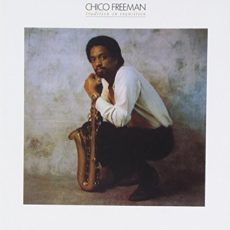
1976 saw the release of his debut album as a leader, Morning Prayer and moving to New York City the next year he widened his musical influences. He would experience his most productive years of his career, releasing albums such as No Time Left, Tradition in Transition and The Outside Within which earned him Record of the Year from Stereo Review. Coming to prominence in the late 1970s Chico was part of a movement including Wynton Marsalis of modern players steeped in the traditions of jazz.
He went on to record for independent labels India Navigation and Contemporary Records enlisting the talents of Wynton Marsalis, Bobby Hutcherson and Cecil McBee. He formed the band Guataca with Hilton Ruiz, Ruben Rodriguez, Yoron Israel and Giovanni Hidalgo and released Oh By the Way… in 2002. Freeman has toured internationally, both with his band as well as with Chaka Khan, Tomasz Stanko, Celia Cruz and Tito Puente.
His electric band Brainstorm brought together Delmar Brown on vocals and keyboards, percussionist Norman Hedman, bassist Chris Walker, and Archie Walker on drums. By the end of the Nineties he was producing Arthur Blythe’s album NightSong and beginning his teaching role at New School University.
Tenor saxophonist, bass clarinetist and trumpeter Chico Freeman, who was a recipient of the New York Jazz Award, continues to compose, perform and educate.

Daily Dose Of Jazz…
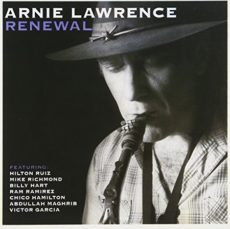
Arnie Lawrence ,was born Arnold Lawrence Finkelstein on July 10, 1938 in Brooklyn, New York. He studied clarinet in his youth before switching to saxophone and from the age of 12 he was playing in clubs in the Catskills, and by age 17 was performing at Birdland, at one point working a double bill with John Coltrane.
He played with Charles Mingus, Thad Jones, Maynard Ferguson, Clark Terry and Duke Pearson but did not make his first recordings until 1966, playing on Chico Hamilton’s The Dealer. Working for several years with Hamilton and becoming a soloist on The Tonight Show from 1967 to 1972, Arnie made his first records as a leader in 1968.
In the early 1970s Lawrence played with Willie Bobo, then joined Blood, Sweat & Tears in 1974. He did a world tour with Liza Minnelli in 1978–79, and released a few more records under his own name before touring with Louie Bellson and Elvin Jones in the early 1980s. He composed a symphony he titled Red, White and Blues, which was premiered by an orchestra in Williamsburg, Virginia. It featured himself, Dizzy Gillespie and Julius Hemphill all soloing in the performance.
Putting on his educator hat he taught from the middle of the 1970s, working as an artist in residence in Kentucky and Kansas. By 1986 he had stopped recording and touring and founded the New School for Jazz and Contemporary Music in New York City. Among the program’s students were Roy Hargrove, Brad Mehldau, Larry Goldings, John Popper, Peter Bernstein and Spike Wilner of Smalls Jazz Club. Moving to Israel in 1997, where he founded the International Center for Creative Music, an education facility open to both Jewish and Arab students. He played regularly in Israel and owned his own nightclub called Arnie’s Jazz Underground.
Suffered from lung and liver cancer late in life, alto saxophonist Arnie Lawrence passed away on April 22, 2005, in Jerusalem, Israel and Palestine, as both claim the city as their capital.
Sponsored By

Voices From The Community
#preserving genius
More Posts: saxophone