

Daily Dose Of Jazz…
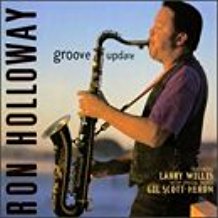
Ronald Edward Holloway was born on August 24, 1953 in Washington, D.C. to parents who met at Howard University and were avid jazz fans. He got his initial introduction from his father who favored saxophone and trumpet led albums and would add to his collection of Prestige and Blue Note jazz albums. Though he started with R&B-influenced Willis Gator Jackson it wasn’t long before he identified the sounds of Sonny Rollins, John Coltrane and Miles Davis as his principal influences.
After high school graduation, Holloway routinely practiced 8–12 hours a day, sat in with bands of all kinds and jam sessions, becoming familiar and performed with jazz, R&B, funk, rock, jazz fusion, blues, country and folk music groups. During the Seventies he had the great fortune to meet, play a tape of a performance and get standing invitations to play with anytime they were in town from Freddie Hubbard, Sonny rollins and Dizzy Gillespie. The latter would invite him to sit in with him at Ronnie Scott’s Jazz Club in London, England, an association that lasted well into the Eighties.
Straying from jazz Ron would move into funk and go on to become a member of Root Boy Slim and the Sex Change Band, Osiris, Gil Scott-Heron’s band Amnesia Express, and Dizzy Gillespie’s band, remaining a member until Dizzy’s passing in 1993. That same year he recorded his debut album as a leader on the Milestone label.
He would go on to perform and tour with Derek Trucks, the Allman Brothers, Susan Tedeschi, Gov’t Mule, and is currently a member of The Warren Haynes Band and leader of The Ron Holloway Band.

More Posts: saxophone
Daily Dose Of Jazz…
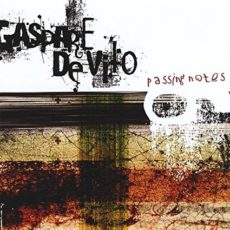
Gaspare De Vito was born on August 17, 1978 in Naples, Italy. He studied with Gianluigi Troversi, Eugenio Columbo and musical composition with Giancarlo Schiaffini. An auspicious meeting of Steve Grossman and Greg Osby was fundamental to the freedom of his original music.
Blending his Neopolitan and Meditteranean roots with hip-hop in his early teens, he would go through funk, jazz, Cuban traditional and South African music gave him the basis for his music. He has performed and recorded as a leader and a session player throughout Europe.
He has performed and recorded with Butch Morris, Alvin Curran, Tristan Hosinger, Giancarlo Schiaffini, Eugenio Colombo, Francesco Bearzatti, Fabrizio Puglisi, Vincenzo Vasi, Nicola Guazzaloca, Pasquale Mirra, Marco Dal Pane, Luisa Cottifogli, Maisha Grant and numerous others.
Alto saxophonist, flautist and composer Gaspare De Vito who has been voted Best Italian saxophonist in 2007 and co-founded the Suoniforme record label, continues to record, tour and perform internationally.
Daily Dose Of Jazz…
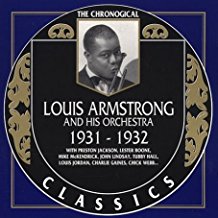
Lester Boone was born August 12, 1904 in Tuskegee, Alabama and studied at the Illinois College of Music before beginning his career in the Chicago bands of Alex Calamese, Charlie Elgar, Clarence Black and Carroll Dickerson. At the end of the 1920s he played in Albert Wynn’s Creole jazz band and on his recording Down by the Levee for Vocalion Records.
The following years he worked with Harry Dial, got his first big break playing with Earl Hines, and by the early Thirties was hitting with Louis Armstrong. He then moved on to play with Jerome Carrington, Emperor Marshall, Eubie Blake, the Mills Blue Rhythm Band and Jelly Roll Morton. Bouncing between Chicago and New York City he played with trumpeter Hot Lips Page and Eddie South. By 1941 he was accompanying Billie Holiday on her recording session of Am I Blue? on the Decca label.
With Tom Lord he was involved in 24 recording sessions between 1928 and 1941. From the early 1940s into the Sixties he played in New York with his own bands including with Everett Barksdale at clubs such as Harvey’s and the Lucky Bar.
Alto and baritone saxophonist and clarinetist Lester Boone, who had the honor of having the great Satchmo personally introduce his solo in that unmistakable growly voice of his, passed away in 1989.

Daily Dose Of Jazz…
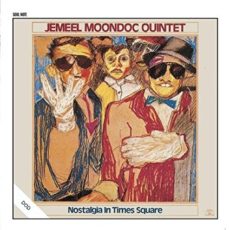
Jemeel Moondoc was born August 5, 1951 in Chicago, Illinois and studied clarinet and piano before settling on saxophone at sixteen. He became interested in jazz largely due to Cecil Taylor and at the University of Wisconsin–Madison became one of his student.
Following graduation he moved to New York City, where he founded Ensemble Muntu with William Parker, Roy Campbell, Jr., and Rashid Bakr. The group had its own Muntu record label for a time but eventually faced financial difficulties. He worked with Parker again on his 1998 album New World Pygmies.
Alto saxophonist Jemeel Moondoc, a proponent of a highly improvisational style, has recorded nineteen albums as a leader, two with the Jus Grew Orchestra, three with Denis Charles and Steve Swell and continues to compose, perform and record.
Sponsored By
Voices From The Community

#preserving genius
More Posts: saxophone
Daily Dose Of Jazz…
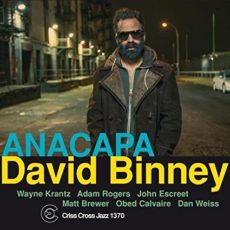
David Binney was born on August 2m 1961 in Miami, Florida and was raised in Carpenteria, California. Through his parents love of music he grew up listening to albums by John Coltrane, Miles Davis, Wayne Shorter, and Jimi Hendrix. He took saxophone lessons in Los Angeles, California and at nineteen moved to New York City and studied with saxophonists George Coleman, Dave Liebman, and Phil Woods.
With a grant from the National Endowment for the Arts he recorded his first album, Point Game in 1991 on the Owl label, that led to him starting his own label, Mythology Records before the turn of the century.
He has been of several bands, including Lost Tribe, Jagged Sky, Lan Xang, the Gil Evans Orchestra, the Maria Schneider Orchestra, and Medeski Martin & Wood. Binney has also worked with Adam Rogers, Alex Sipiagin, Ben Monder, Ben Perowsky, Bill Frisell, Bobby Previte, Brian Blade, Cecil McBee, Craig Taborn, David Gilmore, Edward Simon, Eivind Opsvik, Jacob Sacks, James Genus, Jim Black, Jim Hall, Kenny Wollesen, John Escreet, Leni Stern, Lonnie Plaxico, Mark Turner, Marvin “Smitty” Smith, Nate Wood, Scott Colley, Steven Bernstein, Thomas Morgan, Tim Lefebvre, Uri Caine and Wayne Krantz.
Alto saxophonist and composer David Binney has recorded more than two-dozen albums as a leader, has recorded a half-dozen as a sideman, currently resides in New York City and continues to compose, perform and record.
Sponsored By

#preserving genius
More Posts: saxophone