


Daily Dose Of Jazz…
Etienne Bouyer was born on March 18, 1982 in Saint-Denis on the island of Reunion and took violin lessons from age four to 11, opting to play the saxophone. In 1995 he played tenor saxophone in the big band of the Conservatoire d’Antibes and joined the Nice CNR in 1997, where he studied classical saxophone and contemporary music.
1999 saw Etienne gaining admittance to the Baccalauréat Général in Paris, France to study in the American School of Modern Music. For the next five years he studied saxophone, harmony, arrangement and composition, writing for big band and string quartet. Leading an active professional life while studying, he plays in numerous bands and orchestras of all styles including big band, salsa, gypsy and co-founded La Brocante, recording and performing in concert in France and Morocco.
In 2004 he joined the Didier Lockwood Music Center and where he studied with a host of musicians like André Villéger, Pierrick Pedron and Stéphane Guillaume among others. During this period Bouyer met many other musicians with whom he works regularly, taking part in the electro-jazz project Blözar and forming his quartet, the Etienne Bouyer Group with Pierre Antoine, Martin Berauer and Alexis Sébileau.
Following graduation he began teaching, studying privately in New York City with Dave Liebman and Sam Newsome, taking a week-long master class with Charlie Haden and began working with the Belgian violinist Cécile Broché, that led to recordings. He returned to Europe to study in Paris and Brussels, taking master classes with Bob Mintzer, François Jeanneau and creating the Collective Of Active Composing. Etienne has been a member of the Yuval Amihai Ensemble that won the Jazz Festival Tremplin in Saint-Germain-des-Prés.He has performed with Avishai Cohen, Rabih Abou-Khalil, Bojan Z, Kyle Eastwood and Manu Katché.
Tenor and soprano saxophonist Etienne Bouyer teaches at the Conservatory of Music and Dance of Châtenay-Malabry and the Conservatoire with Regional Radiation of Amiens Métropole. He currently Is the coordinator of the Jazz & Current Music Department at the Amiens Metropole Regional Conservatory and continues to perform, record and compose.
Sponsored By


#preserving genius
More Posts: saxophone
Daily Dose Of Jazz…
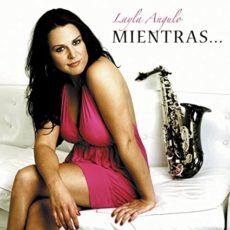
Layla Angulo was born on March 12, 1976 in Seattle, Washington into a long line of artists and musicians, and started playing the piano at age 6, the saxophone at age 10 and began performing in jazz clubs while high school. After graduation, she played in various funk, jazz, pop, and salsa groups. She performed as the horn section leader of various salsa bands around the Northwest and developed the idea to write her own music soon after.
By her early 20’s, Layla was living in Santiago de Compostela, Spain where she began building her Latin jazz career, performing her new music with Spanish and Cuban musicians. Following this stint in Europe she returned to the States, she recorded Live at the Triple Door in 2005 with a thirteen piece orchestra and performing original music. This jumped her career, garnered her two Honorable Mentions awards in the International Songwriting Competition and catapulted Costa Rican singer, Carlos Cascante, who became the singer for the Spanish Harlem Orchestra.
Her sophomore project and her first studio recording was titled Mientras where she wrote for her voice and enlisted a line up of all-star musicians including Oscar Stagnaro, Arturo O’Farrill, and Orlando “Maraca” Valle. Her third release TriAngulo combines the talents of New York’s top salsa, bachata and merengue musicians.
Angulo, who professionally goes by Layla, moved to New York City and toured with reggaeton superstar Don Omar, has toured with Tito Puente Jr., Beyonce’s horn players the Sugarhorns and played with many other Grammy award winning artists.
She is one of the only female saxophone players/singers/band directors in the world of Latin music today. Saxophonist, composer, singer and band director has won several songwriting competitions and continues to perform, record and tour.
Sponsored By

www.whatissuitetabu.com
#preserving genius
Daily Dose Of Jazz…
Jan Garbarek was born March 4, 1947 in Mysen, Norway and grew up in Oslo, the only child of a former Polish prisoner of war and a Norwegian farmer’s daughter. He began his recording career in the late 1960s featured on recordings by jazz composer George Russell. Initially influenced by Albert Ayler and Peter Brötzmann, by 1973 he left avant-garde jazz, and gained wider recognition working with pianist Keith Jarrett’s European Quartet, recording on six Jarrett albums between 1974 and 1979.
As a composer, he draws from Scandinavian folk melodies and his Ayler influence, as well as being a pioneer of ambient jazz composition, exhibited on his Dis album with guitarist Ralph Towner. Jan has ventured into new-age music, set a collection of Olav H. Hauge poems to music, solo saxophone complemented a full mixed choir and incorporated synthesizers and elements of world music.
Garbarek has recorded more than two-dozen albums as a leader and another 45 to date as a sideman with Karin Krog, Terje Rypdal, George Russell, Art Lande, Ralph Towner, Bill Connors, David Darling, Keith Jarrett, Egberto Gismonti, Charlie Haden, Zakir Hussain, Trilok Gurtu, Manu Katché, Eleni Karaindrou, Kim Kashkashian, Marilyn Mazur, Gary Peacock, L. Shankar, Paul Giger, Giya Kancheli, Miroslav Vitous, Eberhard Weber and Kenny Wheeler
His album Officium, a collaboration with early music vocal performers the Hilliard Ensemble, became one of ECM’s biggest-selling albums of all time. Saxophonist Jan Garbarek, who received a Grammy nomination in 2005 for his album In Praise of Dreams, He is also active in classical and world music and continues to perform, record and tour.
Sponsored By
#preserving genius
More Posts: saxophone
Daily Dose Of Jazz…
Ronald Maxwell Jones was born on February 28, 1917 in London, England and together with his brother Cliff, taught himself to play the saxophone, before the two of them founded the semi-professional Campus Club Dance Band in 1930. Dissolved in 1935 he tried to establish himself as a professional musician, becoming a member of a combo led by trumpeter Johnny Claes, with musicians who played in the style of Coleman Hawkins.
In 1942 and 1943, Max worked for the BBC radio program Radio Rhythm Club; and in 1942, together with authors Albert McCarthy and Charles Fox, founded the magazine Jazz Music, which became meritorious as it set out to reassert the pioneering role of the African-American, to emphasize the music’s social dimensions, and to attack the glossy commercialism of big-band swing.
Since 1944, Jones had a full-time job writing features for the Melody Maker in the column Collectors’ Corner. In the following years he gained more and more high recognition as a proven expert of New Orleans Jazz, swing, and mainstream jazz.
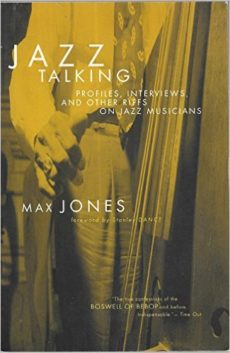
In 1971 Jones published a Louis Armstrong biography, Louis: The Louis Armstrong Story, together with John Chilton. He also wrote a number of liner notes, such as for the CD edition of the Kenny Clarke/Francy Boland Big Band, the Spirits of Rhythm, and wrote the preface for the Lee Collins, Mary Spriggs Collins, Frank Gillis, John W. Miner book Oh, Didn’t He Ramble: The Life Story of Lee Collins. A collection of his articles on musicians such as Coleman Hawkins, Johnny Hodges, Billie Holiday, and Mary Lou Williams was published as a book entitled Talking Jazz in 1987.
Jones was the first jazz musician to become a professional journalist and exclusively dealt with jazz in his publications. He was a model and a mentor for a younger generation of rock music critics and authors. Author, radio host, and journalist Max Jones passed away on August 1, 1993 in Chichester, England.

#preserving genius
More Posts: saxophone
Daily Dose Of Jazz…
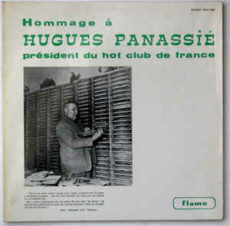
Hugues Panassié was born on February 27, 1912 in Paris, France and when he was fourteen, he was stricken with polio, limiting extracurricular physical activities. So he took-up the saxophone and fell in love with jazz in the late Twenties. In 1932 he was the founding president of the Hot Club de France.
During the Germans occupation of northern France the Nazi’sbanned American jazz because they regarded jazz as low music from an inferior people. However Hugues got past the censors by submitting alternate and obscure French titles and continue to broadcast. One example was La Tristesse de Saint Louis, which translates to Sadness of Saint Louis, but in reality it was Louis Armstrong’s The Saint Louis Blues.
Panassié would go on to produce several jazz records by artists that include Sidney Bechet and Tommy Ladnier, author thirteen books about jazz, was an ardent exponent of Dixieland and Black players and a controversial critic of bad musicians such as Benny Goodman’s clarinet being inferior to the likes of Jimmy Noone and Omer Simeon. He dismissed bebop as a form of music distinct from jazz and held in esteem a lone example of a white musician who played jazz authentically in Mezz Mezzrow.
But he was not without his critics and historians who saw him creating a wedge between Black and Caucasian musicians by insisting that Black jazz was superior. He penned the liner notes for a 1956 RCA Victor compilation Guide to Jazz that included 16 recording by prominent jazz artists. After spending five months in New York City, critic, record producer and impresario Hugues Panassié met his assistant Madeleine Gautier, married, returned and settled in Montauban, France until his passing away on December 8, 1974.
Sponsored By

Voices From The Community
#preserving genius
More Posts: saxophone