

Daily Dose Of Jazz…
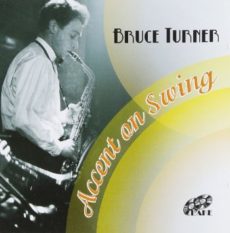
Bruce Turner was born Malcolm Bruce Turner on July 5, 1922 in Saltburn, England. Educated at Dulwich College, he learned to play the clarinet as a schoolboy and began playing alto sax while serving in the Royal Air Force in 1943 during World War II. He played with Freddy Randall from 1948–53, and worked on the Queen Mary in a dance band and in a quartet with Dill Jones and Peter Ind.
He briefly studied under Lee Konitz in New York City in 1950 then joined Humphrey Lyttelton’s outfit from 1953 to 1957. After leaving Lyttelton he led his own Jump Band from 1957–65 and was featured and arranged the music in the 1961 film Living Jazz. In 1961, Turner and his band recorded the LP Jumpin’ At The NFT (National Film Theatre) coinciding with the film’s release. Two years later he took part in the largest trad jazz event to be staged in Britain with George Melly, Diz Disley, Acker Bilk, Chris Barber, Kenny Ball, Ken Colyer, Monty Sunshine, Bob Wallis, Alex Welsh and Mick Mulligan.
He returned to work with Randall from 1964–66, and played with Don Byas in 1966 and Acker Bilk from 1966 to 1970. He continued to work with Lyttelton and Ind in the 1960s, 1970s and 1980s, and played with the Jump Band every so often. He worked with Wally Fawkes, John Chilton, Stan Greig, Alex Welsh, and Dave Green through the Seventies. He led his own small ensembles in the 1990s, up until his death.
He was noted for his very quiet voice and his autobiography Hot Air, Cool Music was published in 1984. He also wrote a column on jazz for the Daily Worker. Saxophonist, clarinetist, and bandleader Bruce Turner passed away on November 28, 1993 in Newport Pagnell.
Sponsored By

www.whatissuitetabu.com

Daily Dose Of Jazz…
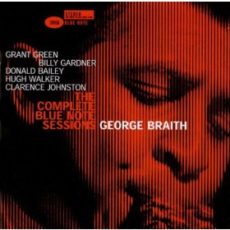
George Braith was born George Braithwaite on June 26, 1939 in New York City. Picking up the baritone saxophone in the seventh grade, by his teen years he had his union card. playing with the thirteen-piece Dickens LaRoca band. He would later become a leader in his own right, sharing the bill with musicians like Bud Powell, Roy Ayers and Freddie Hubbard.
His epiphany about the double-horn came in the early 1960s when one night in Harlem, while playing at the Purple Manor, Roland Kirk hit the stage blowing multiple instruments at once and blew George off the stage. They quickly became friends, though the relationship became a little more competitive when George was signed by Blue Note Records.
Known for playing multiple horns at once, a technique pioneered by Rahsaan Roland Kirk, in 1976 Braith invented the Braithophone, two different horns, straight alto and soprano mended together by extensions, valves and connections. He took his invention to Central Park and later to Broadway and 50th Street, where he perfected the sound and attracted crowds. It has become a mainstay for the soul-jazz saxophonist who continues to feature the instrument in performances at various jazz clubs in town, as well as on recordings he produces on his own label, Excellence Records.

Give A Gift Of Jazz – Share
More Posts: saxophone
Daily Dose Of Jazz…
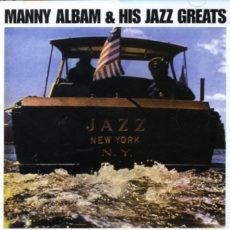
Manny Albam was born on June 24, 1922 in Samana, Dominican Republic. Growing up in New York City he became interested in jazz after hearing Bix Beiderbecke and at sixteen dropped out of school to play for Dixieland trumpeter-leader Muggsy Spanier, but it was his membership in a group led by Georgie Auld that turned his career around.
While playing with Auld group, saxophonist Budd Johnson mentored Albam as an arranger. By 1950, Albam put down his baritone sax and began to concentrate strictly on arranging, writing, and leading. Within a few years, he became known for a bebop-oriented style that emphasised taut and witty writing with a flair for distinctive shadings. Flute-led reed sections became his trademark.
He became known for his work for bandleaders Charlie Barnet and Charlie Spivak, before moving forward to collaborate with Count Basie, Stan Getz, Bob Brookmeyer, Coleman Hawkins, Dizzy Gillespie, Freddie Hubbard, Hank Jones, Mel Lewis, Art Farmer, Urbie Green, and Milt Hinton, among others.
Manny found an entree into the classical music world when he arranged Leonard Bernstein’s score for West Side Story in 1957. Bernstein was said to have been so impressed that he invited him to write for the New York Philharmonic, and, in due course, write such works as Concerto for Trombone and Strings, became musical director for United Artists-Solid State Records, composed the score for a few films and television programs, and recording the albums The Blues is Everybody’s Business, The Drum Suite, The Jazz Workshop, Jazz New York, Something New, Something Blue and his jazz suite The Soul of the City.
As an educator Manny started teaching summer workshops at the Eastman School of Music in Rochester, New York in 1964. He later joined the faculties of Glassboro State College in New Jersey and the Manhattan School of Music in New York. By 1988 he helped establish the BMI Jazz Composer’s Workshop to foster young composers and arrangers. In 1991 he eventually took over as director from Bob Brookmeyer and has as long list of former students throughout the music industry and in higher education, a pursuit he continued until his death.
Baritone saxophonist,composer,arranger, producer and educator Manny Albam passed away of cancer on October 2, 2001 in Croton-on-Hudson, New York.
Sponsored By
www.whatissuitetabu.com
More Posts: saxophone
Daily Dose Of Jazz…
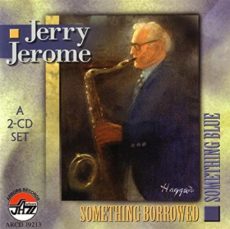
Jerry “Buck” Jerome was born on June 19, 1912 in Brooklyn, New York and began playing the saxophone in high school in Plainfield, New Jersey. In 1936 he was part of a national tour with bandleader Harry Reser and his Clicquot Club Eskimos.
He joined Glenn Miller’s original orchestra in 1937 and was a member until it broke up in 1938. He played on the Miller recording Doin’ the Jive in which in soloed. He then joined the Red Norvo band followed by taking a chair in the Benny Goodman Orchestra in 1938.
When Goodman broke up his band in 1940, Buck joined the Artie Shaw Orchestra. While with Shaw he appeared in the 1940 film Second Chorus starring Fred Astaire and Burgess Meredith.
Tenor saxophonist Jerry Jerome, who was a mainstay during the big band era and led four recording sessions, passed away on November 17, 2001.
Sponsored By


More Posts: saxophone
Daily Dose Of Jazz…
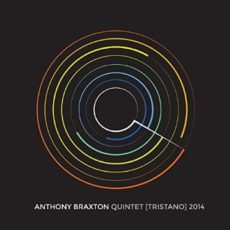
Anthony Braxton was born June 4, 1945 in Chicago, Illinois. He studied philosophy at Roosevelt University and early in his career he led a trio with violinist Leroy Jenkins and trumpeter Wadada Leo Smith. He was involved with the Association for the Advancement of Creative Musicians (AACM) founded in his birthplace.
In 1969, Braxton recorded the double album For Alto, the first full-length album for unaccompanied saxophone. The album’s tracks were dedicated to Cecil Taylor and John Cage among others. The album influenced other artists like soprano saxophonist Steve Lacy and trombonist George Lewis, who would go on to record their own solo albums.
Joining pianist Chick Corea’s trio with bassist Dave Holland and Barry Altschul they form the short-lived avant garde quartet Circle around 1970. When Corea broke up the group to form Return To Forever, Holland and Altschul remained with Braxton for much of the 1970s as part of a quartet, rotating Kenny Wheeler, George Lewis and Ray Anderson. With Sam Rivers they recorded Holland’s This group recorded for Arista Records and the core trio with saxophonist Sam Rivers recorded Holland’s Conference of the Birds on ECM. In the 1970s he recorded duets with Lewis and with synthesizer player Richard Teitelbaum. In 1975, he released Muhal with the Creative Construction Company featuring Richard Davis, Steve McCall, Muhal Richard Abrams, Wadada Leo Smith and Leroy Jenkins. He would oo on to record through the 70s, 80s and early 90s wth Marilyn Crispell, Mark Dresser and Gerry Hemingway.
He performed at the Woodstock Jazz Festival, was awarded a MacArthur Fellowship, composed his Ghost Trance Music released on his now defunct Braxton House label, and the final Ghost House live recordings at the New York City Iridium club were released by Firehouse 12 label in 2007. He recorded a prodigious series of multi-disc sets of standards during the 1990 and early 2000s
Besides playing saxophone, Braxton also plays clarinet, flute and piano, performs and records in the avant-garde, improvisation, bebop and mainstream genres, composes operas, orchestral and classical compositions, and is an avid chess player. He is the author of multiple volumes explaining his theories and pieces, such as the philosophical three-volume Triaxium Writings and the five-volume Composition Notes.
Composer and instrumentalist Anthony Braxton has released well over 100 albums since the 1960s, has taught at Mills College in the Eighties, was Professor of Music at Wesleyan University from the 1990s until his retirement at the end of 2013, and in 2013, was named a 2014 National Endowment for the Arts Jazz Master.
Give A Gift Of Jazz – Share