

Daily Dose Of Jazz…
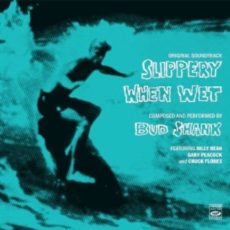
Bud Shank was born Clifford Everett Shank, Jr. on May 27, 1926 in Dayton, Ohio. He began with clarinet in Vandalia, Ohio, but had switched to saxophone before attending the University of North Carolina. While at UNC he was initiated into the Pi Kappa Alpha Fraternity.
In 1946 he worked with Charlie Barnet before working with Stan Kenton and the West Coast jazz scene. He also had a strong interest world music, playing Brazilian-influenced jazz with Laurindo Almeida in 1953–54, and in 1962 fusing jazz with Indian traditions in collaboration with Indian composer and sitar-player Ravi Shankar.
He spent the 1960s as a first-call studio musician in Hollywood and is also well known for the alto flute solo on the song California Dreamin’ recorded by The Mamas & the Papas in 1965. By 1974 Shank had joined with Ray Brown, Shelly Manne and Laurindo Almeida to form the group the L.A. Four, recording and touring extensively through 1982. He helped to popularize both Latin-flavored and chamber jazz music performing with orchestras as diverse as the Royal Philharmonic, the New American Orchestra, the Gerald Wilson Big Band, Stan Kenton’s Neophonic Orchestra, and Duke Ellington.
In 2005 he formed the Bud Shank Big Band in Los Angeles, California to celebrate the 40th anniversary of Stan Kenton’s Neophonic Orchestra.
A documentary film, Bud Shank “Against the Tide” Portrait of a Jazz Legend, was produced and directed by Graham Carter of Jazzed Media and released by Jazzed Media as a DVD and CD) in 2008. The film has been awarded 4 indie film awards including an Aurora Awards Gold.
Alto saxophonist Bud Shank, who also played tenor and baritone saxophone, passed away on April 2, 2009, of a pulmonary embolism at his home in Tucson, Arizona, one day after returning from San Diego, California, where he was recording a new album.

Inspire A Young Mind

#preserving genius
Daily Dose Of Jazz…
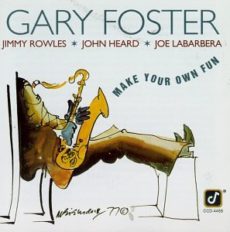
Gary Foster was born May 25, 1936 in Leavenworth, Kansas and started on the clarinet at age 13. His first personal musical inspiration was Olin Parker, his Jr. High School music director and private teacher who introduced him to Woody Herman, Count Basie and many other types of music. He listened closely to the Woody Herman orchestra recording of “Four Brothers” from the late 1940s which featured jazz saxophonists Stan Getz, Zoot Sims and Serge Chaloff and for him, Getz stood out on the tenor saxophone because of his tone. but Lester Young and Charlie Parker were also major influences.
His earliest professional experience was at age of 15 playing Leavenworth VFW Hall dances with bassist Harold Stanford. After high school Gary studied at Central College in Fayette, Missouri, he then transferred to the University of Kansas studying classical clarinet, music education, musicology and conducting. While there he met and played with Kansas City jazz trumpet great Carmell Jones.
In 1961 at age 26 Foster moved to Los Angeles, California to join the West Coast jazz scene, teaching privately and studying the flute but finding little work for a saxophonist to make a living only playing jazz he turned to studio work as a woodwind doubler to support his family. His initial associations and friendships with Clare Fischer and Warne Marsh were vital to Foster’s artistic approach to music and jazz improvisation.
He joined at its inception in 1973 he was a member of the Grammy Award winning Toshiko Akiyoshi – Lew Tabackin Big Band, worked with the big bands of Clare Fischer, Louis Bellson, Mike Barone, Ed Shaughnessy, and the Marty Paich Dek-tette, as well as with Cal Tjader, Poncho Sanchez, Sammy Nestico, Shelly Manne, and Rosemary Clooney and numerous others.
For over 45 years he has made his studio work has included television, movies, recordings, media and soundtracks such as Monsters, Inc., Ice Age, Elf, Meet The Fokkers, and Haunted Mansion to name a few. Foster has been in the Academy Awards Television Orchestra for 30 different broadcasts of the show, performed regularly with the Los Angeles Philharmonic, the Los Angeles Chamber Orchestra, the Los Angeles Opera Orchestra and the Hollywood Bowl Orchestra.
Saxophonist, clarinetist and flutist Gary has taught at Pasadena City College, University of Missouri, University of California, Los Angeles and California State University and founded Nova Music Studios. He has co-authored educational materials and conducts clinics at colleges and performs and lectures at professional music symposiums.
Dose A Day-Blues Away
Daily Dose Of Jazz…
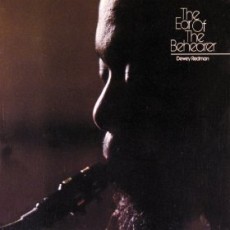
Walter Dewey Redman was born May 17, 1931 in Fort Worth, Texas. He attended I.M. Terrell High School and played saxophone in the school band with Ornette Coleman, Prince Lasha and Charles Moffett. After high school he briefly enrolled in the electrical engineering program at Tuskegee Institute in Alabama but became disillusioned with the program and returned home to Texas. In 1953, he earned a bachelor’s degree in Industrial Arts from Prairie View Agricultural and Mechanical University and while attending switched from clarinet to alto saxophone, eventually to tenor.
Following his degree, Redman served for two years in the Army and upon his discharge he began working on a master’s degree in education at the University of North Texas. While there he taught music to fifth graders in Bastrop, Texas and worked as a freelance saxophonist at night and on weekends around Austin, Texas. By 1957 he graduated in Education with a minor in Industrial Arts.
1959 saw him moving to San Francisco, California as result of an early collaboration with clarinetist Donald Rafael Garrett. He would go on to perform with Ornette Coleman, from 1968 to 1972 and recording New York Is Now!, among others. Dewey was also a part of Keith Jarrett’s American Quartet from 1971 – 1976, whose album The Survivors’ Suite was voted Jazz Album of the Year by Melody Maker in 1978.
In the mid-70s Redman formed the quartet Old And New Dreams with Coleman alumni Don Cherry, Charlie Haden and Ed Blackwell. They recorded four albums in the period to 1987. He performed and recorded as an accompanying musician with jazz musicians who performed in varying styles within the post-1950s jazz idiom, including drummer Paul Motian, Pat Metheny, Jane Bunnett, Anthony Cox, Cameron Brown, Billy Hart, Matt Wilson, Roswell Rudd, Randy Weston, Clifford Thornton, Jon Ballantyne, Michael Boclan, David Bond, Leroy Jenkins, Dane Belany and Michel Benita.
As a leader with more than a dozen recordings, Dewey established himself as one of the more prolific tenor players of his generation. Though generally associated with free jazz, he would also play standards and ballads reminiscent of the blues and post-bop mainstream and would sometimes hum into his sax while performing.
Tenor saxophonist Dewey Redman, who occasionally played alto saxophone, the Chinese suona and clarinet mainly in the free jazz genre, passed away from liver failure in Brooklyn, New York, on September 2, 2006. He was the subject of an award-winning documentary film Dewey Time and recorded two albums with his son Joshua.
Inspire A Young Mind
Daily Dose Of Jazz…
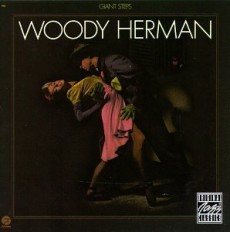
Woody Herman was born Woodrow Charles Thomas Herman on May 16, 1913 in Milwaukee, Wisconsin. His father had a deep love for show business and this influenced him at an early age. As a child he worked as a Vaudeville singer and tap-dancer, then started to play the clarinet and saxophone by age 12.
1936 saw him joining the Tom Gerun band and his first recorded vocals were Lonesome Me and My Heart’s at Ease. He also performed with the Harry Sosnick Orchestra, Gus Arnheim and Isham Jones, the latter writing numerous popular songes including It Had To Be You. When Jones retired Woody acquired the orchestra, which became known for its orchestrations of the blues. They first recorded for the Decca label as a cover band, eventually getting their first hit with Woodchopper’s Ball in 1939.He went on to have hits with The Golden Wedding and Blue Prelude.
As bebop was gradually replacing swing Herman commissioned Dizzy Gillespie as an arranger and he provided him three arrangements of Woody‘n You, Swing Shift and Down Under in 1942, heralding a change in the music. By 1945 Herman was with Columbia Records, recording the First Herd, the very successful Laura, the theme song to the 1944 movie of the same name. That group became famous for its progressive jazz that was heavily influenced by Duke Ellington and Count Basie. By the end of 1946 the big band era was over and he disbanded his only financially profitable group.
In 1947, Herman organized the Second Herd that remained together until 1987. This band was also known as The Four Brothers Band derived from the song and featured three tenor and one baritone saxophone of Zoot Sims, Serge Chaloff, Herbie Steward and Stan Getz. In the band was also Al Cohn, Gene Ammons, Lou Levy, Oscar Pettiford, Terry Gibbs and Shelly Manne and they had hits with Early Autumn and The Goof and I.
Herman would go on to perform in movies with Billie Holiday and Louis Armstrong, record for RCA, Capitol, MGM and Verve record labels, put together his Third Herd and variations of the New Thundering Herd and by the Seventies was touring and working more in jazz education by offering workshops and taking on younger sidemen.
The 1980s saw Herman’s return to straight-ahead jazz, dropping some of the newer rock and fusion approaches he had used the previous decade. He continued to perform with his health in decline, chiefly to pay back taxes that were owed because of his business manager’s bookkeeping in the 1960s. Herman owed the IRS millions of dollars and was in danger of eviction from his home. He eventually passed leadership duties to reed section leader Frank Tiberi.
Clarinetist, alto and soprano saxophonist, singer and big band leader Woody Herman was awarded two Grammys for Best Big Band Jazz Album for Encore and Giant Steps, The Grammy Lifetime Achievement Award, had won Down Beat, Esquire and Metronome polls. He was the feature of a documentary film titled Woody Herman: Blue Flame- Portrait of a Jazz Legend, and was a featured half-time performer at Super Bowl VII. He passed away on October 29, 1987.
Dose A Day-Blues Away
Daily Dose Of Jazz…
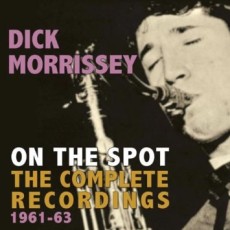
Richard Edwin Morrissey was born May 9, 1940 in Horley, England. Better known to the world as Dick Morrissey, he was self-taught and started playing clarinet in his school band, The Delta City Jazzmen, at the age of sixteen with fellow pupils Robin Mayhew, Eric Archer, Steve Pennells, Glyn Greenfield and young brother Chris on tea-chest bass. He then joined the Original Climax Jazz Band. This stint he followed with becoming a member of the Gus Galbraith Septet and was introduced to Charlie Parker by alto-sax player Peter King. This prompted him to begin specializing on tenor saxophone.
Making his name as a hard bop player, Dick appeared regularly at the Marquee Club in 1960 and recorded his first solo album for Fantana Records It’s Morrissey, Man! the next year at the age of 21. It featured pianist Stan Jones, drummer Colin Barnes, and The Jazz Couriers founding member bassist Malcolm Cecil.
Spending most of 1962 in Calcutta, India as part of the Ashley Kozak Quartet, he played three 2-hour sessions seven days a week. Returning to the UK Dick formed a quartet with Harry Smith, Phil Bates, Bill Eyden, Jackie Dougan or Phil Seamen. They recorded three albums between 1963 and 1966,played regular gigs at The Bull’s Head and Ronnie Scott’s, and played with Ian Hamer, South and
During this time he also played extensively in bands led by Ian Hamer and Harry South, The Six Sounds, performed briefly with Ted Heath’s Big Band, John Dankworth and his Orchestra, was a part of Eric Burdon and The Animals Big Band with Stan Robinson, Al Gay, Paul Carroll, Ian Carr, Kenny Wheeler and Greg Brown.
He would go on to tour and/or record with visiting musicians Brother Jack McDuff, Jimmy Witherspoon, J. J. Jackson, Sonny Stitt and Ernest Ranglin. He would win many Melody Maker Jazz Polls, toured and recorded with Average White Band, team up with guitarist Jim Mullen of Brian Auger’s Oblivion Express and released seven albums of their 16-year association.
Throughout his career as a leader of his own combos, Morrissey he was an in-demand musician playing with Tubby hayes, Bill LeSage, Roy Budd, Charlie Watts, Georgie Fame, Anie Ross, Dusty Springfield, Paul McCartney, Freddie Mack, Orange Juice, Herbie Mann, Shakatak, Peter Gabriel, David Fathead Newman, Boz Scaggs, Johnny Griffin, David Sanborn, Steve Gadd, Richard Tee, Billy Cobham, The Brecker Brothers, Sonny Fortune, Teddy Edwards and the list of players goes on and on. He is known for playing the haunting saxophone solo on the Vangelis composition Love Theme for the 1982 film Blade Runner.
Tenor saxophonist Dick Morrissey, who also played soprano saxophone and flute, passed away on November 8, 2000, aged 60, in Kent, England after many years battling various forms of cancer.
Inspire A Young Mind