

Daily Dose Of Jazz…
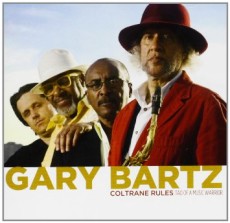
Gary Bartz was born on September 26, 1940 in Baltimore, Maryland. E graduated from the Baltimore City College High School and Juilliard School and got his break playing saxophone into the music industry in his father’s club with Art Blakey, making his debut recording on Blakey’s 1965 Soul Finger album.
Bartz joined the Charles Mingus Jazz Workshop from 1962-1964 where he worked with Eric Dolphy and McCoy Tyner. This was followed with stints with Abbey Lincoln and Max Roach in the mid-Sixties. By ’68 he was a part of McCoy’s Expression band.
Gary has played with Jackie McLean, and with Miles Davis on his Live-Evil project. He formed the group Ntu Troop, and has combined soul, funk, African music, hard bop and avant-garde jazz. He has recorded more than 40 solo albums and over 200 as a guest artist with the likes of the Rance Allen Group, Gene Ammons, Kenny Burrell, Donald Byrd, Norman Connors, Antonio Hart, Phyllis Hyman, Barney McAll, Alphonse Mouzon, Grachan Moncur III, Rare Silk, Pharoah Sanders and Woody Shaw amongst others.
Post-bop alto saxophonist Gary Bartz who also plays soprano saxophone and clarinet has won a Grammy Award in 2005 for his playing on McCoy Tyner’s Illuminations and currently teaches at the Oberlin Conservatory of Music in Ohio when not touring and recording.

Put A Dose In Your Pocket
Daily Dose Of Jazz…
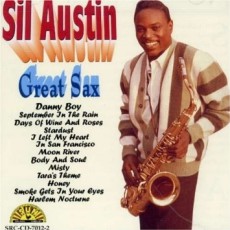
Sil Austin was born September 17, 1929 in Dunnellon, Florida. He taught himself to play saxophone when he was 12, won the Ted Mack Amateur Hour in St. Petersburg, Florida in 1945 playing Danny Boy and his performance got him a contract with Mercury Records. He moved to New York City and studied for a time at the Juilliard School of Music.
Austin briefly played with Roy Eldridge in 1949, with Cootie Williams in 1951-52 and Tiny Bradshaw from 1952-54, before setting up his own successful touring group. He recorded over thirty albums for Mercury, and had a number of Top 40 hits with popular tunes like Danny Boy, that became his signature song, My Mother’s Eyes and Slow Walk, the latter hitting #17 on the charts.
After leaving Mercury in the 1960s, he recorded with a few other labels, including SSS, owned by Shelby Singleton, and recorded a few albums in Japan in the 1970s. Saxophonist Sil Austin, who regarded Coleman Hawkins, Lester Young and Sonny Stitt as his major influences, passed away of prostate cancer on September 1, 2001.
Give A Gift Of Jazz – Share
More Posts: saxophone
Daily Dose Of Jazz..
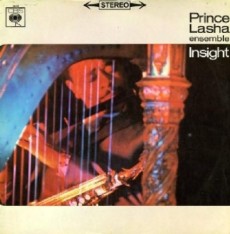
William B. Lawsha, better known as Prince Lasha (pronounced “La-shay“), was born on September 10, 1929 in Fort Worth, Texas. He came of age studying and performing alongside fellow I.M. Terrell High School students John Carter, Ornette Coleman, Charles Moffett and Dewey Redman.
Lasha moved to California during the 1950s and by the Sixties he was active in the burgeoning free jazz movement, of which Ornette Coleman was a pioneer. Moving to Europe in 1966 his musical base was in Kensington, London and his album Insight was recorded, featuring local musicians including Bruce Cale, Dave Willis, Jeff Clyne, Rick Laird, Joe Oliver, David Snell, Mike Carr, Stan Tracey, John Mumford and Chris Bateson.
Prince returned to the U.S. in 1967, worked closely with saxophonist Sonny Simmons, recording two albums, The Cry and Firebirds for Contemporary Records. The latter album received five stars and an AMG Album Pick at Allmusic. He also appeared on two recordings with Eric Dolphy, Iron Man and Conversations, and Illumination! with the Elvin Jones/Jimmy Garrison Sextet featuring McCoy Tyner.
In the 1970s, Lasha and Simmons made additional recordings under the name Firebirds. In 2005, he recorded the album The Mystery of Prince Lasha with the Odean Pope Trio. He also recorded with Gene Ammons and Michael White.
Alto saxophonist, flautist and clarinetist Prince Lasha passed away on December 12, 2008 in Oakland, California.
Give A Gift Of Jazz – Share
Daily Dose Of Jazz…
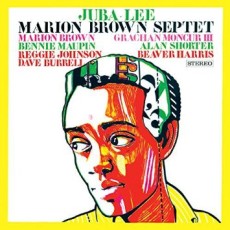
Marion Brown was born on September 8, 1931 in Atlanta, Georgia. He joined the Army in 1953 and three years later attended Clark College to study music. By 1960 he left Atlanta for pre-law at Howard University but after two years moved to New York City and befriended Amiri Baraka, Ornette Coleman, Archie Shepp, Sun Ra, Pharoah Sanders, Paul Bley, Clifford Thornton and Rashied Ali. During this early Sixties period he recorded several important albums such as Archie Shepp’s Fire Music and New Wave In Jazz, and most notably on John Coltrane’s Ascension.
1967 saw Brown in Paris, France where he developed an interest in architecture, impressionist art, African music and the music of Eric Satie. He became an American Fellow in Music Composition and Performance at the Cite International Des Artists in Paris, composed the soundtrack for Marcel Camus’ film Le Temps fou, a soundtrack featuring Steve McCall, Barre Phillips, Ambrose Jackson and Gunter Hall.
Returning to the US in 1970 he landed in New Haven, Connecticut taking a position as a resource teacher in a child study center in the city’s public school system for a year. He went on to be an assistant professor of music at Bowdoin College, and through the 70s joined the faculties of Brandeis University, Colby College, Amherst College and Wesleyan University, earning a Masters in ethnomusicology at the latter.
Throughout his many educational positions, Brown continued to compose and perform, lending his alto saxophone to the recording of Harold Budd’s The Pavilion of Dreams. He received grants from the National Endowment for the Arts, composing and publishing several pieces for solo piano. In 1981, he ventured into drawing and painting and his charcoal portrait of blues guitarist Blind Lemon Jefferson was included in a New York City Kenkeleba Gallery art show called Jus’ Jass, alongside Romare Bearden, Charles Searles and Joe Overstreet.
By the 2000s, avant-garde alto saxophonist Marion Brown had fallen ill due to a series of surgeries and a partial leg amputation. For a time he was in a New York nursing home but in 2005 he moved to an assisted living facility in Hollywood, Florida. He left a catalogue of twenty-five albums as a leader and several more as a sideman before he passed away on October 18, 2010 at age 79.
Dose A Day – Blues Away
More Posts: saxophone
Daily Dose Of Jazz…
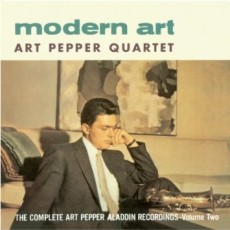
Arthur Edward Pepper, Jr. was born on September 1, 1925 in Gardena, California to a mother who was a fourteen year old runaway and a merchant seaman father, both of whom were violent alcoholics. He was sent to live with his paternal grandmother where he exhibited musical interest and talent while still very young. He began playing the clarinet at nine, switching to the alto saxophone by 13 and immediately started jamming on Carnegie Avenue, the Black nightclub district of Los Angeles.
By the age of 17 he began playing professionally with Benny Carter and then became part of the Stan Kenton Orchestra, touring with that band, until he was drafted in 1943. After the war he returned to Los Angeles and joined the Kenton Innovations Orchestra. In the 1950s Pepper was recognized as one of the leading alto saxophonists in jazz, epitomized by his finishing second only to Charlie Parker as Best Alto Saxophonist in the Down Beat magazine Readers Poll of 1952. Along with Chet Baker, Gerry Mulligan and Shelly Manne, he is often associated with the musical movement known as West Coast jazz, more so for geography than playing style.
Art recorded profusely and some of his most famous albums from the 1950s are Art Pepper Meets The Rhythm Section, Art Pepper + Elven-Modern Jazz Classics, Getting’ Together and Smack Up. During this period he also recorded for Aladdin Records – The Early Show, The Late Show, The Complete Surf Ride, and The Way It Was!, which features a session recorded with Warne Marsh.
His career was repeatedly interrupted by several prison stints stemming from his addiction to heroin from the mid-Fifties to the mid-Sixties and during his last incarcerations at San Quentin played in an ensemble with Frank Morgan. Pepper managed to have several memorable and productive comebacks. Remarkably, his substance abuse and legal travails did not affect the quality of his recordings, which maintained a high level of musicianship throughout his career. During the late 1960s he spent time in Synanon, a drug rehabilitation group and began methadone therapy in the mid-1970s.
His last comeback saw him as a member of Buddy Rich’s Big Band from 1968 to 1969. During the mid-1970s and early 1980s he toured Europe and Japan with his own groups and recorded dozens of albums, mostly for Fantasy Records. He authored an autobiography with his third wife Laurie titled Straight Life that focused on the jazz music world and the drug and criminal subcultures of mid-20th century California. Alto saxophonist and clarinetist Art Pepper recorded sixty-four albums as a leader, three with Ceht Baker and another seventeen as a sideman leaving the world a admirable catalogue of music before his death from a stroke due to a brain hemorrhage in Los Angeles, California on June 15, 1982 at the age of 56.
Dose A Day – Blues Away