

Daily Dose Of Jazz…
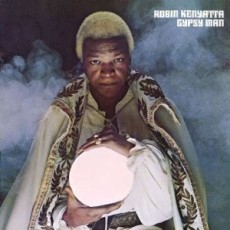
Robin Kenyatta was born Robert Prince Haynes on March 6, 1942 in Moncks Corner, South Carolina but grew up in New York City, learning to play the alto saxophone. He played with Bill Dixon in the 1960s and playing with his project “The October Revolution in Jazz”. Later that decade he played with Jazz Composer’s Orchestra, Roswell Rudd, Sonny Stitt, Archie Shepp and Buddy Miles among others.
By the 1970s he was playing with Alan Silva and Andrew Hill; for a brief time he experimented with instrumental pop music during this decade as well. He moved to Europe during the Seventies, finding it easier to make a living as a jazz musician.
Later in his career he would play with musicians such as Dizzy Gillespie, B. B. King, Dr. John and George Benson; played the Montreux Jazz Festival and went with his own groups on a European tour.
Kenyatta would go on to lead a jazz school in Lausanne, Switzerland during this period. In 2002 Kenyatta returned to the USA becoming active as a director of music in Boston. He died on October 28, 2004 at the age of 62 in Lausanne, leaving behind a catalogue of thirteen albums as a leader and eight as a sideman.
More Posts: saxophone
Daily Dose Of Jazz…
Donald Rafael Garrett was born on February 28, 1932 in El Dorado, Arkansas but was raised in Chicago, Illinois. While in high school he first studied clarinet and then bass under Captain Walter Dyett. By the late 50s he was working closely with Muhal Richard Abrams, becoming a member of his Experimental Band in the Sixties.
It was during this time that he worked with Ira Sullivan, Eddie Harris, Dewey Redman and Rahsaan Roland Kirk but by the mid-sixties he relocated to San Francisco and formed a band called Sound Circus. He stayed on the West coast into the 70s working with such jazz greats as Archie Shepp, Sonny Rollins, Pharoah Sanders and numerous more including performing and recording on four John Coltrane albums – Om, Kulu Se Mama, Selflessness and Live In Seattle.
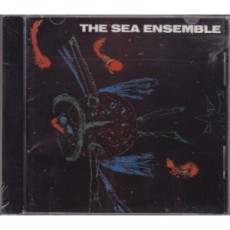
In 1971 he formed the Sea Ensemble with Zusaan Kali Fasteau and embarked on a world tour for the next several years, the duo funding their travels with Fasteau giving music lessons and Garrett skillfully making bamboo flutes. Throughout his career he studied Turkish music, added flute to his instrumental repertoire, became an educator, writer, researcher and continued to perform and record with Johnny Griffin, Sonny Stitt, Joe Henderson, Billy Bang and other great jazz musicians.
Donald Garrett, multi-instrumentalist best known for his work with John Coltrane and the free jazz musicians and improvisers of the 60s and 70s, passed away on August 17, 1989.
More Posts: saxophone
Daily Dose Of Jazz…
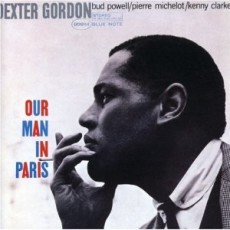
Dexter Gordon was born in Los Angeles on February 27, 1923 to a doctor who counted Duke Ellington and Lionel Hampton among his patients. He played clarinet from the age of 13, before switching to saxophone, initially alto then tenor at 15. While still at school, he was playing in bands with such contemporaries as Chico Hamilton and Buddy Collette.
By 1940 he was on the road with Lionel Hampton playing alongside Illinois Jacquet and Marshall Royal. In 1943 he made his first recordings under his own name with Nat Cole and Harry Edison. During the next two years he was featured in the Louis Armstrong and Fletcher Henderson bands before joining Billy Eckstine. In 1945, Gordon left the Eckstine band and was resident in New York performing and recording with Charlie Parker as well as recording under his own name. Dexter was a virtuoso particularly famous for his titanic saxophone duels with fellow tenor Wardell Gray, that were a popular live attraction and that were documented in several albums between 1947 and 1952.
In 1960 he signed with Blue Note Records, a collaboration that produced some of his highly regarded recordings such as “Doin’ Alright”, “Go”, “Dexter Calling”, and a “Swinging Affair”. After that he spent 15 years in Europe, mostly in Paris and Copenhagen, where he played regularly with fellow expatriate jazzmen such as Bud Powell, Benn Webster Freddie Hubbard, Kenny Drew, Bobby Hutcherson and others. He occasionally returned to Blue Note creating such masterpieces as “Our Man In Paris”, “One Flight Up” and “Getting’ Around”.
His stature of 6’6” earned him the nicknames of “Long Tall Dexter” and “Sophisticated Giant” and he is one of the most influential and iconic figures in Jazz and is largely credited for establishing the classic, modern sound and stylistic concept for the saxophone in general, and the tenor in particular. His studio and live performance career were both extensive and multifaceted; spanning over 50 years in recorded jazz history. Dexter Gordon passed away on April 25, 1990 in Philadelphia, Pennsylvania.
More Posts: saxophone
Daily Dose Of Jazz…
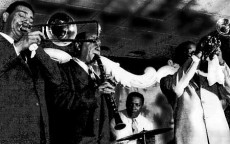
George Dorman “Scoops” Carry was born on January 23, 1915 in Chicago, Illinois. His mother a music teacher, his brother Ed a Chicago based bandleader and guitarist put Scoops in good company during his childhood. Starting on horn at the age of eight, he later went on to study at the Chicago College of Music and Iowa University.
He worked with Cassino Simpson, the Midnight Revellers and Boyd Atkin’s Firecrackers in the late 1920s and 30s while still a teenager. In 1931 Carry played with Lucky Millinder in RKO theater palaces. Reuniting with his brother in 1932, the pair co-led an orchestra through the middle of the 1930s. Following this, Scoops played with Zutty Singleton, Fletcher Henderson and Roy Eldridge. By 1938 he was with Art Tatum, a year later with Horace Henderson and at the end of the decade he worked briefly with Darnell Howard before joining Earl Hines’s band in 1940.
Carry remained in Hines’s employ until 1946, working with him in both large and small ensemble settings. After his tenure with Hines, Carry left music and entered law school in 1947, eventually working in the office of the Illinois state attorney.
Scoops Carry, alto saxophonist and clarinetist during the swing era, passed away on August 4, 1970.

Daily Dose Of Jazz…
Bobby Jaspar was born February 20, 1926 in Liege, Belgium and at a very young age learned to play piano and clarinet. He later took up the tenor saxophone and flute that became his working instruments. Bobby took his first steps in the jazz world with the Bop Shots band but in 1950, Jaspar moved to Paris, played and recorded with the best musicians of the era and met his future wife, Blossom Dearie.
In 1956, Jaspar was persuaded to try his luck in the U.S. where his reputation in jazz circles had preceded him. He played and recorded with J. J. Johnson, Kenny Burrell, Miles Davis, John Coltrane, Toshiko Akiyoshi, Donald Byrd and many others.
In 1961/1962, Jaspar returned to Europe for a year for a series of concerts and a number of recordings. With his colleague, Belgian guitarist Rene Thomas, they formed a successful quintet and in some sessions, this was expanded to a powerful sextet with American trumpeter Chet Baker.
Bobby Jaspar, tenor saxophonist and flautist of the hard bop and cool jazz genres, died from a heart attack in New York City on February 28, 1963 at age 37.