


Daily Dose Of Jazz…
Harold de Vance Land was born on February 18, 1928 in Houston, Texas but was raised in San Diego, California. He started playing tenor saxophone at 16 and made his first recording as leader of the Harold Land All-Stars in 1949 for Savoy Records. By 1954 he had joined the Clifford Brown/Max Roach Quintet but due to family problems he moved to Los Angeles in 1955. There he led his own groups, played with Curtis Counce, and co-led groups with Bobby Hutcherson, Blue Mitchell and Red Mitchell.
Harold developed his hard bop playing with the Max Roach/Clifford Brown band into a personal, modern style. His tone was strong and emotional, yet displayed a certain fragility that made him easy to recognize. From the 1970s onwards his style showed the influence of John Coltrane.
In the early 1980s through to the early 1990s he worked regularly with the Timeless All Stars, a group consisting of Cedar Walton, Buster Williams, Billy Higgins, Curtis Fuller, and Bobby Hutcherson and sponsored by the Timeless jazz record label. Land also toured with his own band during this time, often including his son on piano and usually featuring Bobby Hutcherson and Billy Higgins as well. During these years he played regularly at Hop Singh’s in Marina Del Ray in the L.A area and the Keystone Korner in San Francisco.
As an educator he was a professor at the University of California, Los Angeles joining the Jazz Studies Program in 1996 teaching instrumental jazz combo. Tenor saxophonist Harold Land became a major contributor to hard bop and post bop jazz history, passing away from a stroke on July 27, 2001 at age 73.
More Posts: saxophone
Daily Dose Of Jazz…
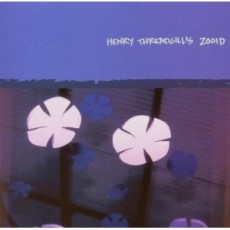
Henry Threadgill was born February 15, 1944, in Chicago, Illinois and first performed as a percussionist in his high school marching band before taking up the baritone saxophone and later a large portion of the woodwind instruments. He soon settled upon the alto saxophone and flute as his main instruments.
He was one of the original members of the legendary AACM – Association for the Advancement of Creative Musicians in Chicago, working under the guidance of Muhal Richard Abrams before leaving to tour with a gospel band. In 1967, he enlisted in the Army, playing with a rock band in Vietnam through 1968. Discharged in 1969 he returned to Chicago, formed a trio that eventually became “Air”, one of the most celebrated and critically acclaimed avant-garde jazz groups of the 1970s and 1980s.
Threadgill had moved to New York City and began pursuing his own musical visions, exploring musical genres in innovative ways with his first nonet X-75. In the early Eighties, Threadgill created the Henry Threadgill Sextet, his first critically acclaimed ensemble as a leader, with two drummers as a single unit. He has recorded three albums under X-75 for About Time Records, reformed his sextet and released three albums on the Novus label.
Since the 90s Threadgill has continued to compose, create, perform and record music with various group configurations such as “Very Very Circus” and “Zooid” utilizing electric guitars, French horn, Latin percussion, accordion, cello and tuba.
Daily Dose Of Jazz…
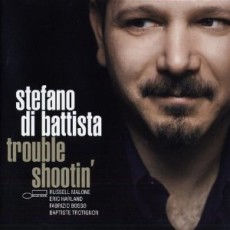
Stefano di Battista was born on February 14, 1969 in Rome Italy. He began studying the saxophone at the age of 13 years in a band made up primarily of boys. It was during this period that he discovered the fun of making music. By the time he was sixteen he had become interested in jazz and the sound of Art Pepper and found his mentor, Massimo Urbani.
Enrolling in The Conservatory, Stefano perfected his technique with classical tradition, graduated with honors and by twenty-one was playing in groups of various configurations. 1992 finds him playing the Calvi Jazz Festival and is invited to perform in Paris. Traveling between Rome and Paris he lands two engagements, is hired to play with the National Jazz Orchestra and his career takes off.
Di Battista put out “Volare”, his debut as a leader in 1997, has toured with the Elvin Jones Jazz Machine as well as performing with Jimmy Cobb, Walter Booker, Nat Adderley, Laurent Cugny, Aldo Romano, Jacky Terrasson and many others. The alto and soprano saxophonist continues to record, perform and tour both as a leader and sideman.
More Posts: saxophone
Daily Dose Of Jazz…
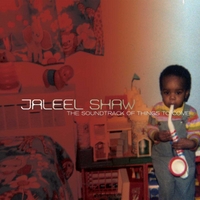
Jaleel Shaw was born February 11, 1978. Growing up in Philadelphia, PA, where he studied with saxophonist Rayburn Wright, Robert Landham, and jazz instructor Lovette Hines while attending the High School for Creative & Performing Arts, Shaw transferring and graduated from George Washington High School. During this period, John Blake and Grover Washington, Jr. also mentored him.
Upon graduating from high school, he received a full four-year tuition scholarship to Berklee College of Music, earned dual degrees in music education and performance Jaleel attended Berklee for four years, received the Billboard Endowed Scholarship for Outstanding Academic and Musical achievement, two Woodwind Dept. Chair Awards, The Outstanding Student Teacher Award, and The Boston Jazz Society Award.
After Berklee, Shaw went to Manhattan School of Music, received his Masters in Jazz Performance and was a finalist in the Thelonious Monk International Saxophone Competition. Jaleel has performed and toured throughout the U.S., Asia, Europe and Australia. The altoist is currently a member of the Roy Haynes Quartet and the Charles Mingus Big Band, performs in various New York clubs, has recorded two albums and leads his own quartet and quintet.
More Posts: saxophone
Daily Dose Of Jazz…
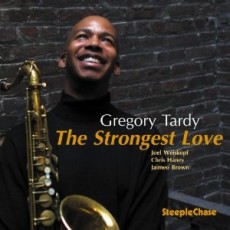
Gregory Tardy was born February 3, 1966 in New Orleans, Louisiana but was reared in Milwaukee, Wisconsin. His interest in music began studying classical clarinet. By high school he excelled in music, winning many awards and scholarships, studying with renowned clarinetists and preparing for a symphony career. Over time he was asked to play saxophone, filling missing gaps in various high school and college ensembles. But it was the prodding of his older brother that made him explore the music of John Coltrane, and decide to follow a jazz path.
Gregory’s passion for the saxophone took over his studies, he moved to St. Louis, played the jazz and blues scene, returned to New Orleans to further study, gigged with the Neville Brothers and ended up in bands led by Nicholas Payton, Jason and Ellis Marsalis. In 1992, Tardy recorded his first solo project “Crazy Love”, was picked up by Elvin Jones Jazz Machine, and moved to New York City.
His performance and recording lists a large array of prominence not limited to Tom Harrell, Dave Douglas, Wynton Marsalis, Jay McShann, Steve Coleman, Betty Carter, James Moody, Ravi Coltrane, Mark Turner, Dewey Redman, Chris Potter, Joe Lovano, Bill Frisell, Rashied Ali and John Patitucci. He has even brought his clarinet out of retirement playing with Andrew Hill, Steve Swallow, Stefan Harris and others.
Tardy continues to explore new territory while keeping in the tradition as he play his own music and perform in many great bands. As an educator he teaches private lessons and facilitates clinics around the world, but always speaking through his horn.