

Daily Dose Of Jazz…
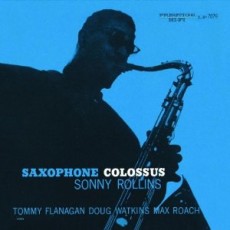
Theodore Walter “Sonny” Rollins was born on September 7, 1930 in New York City to parents from the U.S. Virgin Islands. The young Theodore started out at eleven years old on the piano, receiving his first alto saxophone at thirteen and by sixteen switched to the tenor. By high school he was playing in a band with other future jazz greats like Jackie McLean and Kenny Drew.
1949 saw Rollins recording with Babs Gonzales, J. J. Johnson and Bud Powell and through 1954 performed with Miles Davis, the Modern Jazz Quartet, Charlie Parker and Thelonious Monk. During this early period in the fifties he was arrested for armed robbery, arrested for violating his parole using heroin and sentenced the Federal Medical Center in Lexington, KY where he kicked his habit, although he was afraid sobriety would impair his musicianship. Little did he know at the time he would soar to greater height.
His early influences Louis Jordan, Coleman Hawkins and Lester Young which did so much to inspire the fleet improvisation of be-bop in the 1950s. Rollins drew the two threads together as a fluid post-bop improviser with a sound as strong and resonant as any since Hawkins himself.
Sonny’s widely acclaimed sixth album “Saxophone Colossus” was recorded on June 22, 1956 at Rudy Van Gelder’s studio in New Jersey, with Tommy Flanagan, Doug Watkins and Max Roach. This seminal work led to “Tenor Madness” with Garland, Chambers, Jones and Coltrane, and Sonny Rollins volume One & Two.
By 1959, Rollins was frustrated with what he perceived as his own musical limitations and took the first – and most famous – of his musical sabbaticals. To spare a neighboring expectant mother the sound of his practice routine, Rollins ventured to the Williamsburg Bridge to practice. Upon his return to the jazz scene in 1962 he named his “comeback” album “The Bridge” at the start of a contract with RCA Records, recorded with a quartet featuring guitarist Jim Hall, drummer Ben Riley and bassist Bob Cranshaw. This became one of Rollins’ best-selling records.
Over a very lengthy career spanning more than six decades, the Grammy winning tenor saxophonist, Sonny Rollins, has recorded some 50 albums as a leader and two dozen albums as a sideman. He continues to record, perform and tour until his death on May 25, 2026.
More Posts: saxophone

Daily Dose Of Jazz…
David Sanchez was born on September 3, 1968 in Guaynabo, Puerto Rico and from an early age took up the conga when he was eight His earliest influences were Afro-Caribbean, danza, European and Latin classical. By age 12 David began playing the saxophone, attending La Escuela Libre de Musica, which emphasized formal musical studies.
Around the time he turned 14 he heard Miles Davis’ Basic Miles and Billy Holiday’s Lady In Satin. A few years later faced with college he chose Rutgers over Berklee for a better scholarship and nearer to New York City. While at Rutgers he studied with Kenny Baron, Ted Dunbar and John Purcell.
After a period freelancing in New York with many top Latin players including Paquito D’Rivera and Claudio Roditi, Sanchez joined Dizzy Gillespie’s United Nations Orchestra in 1990 and Dizzy became his mentor. With Dizzy’s group he toured 27 countries and 100 U.S. cities in 31 states.
Leaving the United Nation Orchestra, Sanchez continued to play in Dizzy’s trio until Dizzy’s death in 1993. He has toured with the Philip Morris Superband, recorded with Slide Hampton and his Jazz Masters, Roy Hargrove, Kenny Drew Jr., Ryan Kisor, Danilo Perez, Rachel Z and Hilton Ruiz.
The tenor saxophonist is well known as a leader with seven albums under his belt for Columbia Records. He won a Grammy for the “Best Large Jazz Ensemble Album” in 2004 for Coral. David Sanchez continues to compose, record, perform and tour.
More Posts: saxophone
Daily Dose Of Jazz…
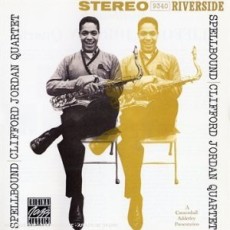
Clifford Laconia Jordan was born on September 2, 1931 in Chicago, Illinois and began his musical studies on the piano at an early age. While still in his hometown he took up the saxophone and had the opportunity to play with Max Roach, Sonny Stitt and a few rhythm and blues groups into the 50s. By 1957 at the age of 26, he made his move to New York City where he recorded three albums for Blue Note.
Over the course of his career Clifford recorded with Horace Silver, J. J. Johnson, Kenny Dorham, Lee Morgan, Max Roach and Paul Chambers. In 1964 he joined the Charles Mingus Sextet along with Eric Dolphy for the European tour. For a while he lived in Belgium, performed in Paris and toured Africa with Randy Weston.
Jordan’s later years saw him leading his own groups, performing with Cedar Walton’s Eastern Rebellion and even led his own big band. He recorded eighteen sessions as a leader and another 28 as a sideman. Saxophonist Clifford Jordan passed away on March 27, 1993 in Manhattan.
More Posts: saxophone

Daily Dose Of Jazz…
Wilton Lewis Felder was born August 31, 1940 in Houston, Texas and is both saxophonist and bass player. He is best known as an original member of The Jazz Crusaders, founded while still in high school, along with Joe Sample, Wayne Henderson and Stix Hooper.
The Jazz Crusaders evolved from a straight-ahead jazz combo into a pioneering jazz-rock fusion group, with a soul music influence. They dropped jazz from the name and became simply known as The Crusaders. Felder worked with the original group for over thirty years, and continues to work in its current versions, which often features other founding members.
Felder also worked as a west coast studio musician, mostly playing electric bass, for various soul and R&B musicians. He was one of the in-house bass players for Motown Records when the label opened operations in Los Angeles in the early 70s working with The Jackson 5, Marvin Gaye, America, Billy Joel, Joni Mitchell and Michael Franks.
Wilton worked with Dizzy Gillespie, John Klemmer, Richard Groove Holmes, Grant Green and Milt Jackson among others during his studio years. His solo release titled “Secrets” featured vocalist Bobby Womack singing the hit “(No Matter How High I Get) I’ll Still Be Looking Up To You”. Wilton Felder continues to perform and record.
Daily Dose Of Jazz…
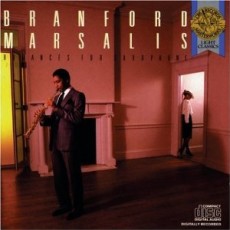
Branford Marsalis was born August 26, 1960 in Breaux Bridge, Louisiana into a musical family led by the patriarch, Ellis. In the summer of 1980, while still at Berklee College of Music, Marsalis toured Europe playing alto and baritone saxophone in an art Blakey large ensemble that led to big band experience with Lionel Hampton and Clark Terry with a return the Art Blakey in the Jazz Messengers with his brother Wynton.
By 1985 he released his first recording, Scenes in the City, as well as guest appearances with Miles Davis and Dizzy Gillespie. In 1985 he joined Sting and The Police along with jazz drummer Omar Hakim, bassist Darryl Jones and keyboardist Kenny Kirkland, recording and performing until 1999.
Branford is primarily known for his work in jazz as the leader of his own quartet, with original member Jeff “Tain” Watts drums, bassist Eric Revis replacing Robert Hurst on bass and pianist Joey Calderazzo replacing Kenny Kirkland after his death. The quartet has toured and recorded extensively, receiving a Grammy in 2001 for its album “Contemporary Jazz”.
After a two-decade association with Columbia Records serving as Creative Consultant and producer for jazz recordings between 1997 and 2001, Marsalis founded his own Marsalis Music label in 2002. producing and releasing his own band along with Harry Connick Jr., Miguel Zenon, Doug Wamble, Alvin Batiste, Michael Carvin, Jimmy Cobb, Bob French and soon to be released Claudia Acuna.
Marsalis has placed great emphasis on his classical music endeavors since the 2001 release of the album “Creation” and symphony orchestra and chamber ensemble performances worldwide became a significant part of his itinerary, touring the U.S. with Philarmonia Brasileira. He has won a 2010 Drama Desk Award for “Outstanding Music in a Play” and was nominated for a 2010 Tony for August Wilson’s Broadway revival of Fences.
Branford has been an educator on the university level at Michigan State, San Francisco State and presently at North Carolina Central University. After Hurricane Katrina he joined forces with Harry Connick Jr. and created the Musician’s Village, undertaken by New Orleans Area Habitat for Humanity in the upper 9th ward, providing dozens of musicians of modest means with the opportunity to own decent, affordable housing. They received the Jefferson Awards for Public Service.
More Posts: saxophone