

Daily Dose Of Jazz…
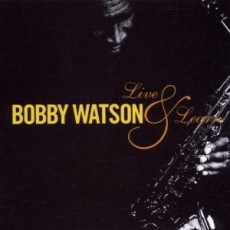
Bobby Watson was born in Lawrence, Kansas on August 23, 1953 but grew up in Kansas City, Kansas. He attended the University of Miami along with fellow students Pat Metheny, Jaco Pastorius and Bruce Hornsby. After graduating in 1975, he moved to New York City and joined Art Blakey’s Jazz Messengers. He performed with the Jazz Messengers from 1977 to 1981, eventually becoming the musical director for the group. He also founded the 29th Street saxophone Quartet with alto saxophonist Ed Jackson, tenor saxophonist Rich Rothenberg, and baritone saxophonist Jim Hartog.
Following his tenure as a Jazz Messenger, Watson became a much-sought after musician, working along the way with many notable musicians, including: drummers Max Roach and Louis Hayes, fellow saxophonists George Coleman and Branford Marsalis, multi-instrumentalist Sam Rivers and his trumpeter brother Wynton. In addition Bobby supported vocalists including Joe Williams, Dianne Reeves, Lou Rawls, Betty Carter and Carmen Lundy as well as being a sideman for Carlos Santana, Rufus & Chaka Khan, Bob Belden and John Hicks.
Watson along with Curtis Lundy and Victor Lewis started “Horizon” an acoustic quintet; led the a tribute band to Johnny Hodges called the “High Court of Swing”; and the “Tailor-Made Big Band”. He composed a song for the soundtrack of Deniro’s “A Bronx Tale”; has been an adjunct professor at William Patterson University and the Manhattan School of Music; and is currently involved with the Thelonious Monk Institute’s “Jazz in America” high school outreach program.
Watson was selected as the first William D. and Mary Grant/Missouri, Distinguished Professorship in Jazz Studies. The past six years he has served as the director of jazz studies at the University of Missouri-Kansas City Conservatory of Music and the alto saxophonist, composer, producer and educator still manages to balance recording of 26 albums as a leader, hundreds of co=led or sideman recordings, along with live engagements around the world with his teaching responsibilities. Watson’s ensembles at UMKC have garnered several awards and national recognition.
Bobby Watson, post-bop jazz alto saxophonist, composer, producer, and educator, now has 26 recordings as a leader. He appears on nearly 100 other recordings as either co-leader or in a supporting role and has recorded more than 100 original compositions and his long-time publisher.
More Posts: saxophone
Daily Dose Of Jazz…
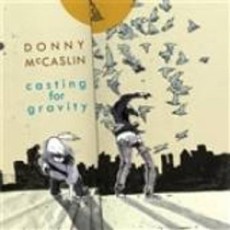
Donny McCaslin was born August 11, 1966 growing up in Santa Cruz, California. Inspired by his pianist/vibraphonist father, Donny began playing the saxophone at 12 and quickly progressing played in his father’s band. While in high school he toured the U.S., Japan and Europe with his own band and youth ensembles. He played the Monterey Jazz Festival for three years as a member of the Festival’s California All-Star Band.
Receiving a full scholarship to Berklee College of Music in 1984, it was during his matriculation that Donny came under the influence of Gary Burton, Herb Pomeroy, Billy Pierce, George Garzone and Joe Viola. He performed regularly around Boston and Cambridge with the True Colors Big Band and in 1987 joined Burton’s group and toured with him for four years.
Moving to New York in 1991 McCaslin replaced Michael Brecker in Steps Ahead, staying with them until ’94. He has played with the Gil Evans Orchestra, the George Gruntz Concert Jazz Band, Danilo Perez, Maria Schneider, and Santi DiBriano. In 2006 he joined the Dave Douglas Quintet.
His first release as a leader came in 1998 with “Exile and Discovery” and he has continued performing, recording and issuing releases under his own name with his latest 2012 release “Casting For Gravity”.

More Posts: saxophone
Daily Dose Of Jazz…
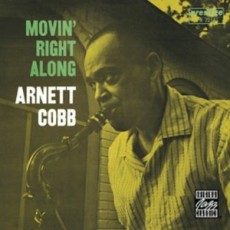
Arnett Cobb was born on August 10, 1918 in Houston, Texas. Taught to play piano by his grandmother, he went on to study violin before taking up the saxophone in high school. At fifteen he joined Louisiana bandleader Frank Davis, performing around Houston and throughout Louisiana during the summers. He continued his career in the mid-Thirties with the local bands of Chester Boone and Milt Larkin; the latter home to Illinois Jacquet, Wild Bill Davis and Eddie “Cleanhead” Vinson.
Arnett went on to replace Illinois in Lionel Hampton’s band in 1942 and is credited with the words and the music to “Smooth Sailing” which became a jazz standard in 1951, and sung by Ella Fitzgerald on her Lullabies of Birdland. After departing from Hampton’s band, Cobb formed his own seven-piece band, but suffering a serious illness in 1950, which necessitated spinal surgery, the group was disbanded.
Reforming the band upon recovery, in 1956 its success was again interrupted, this time by a car crash. This accident had long-term effects on his health, involving long hospital stays and making him permanently reliant on crutches. Nevertheless, Cobb worked as a soloist through the 1970s and 1980s in the U.S. and abroad, working with Jimmy Heath and Joe Henderson in Europe during the late Eighties.
Arnett Cobb, tenor saxophonist, passed away in his hometown in March 24, 1989 at the age of 70.
More Posts: saxophone
Daily Dose Of Jazz…
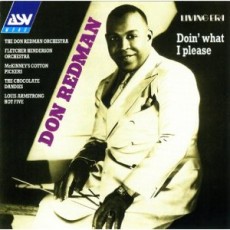
Donald Matthew Redman was born into a musical family on July 29, 1900 in Piedmont, West Virginia. He started playing the trumpet at age 3, joined his first band at 6 and by twelve was proficient on all wind instruments ranging from trumpet to oboe and piano. After studying at Storer’s College in Harper’s Ferry and at the Boston Conservatory, he joined Billy Page’s Broadway Syncopaters in New York.
1922 saw Don joining Fletcher Henderson’s orchestra, mostly playing clarinet and saxophones. He soon began writing the bulk of the orchestra’s arrangements, contributing much to formulate the sound that was to become big band swing. The chief trademark of Redman’s arrangements was that he harmonized melody lines and pseudo-solos within separate sections; for example, clarinet, sax, or brass trios. He played these sections off each other, having one section punctuate the figures of another, or moving the melody around different orchestral sections and soloists. His use of this technique was sophisticated, highly innovative, and formed the basis of much big band jazz writing in the following decades.
By 1927 he joined McKinney’s Cotton Pickers in Detroit as their musical director and leader but by 1931 Redman formed his own band and took up residency at Connie’s Inn in Manhattan. Redman’s band recorded for Brunswick Records, provided music for the Betty Boop series, employed singer Harland Lattimore, known as “The Colored Bing Crosby” and wrote arrangements for musicians and bandleaders like Paul Whiteman, Isham Jones and Bing Crosby. By 1940 Redman had disbanded his orchestra, began freelancing writing arrangements that became hits for Jimmy Dorsey, Count Basie and Harry James. In 1949 he appeared on CBS’s Uptown Jubilee and in the Fifties became musical director for Pearl Bailey.
Don Redman died in New York City at age 64 on November 30, 1964. His family legacy left us two more generations of jazz musicians, as he was the uncle of saxophonist Dewey Redman, and thus great-uncle of saxophonist Joshua Redman and trumpeter Carlos Redman.
Daily Dose Of Jazz…
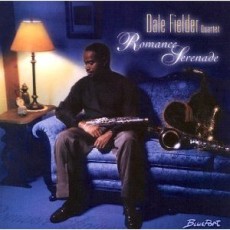
Dale Fielder was born July 27, 1956. Growing up in Midland, a small suburb outside Pittsburgh, Pennsylvania he studied oboe, bassoon and tuba in the school system and clarinet, saxophone, composition and arranging privately with Pittsburgh area tenor saxophonist Phillip Celli. An alumnus of the University of Pittsburgh Jazz Studies Program, Dale studied as an ethnomusicology major under Dr. Nathan Davis. His debut jazz performance was as a member of the Joe Harris Quartet, former drummer with the Charlie Parker Quintet and Dizzy Gillespie Orchestra.
Fielder is a recipient of a NEA grant, has completed his first large work “The Aquarian” for alto saxophone and chamber orchestra; spent eight years in NYC, moved to Los Angeles, began studying with alto legend, Charles McPherson. He has recorded a dozen CDs as a leader including the top-ten critically acclaimed “Dear Sir: Tribute To Wayne Shorter”; he received his first commission and wrote the extended eleven-movement jazz suite, “Ocean Of Love And Mercy”; was selected as BET’s 1999 Jazz Discovery winner and performs throughout Europe and Asia with his quartet.
If originality is the barometer of what truly makes a great jazz artist, Dale Fielder possesses a quality of originality in his voice. The multi-instrumentalist offers rare and obscure jazz classics to his audience coupled with his original compositions, giving the listener a variety of new concepts and presentations. He continues his performance, recording and touring.
More Posts: saxophone