

Daily Dose Of Jazz…
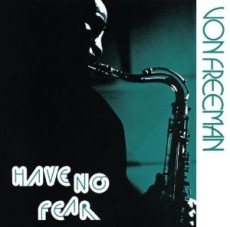
Von Freeman was born Earl Lavon Freeman Sr. on October 3, 1922 in Chicago, Illinois and learned to play the saxophone as a child. Attending DuSable High he studied under band director Walter Dyett. By the time he was 16 he was playing professionally with Horace Henderson’s Orchestra.
After serving in the Navy and playing in the band during WWII, Von returned to Chicago, where he has lived ever since, playing with his brothers George on guitar and Bruz (Eldridge) on drums at the Pershing Hotel Ballroom. Over the years various leading jazzmen such as Charlie Parker, Roy Eldridge and Dizzy Gillespie played with the Freemans as the backing band. In the early 1950s, Von played in Sun Ra’s band.
Freeman’s first venture into the recording studio took place in 1954, backing a vocal group called The Maples for Al Benson’s Blue Lake label. He appeared on Andrew Hill’s second single on the Ping label in 1956, followed by recording for Vee-Jay with Jimmy Witherspoon and Al Smith in the late fifties, and a recorded appearance at a Charlie Parker tribute concert in 1970.
It was not until 1972 that Von recorded under his own name, the album “Doin’ It Right Now” with the support of Roland Kirk. His next effort was a marathon session in 1975 released over 2 albums by Nessa. Since then he has lived, played regularly and recorded in Chicago, his recordings including 3 albums with his son, the tenorist Chico Freeman and “You Talkin’ To Me” with 22-year old saxophonist Frank Catalano, following their successful appearance at the Chicago Jazz Festival in 1999.
Freeman is considered a founder of the “Chicago School” of jazz tenorists along with Gene Ammons, Johnny Griffin and Clifford. His music has been described as “wonderfully swinging and dramatic featuring a large rich sound”. The hard bop tenor saxophonist holds down a regular Tuesday night set and jam session at the New Apartment Lounge on Chicago’s south side, and can also be heard at Andy’s Jazz Club on select weekends. Hard bop tenor saxophonist Von Freeman passed away on August 11, 2012 at age 88 in Chicago, Illinois.
More Posts: saxophone
Daily Dose Of Jazz…
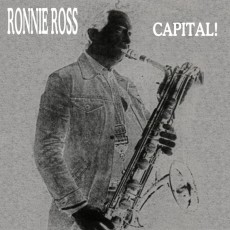
Ronnie Ross was born Albert Ronald Ross on October 2, 1933 in Calcutta, India. A move to London at 13 was where he began his interest in playing saxophone and started out on the tenor. In the ‘50s he played with Tony Kinsey, Ted Heath and Don Rendell and it was during his tenure with Rendell that he switched to the baritone.
Ross played the Newport Jazz Festival in 1958 and formed his own group that year called the Jazz Makers with drummer Allan Ganley. In 1959 he toured the United States and later Europe with the Modern Jazz Quartet. From 1961 to 1965 he played with Bill LeSage, Woody Herman, John Dankworth, Friedrich Guida and Clark Terry.
Ronnie was a saxophone tutor for a young David Bowie, and years later was the soloist on the Lou Reed song “Walk On The Wild Side”, which was co-produced by Bowie. He also had guest appearances as a soloist on several Matt Bianco albums.
Baritone saxophonist Ronnie Ross passed away on December 12, 1991 in London, England. He was 58.
More Posts: saxophone
Daily Dose Of Jazz…
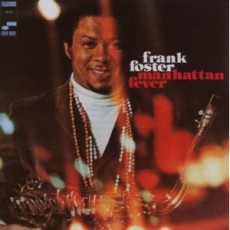
Frank Benjamin Foster III was born September 23, 1928 in Cincinnati, Ohio and began his musical career when he took up the clarinet at 11. Two years later he was playing the alto saxophone, quickly advanced and played with local bands by 14. He began composing and arranging at 15, leading his own 12-piece band while still in high school. He received his continued musical education at Wilberforce University but left with Snooky Young, moved to Detroit, playing the local jazz scene with Wardell Gray.
From 51-53 he served in Korea followed by joining Count Basie’s Big Band, contributed both arrangements and original compositions to Count Basie’s band including the standard, “Shiny Stockings” and other popular songs such as “Down for the Count,” “Blues Backstage,” “Back to the Apple,” “Discommotion,” and “Blues in Hoss Flat” as well as arrangements for the entire “Easin’ It” album.
From 1970 to 1972 he played with Elvin Jones, and in 1972 and 1975 with the Thad Jones-Mel Lewis big band. Frank went on to form and lead several groups, most notably Living Color and The Loud Minority while also co-leading a quintet with Frank Wess in 1983, and toured Europe with Jimmy Smith’s quintet in 1985.
By June 1986 Foster succeeded Thad Jones as leader of the Count Basie Orchestra and during his tenure Dr. Foster received two Grammy Awards for his big band arrangement of the Diane Schuur composition “Deedles’ Blues” and for his arrangement of the renowned guitarist/vocalist George Benson’s composition “Basie’s Bag”.
Over his career he was never far from education spending time teaching at the New England Conservatory of Music, New York City Public School System in Harlem, and State University of New York, Buffalo. Suffering a stroke in 2001, Frank Foster discontinued his playing but continued to lead The Loud Minority on limited engagements but soon passed the helm to trumpeter Cecil Bridgewater.
The tenor and soprano saxophonist and flautist amassed throughout his career twenty-six albums as a leader, thirty-four as a sideman and arranged five albums for Sarah Vaughan, Diane Schuur, Frank Sinatra, George Benson and Count Basie. Saxophonist Frank Foster continued to compose and arrange until his passage on July 26, 2011 at the age of 82.
Daily Dose Of Jazz…
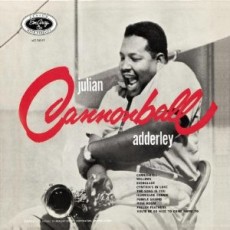
Cannonball Adderley was born Julian Edwin Adderley on September 15, 1928 in Tampa, Florida but moved with his parents to Tallahassee when his parents accepted teaching positions at Florida A&M University. While there both he and his brother Nat played with Ray Charles during the early forties, with Cannonball becoming a local legend prior to moving to New York in 1955.
It was in New York during this time that Adderley’s prolific career began when he visited Cafe Bohemia and witnessed the Oscar Pettiford group playing that night. Bringing his saxophone into the club with him, for fear of it being stolen, he was asked to sit in, as the saxophone player was late. In true Cannonball style, he soared through the changes, and became a sensation in the following weeks.
Cannonball formed his own group with his brother Nat after signing onto the Savoy jazz label in 1957. He was noticed by Miles Davis and it was because of his blues-rooted alto saxophone that Davis asked him to play with his group in October, three months before Coltrane’s return to the group. This group released the seminal “Milestones” and “Kind of Blue” and the association with Bill Evans produced “Portrait of Cannonball” and Know What I Mean”.
By the end of ‘60s, Adderley’s playing began to reflect the influence of the electric jazz avant-garde producing such albums as “Accent on Africa” and “The Price You Got To Pay to Be Free”. In 1970 his quintet played the Monterey Jazz Festival and a brief scene of that performance was featured in the Clint Eastwood film “Play Misty For Me”, and shortly before his death in 1975 he was casted in an episodic role alongside Jose Feliciano and David Carradine in Kung Fu.
His interest as an educator led him to teach applied instrumental music classes at Dillard High School in Fort Lauderdale; and carried over to him narrating and recording “The Child’s Introduction to Jazz” released in 1961 on Riverside Records.
Joe Zawinul’s “Mercy, Mercy, Mercy” and “Walk Tall”, “This Here” written by Bobby Timmons, “The Jive Samba” and “Work Song” are a few of the songs made famous by Cannonball. Joe Zawinul composed “Cannon Ball” that was recorded on the Weather Report album Black Market as a tribute to his former leader.
Alto saxophonist and educator Julian “Cannonball” Adderley, who added so much to the hard bop era of the ‘50s and ‘60s, died of a stroke on August 8, 1975. Later that year he was inducted into the Down Beat Jazz Hall of Fame.

More Posts: saxophone
Daily Dose Of Jazz…
Oliver Lake was born in Marianna, Arkansas on September 14,1942 and his family moved to St. Louis when he was two. He began drawing at the age of thirteen and soon after began playing cymbals and the bass drum in a variety of drum and bugle corps. At 17, he began to take a serious interest in jazz and started playing percussion followed by alto saxophone. His piercing, bluesy, biting sound is his trademark and his explosive unpredictable solos are akin to Eric Dolphy.
During the 1960s Oliver taught school, worked in several contexts around St. Louis and led along with Julius Hemphill and Charles “Bobo” Shaw, BAG, the Black Artists Group. In 1972 Lake moved to Paris for two years working with his colleagues from BAG, returned to New York and immersed himself into the then burgeoning jazz loft scene. Like many other members of BAG, (Black Artists Group) and its Chicago-based sister organization, the Association for the Advancement of Creative Musicians (AACM), he moved to New York in the mid-’70s, working the fertile ground of the downtown loft scene and quickly establishing himself as one of its most adventurous and multi-faceted musician.
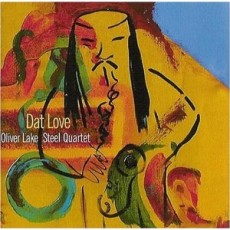
Oliver is co-founder of the internationally acclaimed World Saxophone Quartet with Julius Hemphill, Hamiet Bluiett and David Murray in 1977. Over the next two decades the group crossed over to new audiences, in part, due to their late 80s albums of Ellington and popular R&B tunes. He leads his own Steel Quartet and Big Band; has worked with hip hop artists Mos Def and A Tribe Called Quest and Me’shell Ndegeocello; has created a groundbreaking roots/reggae ensemble “Jump Up”; founded Passin’ Thru, Inc. – a non-profit dedicated to fostering, promoting and advancing the knowledge, understanding and appreciation of jazz, new music and other disciplines related to music.
Oliver Lake, the alto saxophonist, flautist, composer, poet and painter has collaborated with numerous notable choreographers, poets and a veritable Who’s Who of the progressive jazz scene of the late 20th century. He has recorded as a leader for Freedom, Black Saint, and Black Lion, Novus, Gramavision, Blue Heron Gazell, Soul Note and other record labels. The mainstay of the avant-garde and free jazz realms continually performs all over the U.S. as well as in Europe, Japan, the Middle East, Africa and Australia. He paints daily, using oil, acrylics, wood, canvas, and mixed media.