

Daily Dose Of Jazz…
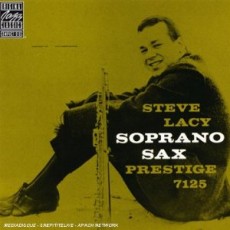
Steve Lacy was born Steven Norman Lackritz on July 23, 1934 in New York City. He didn’t begin his career until age sixteen, coming to prominence in the 1950s as a progressive Dixieland musician playing with the likes of Henry “Red” Allen, Pee Wee Russell, George ”Pops Foster and Zutty Singleton, as well as Kansas City jazz musicians like Buck Clayton, Dicky Wells and Jimmy Rushing.
Working extensively in experimental jazz and dabbling in free improvisation, Lacy’s music was typically melodic and tightly structured over a long and prolific career. He became involved with the avant-garde, performed on “Jazz Advance” in 1956, the debut album of Cecil Taylor, and appeared with his groundbreaking quartet at the 1957 Newport Jazz Festival.
Steve made a notable appearance on an early Gil Evans album, however, his most enduring relationship, however, was with the music of Thelonious Monk, his first recorded album in 1958 as a leader “Reflections” featured only Monk compositions. He briefly played in Monk’s band in 1960 and later on Monk’s Columbia session “Big Band/Quartet” in 1963.
Monk tunes became a permanent part of his repertoire, making an appearance in virtually every concert appearance and on his albums. He often collaborated with trombonist Roswell Rudd in presenting interpretations of Monk, Mingus, Ellington and Herbie Nichols’ compositions, rarely playing standard popular or show tunes. In the 1960s he continued to work with other players involved in the American free-jazz avant-garde, and in the Seventies immersed in the European free improvisation scene that would remain an important element in his work thereafter.
Steve became a highly distinctive composer with his signature simplicity of style. He became a widely respected figure on the European jazz scene for several decades, was the recipient of a MacArthur Fellowship, began teaching at the New England Conservatory of Music in Boston and performed one of his last public performances in front of 25,000 people at the close of a peace rally on Boston Common in 2003.
Steve Lacy, soprano saxophonist, was diagnosed with cancer continued playing and teaching until weeks before his death on June 4, 2004 at the age of 69.
More Posts: saxophone
Daily Dose Of Jazz…
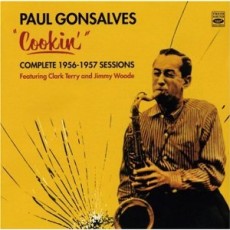
Paul Gonsalves was born July 12, 1920 in Brockton, Massachusetts to Cape Verdean parents. His first instrument was the guitar, and as a child he was regularly asked to play Portuguese folk songs for his family. Growing up in New Bedford, Massachusetts he was a member of the Sabby Lewis Orchestra.
His first professional engagement in Boston was with the same group on tenor saxophone, that he had learned to play prior to and during World War II military service. After the war he played in Count Basie and Dizzy Gillespie’s big bands before joining the Duke Ellington Orchestra in 1950.
At the 1956 Newport Jazz Festival, Gonsalves’ solo in Ellington’s song “Diminuendo and Crescendo in Blue” contained 27 choruses and the publicity from which is credited with reviving Ellington’s career. This performance is captured on the album Ellington at Newport. He was a featured soloist in numerous Ellingtonian settings and received the nickname “The Strolling Violins” from Ellington for playing solos while walking through the crowd.
Tenor saxophonist Paul Gonsalves died on May 15, 1974 in London just a few days before Duke Ellington’s death. Gonsalves and Ellington, along with trombonist Tyree Glenn, lay side-by-side in the same New York funeral home for a period of time.
More Posts: saxophone

Daily Dose Of Jazz…
Eric Allan Dolphy was born on June 20, 1928 in Los Angeles, California and received his musical education at Los Angeles City College. Performing locally in the big bands of Gerald Wilson and Roy Porter, he played soprano clarinet, baritone saxophone and his main instrument, the alto, on early recordings. But his big break came when he joined Chico Hamilton’s quintet, gaining wider audience recognition.
By 1959 Dolphy had moved to New York City and his early association with then established John Coltrane brought him acclaim amongst jazz lovers. During this period, Dolphy also played in a number of challenging settings, notably in key recordings by Ornette Coleman’s Free Jazz: A Collective Improvisation; Oliver Nelson’s The Blues and the Abstract Truth; and George Russell’s Ezz-thetics. He also worked with Max Roach, Gunther Schuller, Ron Carter, Ken McIntyre and Abbey Lincoln among others.
His first two albums as leader produced Outward Bound and Out There that were deeply rooted in hard bop with trumpeter Freddie Hubbard. This was followed with Far Cry with Booker Little, with whom he would record a series of legendary sets at the Five Spot before Little’s death at 23. In 1964, Dolphy signed with Blue Note and recorded Out To Lunch! with Hubbard, Bobby Hutcherson, Richard Davis and Tony Williams. This record was rooted in the avant-garde, his solos unpredictable and is considered his magnum opus.
Eric Dolphy died in Berlin while touring with Charles Mingus on June 29, 1964. The circumstances are sketchy as to where he died and the cause, though he was a diabetic. Whatever the cause, the jazz world lost an alto saxophonist, flautist, clarinetist who contributed profusely to the genre of jazz during his short-lived 36 years.
Daily Dose Of Jazz…
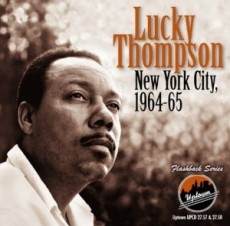
Lucky Thompson was born Eli Thompson on June 16, 1924 in Columbia, South Carolina but the family moved to Detroit, Michigan during his childhood. Raising his siblings after his mother died, he practiced his saxophone fingerings daily on a broomstick prior to acquiring his first instrument. After graduating from high school in 1942 he joined the Erskine Hawkins band.
Lucky went on to play with the swing orchestras of Lionel Hampton, Don Redman, Billy Eckstine, Lucky Millinder and Count Basie, he worked in rhythm and blues, later establishing a career in bop and hard bop working with Kenny Clarke, Miles Davis, Dizzy Gillespie and Milt Jackson.
An inspired soloist playing in a more advanced bebop format in the early 60s and capable of a very personal style in which the tradition of Coleman Hawkins, Ben Webster and Don Byas was intelligently mixed with a modern grasp of harmony. He showed these capabilities as sideman on many albums recorded during the mid-1950s, such as Stan Kenton’s Cuban Fire and those under his own name.
He appeared on Charlie Parker’s Los Angeles Dial Records sessions and on Miles Davis’s hard bop Walkin’ session. Thompson recorded albums as a leader for ABC Paramount, Prestige and as a sideman on records for Savoy with Milt Jackson as leader.
In the late 60’s Thompson lived in Lausanne, Switzerland and recorded several albums there including A Lucky Songbook in Europe. He taught at Dartmouth College in 1973 and 1974, and then left the music business completely, because of the racist treatment he received from record companies and clubs.
In his last years he lived in the Pacific Northwest suffering from Alzheimer’s disease and on July 30, 2005, hard bop saxophonist Lucky Thompson passed away in Seattle, Washington.

More Posts: saxophone

Daily Dose Of Jazz…
Jaki (John) Byard was born on June 15, 1922 in Worcester, Massachusetts and began playing professionally at age 15. Adept not only on the piano, he played trumpet and saxophone among other instruments. After serving in WWII he toured with Earl Bostic in the late 40s, based himself in Boston and had his recording debut with Charlie Mariano in 1951.
Known for his eclectic style, Byard added everything from ragtime to free jazz in his delivery. Through the fifties and into the sixties he was a member of Herb Pomeroy’s band followed by a stint with Maynard Ferguson.
Moving to New York, Byard recorded extensively with Charles Mingus from 1962 to 1964 and in 1970, touring Europe with him in 1964. He also made important recordings as a sideman with Eric Dolphy, Booker Ervin and Sam Rivers.
As a leader, he recorded a string of albums for the Prestige label during the 1960s and fronted an occasional big band, the Apollo Stompers. He taught at the New England Conservatory, Manhattan School of Music, Hartt School of Music, and the New School for Social Research.
Jaki Byard was shot dead on February 11, 1999 in New York City. The circumstances surrounding his death have not been determined. Phil Woods described him as “one of the most compelling and versatile pianists in jazz”.