

Daily Dose Of Jazz…
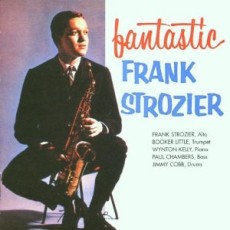
Frank Strozier was born on June 13, 1937 in Memphis, Tennessee. He played with other hometown musicians in his youth and continued even after his move to Chicago in 1954 including Harold Mabern, Booker Little and George Coleman.
A renowned hard bop alto saxophonist who never got the recognition he deserved he did lead recording sessions for Vee-Jay Records and recorded with the MJT+3 from 1959-1960. After moving to New York, Frank was briefly with the Miles Davis Quintet in 1963, between the tenures of Hank Mobley and George Coleman. During this period he also gigged with Roy Haynes.
Strozier relocated to Los Angeles working with Chet Baker, Shelly Manne and most notably with the Don Ellis big band where he executed a memorable solo on “K.C. Blues” on the “Autumn” album. Returned to New York in 1971 he worked with the Jazz Contemporaries, the New York Jazz Repertory Company, Horace Parlan and Woody Shaw among others,.
Frustrated with lack of work, Frank would reappear from time to time as a piano player but with little results. His last recordings were in 1977 and he left a limited catalogue of seven albums as a leader and another 15 as a sideman.
More Posts: saxophone

Daily Dose Of Jazz…
Tina Brooks was born Harold Floyd Brooks on June 7, 1932 in Fayetteville, North Carolina, the brother of tenor saxophonist David “Bubba” Brooks. He initially studied the C-melody saxophone, which he began playing in 1944 shortly after his family relocated to New York.
His first professional work came in 1951 with rhythm and blues pianist Sonny Thompson and Lionel Hampton four years later. His friendship with trumpeter and composer Little Benny Harris led to his first recording as a leader. Harris played a key role in Brooks’ acquiring a contract with Blue Note Records in 1958.
Best known for his work for Blue Note Records, between 1958 and 1961, Tina led four recording sessions and worked as a sideman on record sessions with Kenny Burrell, Freddie Hubbard, Jackie McLean, Freddie Redd and Jimmy Smith. Appearing on Brooks’ albums, McLean and Brooks’ also gave highly regarded performances of the music composed by Redd in Jack Gelber’s play “The Connection”, from which came a recording of the music from the play.
Declining health problems due to heroin dependency, his recording career ceased after 1961. Tina Brooks, the hard bop tenor saxophonist and composer whose strong, smooth tone and amazing flow of fresh ideas are indelibly imprinted on seventeen sessions in the Blue Note catalogue, died at age 42 of liver failure on August 13, 1974.
More Posts: saxophone

Daily Dose Of Jazz…
Oliver Edward Nelson was born on June 4, 1932 in St. Louis, Missouri. His brother played sax with Cootie Williams and his sister sang and played piano. He began playing the piano when he was six, the saxophone by eleven and by age 15 he was playing in territory bands around St. Louis. In 1950 he joined Louis Jordan’s big band, playing alto saxophone and arranging.
After military service Nelson returned to Missouri to study music composition and theory at Washington and Lincoln University graduating in 1958. He married, had a son, divorced, moved to New York City, and began playing with Erskine Hawkins and Wild Bill Davis, and arranged for the ApolloTheatre. In 1959 he briefly worked the West coast with Louie Bellson’s big band and played tenor for Quincy Jones.
After six albums as leader between 1959 and 1961 for Prestige with Kenny Dorham, Johnny Hammond Smith, Eric Dolphy, Roy Haynes and others. Oliver’s big break came with his Impulse album The Blues and The Abstract Truth featuring his now classic standard “Stolen Moments”. Propelling him into prominence as a composer and arranger, it opened up opportunities to arrange for Cannonball Adderley, Irene Reid, Sonny Rollins, Billy Taylor, Wes Montgomery, Johnny Hodges and many others.
Moving to Los Angeles in 1967 Nelson spent a great deal of time composing for television shows like Colombo, Ironside, Bionic Woman and films like Death of a Gunfighter and Last Tango In Paris. He produced for Nancy Wilson, James Brown, the Temptations and Diana Ross.
Less well-known is the fact that Nelson composed several symphonic works, and was also deeply involved in jazz education, returning to his alma mater, Washington University, in the summer of 1969 to lead a five-week long clinic that also featured such performers as Phil Woods, Mel Lewis, Thad Jones, Sir Roland Hanna, and Ron Carter.
Oliver Nelson, saxophonist, clarinetist, pianist, arranger and composer died of a heart attack on October 28, 1975, aged 43.

Daily Dose Of Jazz…
Lennie Niehaus was born June 1, 1929 in St. Louis, Missouri. A musical family heralded a concert pianist sister and a father who was an excellent violinist who started his son on the violin at seven, then switched to the bassoon. At 13 he began learning the alto saxophone and clarinet.
Always interested in composing and writing music Lennie studied music in college and in 1946 began playing professionally with Herb Geller, Herbie Steward and Teddy Edwards in 1946. Six months later he joined Stan Kenton, then drafted in 1952 but two years late rejoined Kenton after his discharge.
Leaving Kenton in 1959, Niehaus began composing, moved back to Los Angeles and arranged for the King Sisters, Mel Torme, Dean Martin, and Carol Burnett. Three years later saw him orchestrating for film composer Jerry Fields, a relationship that yielded more than sixty TV shows and films.
He orchestrates his own pieces and never forgets his jazz roots in film, writing jazz and using jazz musicians like Marshall Royal, Bill Perkins, Pete Jolly, Mike Land, and Clint Eastwood. He was the musical director for the Charlie Parker bio-feature, Bird.
After many years of not playing his alto saxophone at all, Niehaus returned to performing, reportedly in top form. He continues to arrange, compose and play alto on the West Coast jazz scene.
Daily Dose Of Jazz…
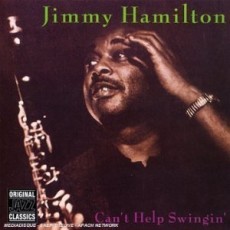
Jimmy Hamilton was born on May 25, 1917 in Dillon, South Carolina but grew up in Philadelphia. He learned to play piano and brass instruments and by the thirties he was playing the latter in local bands. He switched to clarinet and saxophone and by 1939 was playing with Lucky Millinder, Jimmy Mundy and Bill Doggett, then going to work for Teddy Wilson in 1940.
After a two-year stay with Wilson he played with Eddie Heywood and Yank Porter before replacing Barney Bigard in Duke Ellington’s orchestra in 1943. Over the next twenty-five years with Ellington his sound on saxophone had an R&B style while his clarinet was more precise, correct and fluent and it was during this time that he wrote some of his own material.
Leaving the Ellington orchestra, Hamilton played and arranged on a freelance basis, before spending the 1970s and 1980s in the Virgin Islands teaching music, occasionally returning to the U.S. for performances with John Carter’s Clarinet Summit. He retired from teaching but continued to perform with his own groups from 1989 to 1990.
The clarinetist, saxophonist, arranger, composer and music educator Jimmy Hamilton died in St. Croix, Virgin Islands at the age of seventy-seven on September 20, 1994.