

Daily Dose Of Jazz…
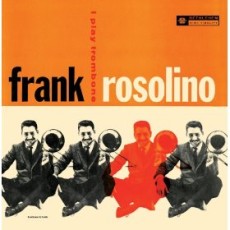
Frank Rosolino was born on August 20, 1926 in Detroit, Michigan. He studied the guitar with his father from the age of 9 and took up the trombone at age 14 while he was enrolled at Miller High School where he played with Milt Jackson in the school’s stage band and small group. Having never graduated, he joined the 86th Division Army Band during World War II.
Perhaps most influential of all was the street education Frank received after returning to Detroit following his period in the Army during which he sat in at the Mirror Ballroom or the Bluebird where other to-be-renowned musicians also congregated, the Jones brothers – Hank, Thad and Elvin, Tommy Flanagan, Kenny Burrell, Paul Chambers and later at the 3 Deuces on 52nd Street in New York City with Charlie Parker.
During this period Rosolino was also performing with the big bands of Bob Chester, Glen Gray, Tony Pastor, Herbie Fields, Gene Krupa and Stan Kenton. Leaving the Kenton outfit he settled in Los Angeles where he performed with Howard Rumsey’s Lighthouse All-Stars from 1954–1960 in Hermosa Beach.
Throughout the 1960s and 1970s, between nightclub engagements, Rosolino was active in many Los Angeles recording studios where he performed with such notables as Frank Sinatra, Sarah Vaughan, Tony Bennett, Peggy Lee, Mel Torme, Michel Legrand and Quincy Jones among others.
He can also be seen performing in “Sweet Smell of Success” in 1957 with Burt Lancaster and Tony Curtis, and in 1958 with Shelly Manne’s group in the film “I Want To Live!” starring Susan Heyward and also. He was also a regular on The Steve Allen Show, The Tonight Show and The Merv Griffin Show. A talented vocalist, renowned for his wild form of scat-singing, Frank recorded one vocal album, “Turn Me Loose!” featuring both his singing and trombone playing. He can also be seen performing in the half hour syndicated program Jazz Scene USA, hosted by Oscar Brown, Jr.
It was during the 1970s that he performed and toured with Quincy Jones and the Grammy Award winning group Suoersax. He recorded some two-dozen sessions as a sideman and a dozen as a leader. Trombonist and vocalist Frank Rosolino committed suicide on November 26, 1978 after shooting his two sons.

Put A Dose In Your Pocket
Daily Dose Of Jazz…
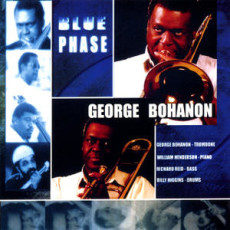
George Roland Bohanon, Jr. was born on August 7, 1937 in Detroit, Michigan. The jazz trombonist and session musician studied in his youth and by his late teens he was a part of Detroit’s Workshop Jazz ensemble, with Johnny Griffin, Paula Greer, David Hamilton, Lefty Edwards and Herbie Williams.
Following his appearance on several Motown recordings, together with leading musicians such as Hank Cosby of the Funk Brothers, George moved to California.
In 1962, he replaced Garnett Brown in the Chico Hamilton Quintet. 1963 and 1964 witnessed two recorded albums for Motown’s unsuccessful jazz Workshop label, “Boss: Bossa Nova” and “Bold Bohanon”, with the latter be unreleased according to several sources.
By 1971, he was a member of the Ernie Wilkins Orchestra playing alongside trombonist Benny Powell that backed Sarah Vaughan on her album “A time In My Life”. Between 1984 and 1993, Bohanon played in orchestras backing Frank Sinatra. He has performed and/or recorded as a sideman with Charles Kynard, Hampton Hawes, Stanley Clarke, Ry Cooder, Etta James and Diana Krall. Trombonist George Bohanon continues to perform and record.
Put A Dose In Your Pocket
More Posts: trombone
Daily Dose Of Jazz…
Elmer Crumbley was born on August 1, 1908 in Kingfisher, Oklahoma. The trombonist joined the Dandie Dixie Minstrels in 1926 in between stints with bandleader Lloyd Hunter and his Serenaders. By 1930 Elmer made it east to Kansas City and the George E. Lee band.
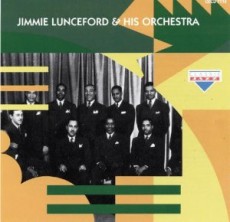
During the 30s he continued to work with Lloyd Hunter as well as with western swing pioneer Tommy Douglas in Nebraska, then with Bill Owens, Jabbo Smith and in Chicago with Erskine Tate. He led an ensemble in Omaha in 1934 then joined up with Jimmie Lunceford, enjoying a thirteen-year stint playing with band mates Eddie Wilcox, Lucky Millinder and Erskine Hawkins.
By the late ’50s Crumbley was touring Europe with Sammy Price and became part of the combo scene at the Apollo in Harlem. The Sixties saw him playing with Cab Calloway and Earl Hines, keeping him in slide oil.
Little is known about him after this period and trombonist Elmer Crumbley passed away in 1993 at the age of 85.
Jazz Is Global – Share
More Posts: trombone
Daily Dose Of Jazz…
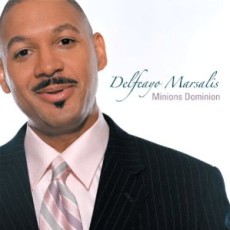
Delfeayo Marsalis was born July 28, 1965 in New Orleans, Louisiana into the musical family in which father and three brothers are musicians. Lying under the piano as a child while his father played, he eventually tried the bass and the drums but by the sixth grade gravitated to the trombone. His early influences were J.J. Johnson, Curtis Fuller, Al Grey, Tyree Glenn and Tommy Dorsey.
He went on to attend the New Orleans Center for Creative Arts high school and was classically trained at the Eastern Music Festival and Tanglewood Institute. He graduated from Berklee School of Music and the University of Louisville with degrees in performance and audio production.
While a gifted trombonist, Delfeayo has recorded only five albums as a leader and is more prolific and better known for his work as a producer of over 100 acoustic jazz recordings. Since the age of 17 he has produced such artists as Harry Connick Jr., Marcus Roberts, Spike Lee, Terence Blanchard, Nicholas Payton, Marcus Roberts, the Preservation Hall Jazz Band and his family members – Ellis, Branford and Wynton.
Along with Tonight Show engineer Patrick Smith, he coined “to obtain more wood sound from the bass recorded without usage of the dreaded bass direct”, a phrase that became the single sentence to define the recorded quality of many acoustic jazz recordings since the late ’80s.
Forming Uptown Music Theatre in 2000, the organization has trained over 300 youth and staged 8 original musicals, all of which are based upon the mission of “community unity.” Marsalis has toured with internationally renowned bandleaders Art Blakey, Slide Hampton, Max Roach, Elvin Jones and Abdullah Ibrahim. In addition he has performed and toured with the Lincoln Center Jazz Orchestra, was a part of the Ken Burns documentary Jazz and is an integral part of Marsalis Family: A Jazz Celebration DVD.
Delfeayo Marsalis, along with his father and brothers, are group recipients of the 2011 NEA Jazz Masters Award. He continues to perform, record, tour and produce.
Dose A Day – Blues Away
Daily Dose Of Jazz…
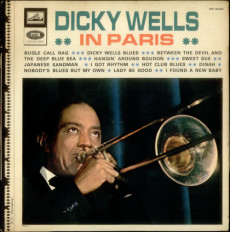
Dicky Wells was born William Wells on June 10, 1907 in Centerville, Tennessee but came to fame playing trombone as Dicky or Dickie Wells. He moved to New York City in 1926 and joined the band of Lloyd Scott.
He played two stints with Count Basie between 1938-1945 and 1947-1950. Dickie also played with Cecil Scott, Spike Hughes, Fletcher Henderson, Benny Carter, Teddy Hill, Jimmy Rushing, Buck Clayton and Ray Charles.
In his later years, Wells suffered a severe beating that affected his memory, but he recovered and continued to perform. He played frequently at the West End jazz club at 116th and Broadway, most often with a band called “The Countsmen”, led by alto saxophonist Earle Warren, his colleague from Count Basie days. His trademark was a “pepper pot” mute that he made himself.
Jazz trombonist Dickie Wells died on November 12, 1985, in New York City. Shortly after his death, his family donated his trombone to Rutgers University.
Jazz Is Global – Share
More Posts: trombone