


Daily Dose Of Jazz…
Al Grey was born in Aldie, Virginia on June 6, 1925 but grew up in Pottstown, Pennsylvania. After serving in the Navy during WWII, where he started playing trombone, he joined Benny Carter’s band, later moving to Lionel Hampton’s trombone section. After some solo worked he joined Dizzy Gillespie’s big band in ’56 and a year later was touring Europe with Count Basie.
Trummy Young inspired Al’s early trombone style and he developed a wild, strong and full sound. Solos often consisted of short, pronounced phrases with precisely timed syncopation. He became known for his plunger mute technique, later writing an instructional book title “Plunger Techniques”. When playing with the plunger, however, he would produce the most mellow fill-ins and shape melodic answers to the lead voice.
After 1961 Grey performed only occasionally with the Count and apart from leading his own combos, he collaborated with many jazz greats such as Herbie Hancock, Melba Liston, J. J. Johnson, Quincy Jones, Ray Charles, Jack McDuff, Ella Fitzgerald and Frank Sinatra. His trombone skills were also featured on the award-winning soundtrack for The Color Purple.
Al Grey, who passed away on March 24, 2000, greatly contributed to the post-swing era jazz-trombone vocabulary and will be remembered for his charming personality as well as his ability to bond with audiences around the world.

Take A Dose On The Road
More Posts: trombone
Daily Dose Of Jazz…
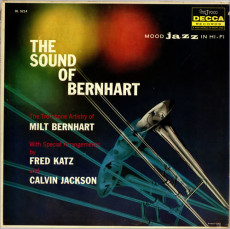
Milt Bernhart was born on May 25, 1926 in Valparaiso, Indiana and began his musical career with the tuba. By high school he switched to trombone and by 16 he was working in Boyd Raeburn’s band and later gigged with Teddy Powell.
After a tour in the Army he worked, off and on, with Stan Kenton for the next ten years. He is perhaps most associated with Kenton, but in 1955 he had his first album as a leader. In 1986 he was elected President of the Big Band Academy of America.
Widely known as a mild-mannered and humorous musician his brief period with Benny Goodman was one area that brought out his ire. Except for the Army’s basic training, Milt indicates working with Goodman was “the bottom” of his first 23 years of life, referring to him as a bore and could not abide Goodman’s public humiliation of tenor saxophonist Wardell Gray or his segregated treatment at a Las Vegas club.
West coast jazz trombonist Milt Bernhart, who supplied the exciting solo heard in the middle of Sinatra’s popular 1956 recording of “I’ve Got You Under My Skin” conducted by Nelson Riddle, passed away on January 22, 2004 in Glendale, California.26-2004
Jazz Is Global – Share
More Posts: trombone

Daily Dose Of Jazz…
Jack Jenney was born Truman Eliot Jenney May 12, 1910 in Mason City, Iowa and started playing in his father’s band from the age of 11. The trombonist’s first professional work began with Austin Wylie in 1928 but he would go on to work with Isham James, Red Norvo, Artie Shaw, Mal Hallett and Waring’s Pennsylvanians.
Jack led his own band for a year in 1939-40, which included Peanuts Hucko, Paul Fredricks and Hugo Winterhalter. Although this band received good reviews it was a financial failure. Best known for instrumental versions of the song Stardust, he won the Down Beat Reader’s Poll for trombone in 1940 and would appear in the 1942 film “Syncopation”.
After his return from being drafted into the United States Navy, trombonist Jack Jenney died of complications related to appendicitis in Los Angeles, California on December 16, 1945.
Give A Gift Of Jazz – Share
More Posts: trombone
Daily Dose Of jazz…
George “Buster” Cooper was born on April 4, 1929 in St. Petersburg, Florida and took up the trombone. He played in a Texas territory band with Nat Towles in the late 1940s, and gigged with Lionel Hampton in 1953.
During the mid-1950s he played in the house band at Harlem’s Apollo Theater in New York City followed by playing with Benny Goodman. By the late 1950s, he and his brother Steve had formed The Cooper Brothers Band but by the early Sixties through the decade Buster was a trombone fixture in Duke Ellington’s Orchestra.
In 1973 he moved to Los Angeles and played in various jazz orchestras there over the next several decades; among them were “The Juggernaut” and “Bill Berry’s L.A. Band”.
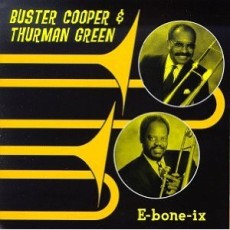
Over the course of his career, Buster Cooper, the extroverted trombonist with a witty style that often involved hitting repeated, humorous high notes at the conclusion of a song never recorded as a leader until he paired with trombonist Thurman Green and released E-Bone-ix in 1997. At 85 years, he currently leads the Buster Cooper Trio, playing The Garden Restaurant in his hometown of St. Petersburg.
More Posts: trombone

Daily Dose Of Jazz…
Benjamin Gordon Powell Jr. was born on March 1, 1930 in New Orleans, Louisiana. He first played professionally at age 14 and by 18 he was playing with Lionel Hampton. In 1951 he left Hampton’s band and joined Count Basie, where he remained until 1963. Powell takes the trombone solo in the bridge of Basie’s 1955 recording of “April In Paris”.
After leaving Basie, Benny freelanced in New York City and from 1966 to 1970 he was a member of the Thad Jones-Mel Lewis Jazz Orchestra, playing Monday nights at the Village Vanguard. Among other engagements, he played in the house band of the Merv Griffin Show, relocating to Los Angeles, California when the show moved to the West Coast in 1970.
During this period Powell did extensive work as a session musician working with Abdullah Ibrahim, John Carter and Randy Weston. In the 80s he moved back to New York and added educator to his resume becoming part of the Jazzmobile and later, in 1994 teaching at the New School for Jazz and Contemporary Music.
Benny Powell, tenor and bass trombonist, died following back surgery on June 26, 2010 in Manhattan, New York City. He was 80 years old.
More Posts: trombone