

Daily Dose Of Jazz…
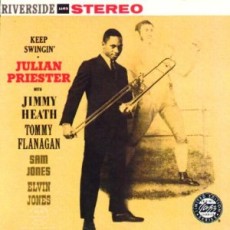
Julian Priester was born on June 29,1935 in Chicago, Illinois. He attended DuSable High School studying under Walter Dyett and during his teens he played trombone with Muddy Waters, Dinah Washington, and Bo Diddley and jammed with jazz greats Max Roach, Clifford Brown and Sonny Stitt.
By the early 1950s Priester was a member of Sun Ra’s big band, recording several albums with the group before leaving Chicago in 1956 to tour with Lionel Hampton. Settling in New York in ’58 Julian joined Max Roach’s band and during his tenure recorded two albums as a leader for Riverside Records titled Spiritsville and Keep Swingin’.
In 1961 Priester left Max Roach and for the next eight years took a sideman gig on albums by Freddie Hubbard, Stanley Turrentine, Blue Mitchell, Art Blakey, Joe Henderson, McCoy Tyner, Johnny Griffin and Sam Rivers. During that period he also took part in Coltrane’s Africa/Brass ensemble, which played with Coltrane’s quartet on the album by the same name recorded in 1961. Accepting an invitation to play with Ellington’s big band, he stayed for six months and by 1970 Priester was playing fusion in Herbie Hancock’s sextet.
In 1973, Priester moved to San Francisco, recorded two more albums as a leader, joined the faculty of Cornish College of the Arts in Seattle in 1979 teaching jazz composition, performance and history. Over the course of the next three decades Julian has been a member of the Dave Holland band, returned to play with Sun Ra’s band, became a member of Charlie Haden’s Liberation Music Orchestra, co-led with drummer Jimmy Bennington “Portraits and Silhouettes”, played the 30th Annual Chicago Jazz Festival and made significant contribution to “Alice”, a tribute album to Alice Coltrane.
Trombonist Julian Priester’s musical experience spans to the borders of jazz and beyond, encompassing R&B, bebop, hard bop, and progressive and free jazz.
More Posts: trombone
Daily Dose Of Jazz…
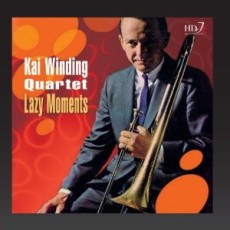
Kai Chresten Winding was born in Aarhus, Denmark on May 18, 1922 and when he was 12 his family immigrated to the United States. Graduating from Stuyvesant High School in 1940 and immediately commence on a professional path in Shorty Allen’s band. He followed with stints in the bands of Sonny Durham and Alvino Rey prior to service in the Coast Guard during WWII.
After the war, Winding worked with Benny Goodman, Stan Kenton, and participated in the Birth of the Cool sessions. In 1954 he joined forces with J.J. Johnson and the collaboration produced some of the greatest trombone duet recordings, first on Savoy then Columbia. During this period he arranged and composed many of the songs they recorded and experimented with different instrumentation in brass ensembles and used a trombonium during an octet session.
During the 1960s, Kai had a long stint at Verve Records working with Creed Taylor that produced his hit recording “More” the theme from the movie Mondo Caine. In the 1970s and early 1980s, Kai recorded for a number of independent record labels, conducted clinics, wrote instructional jazz trombone books, played jazz concerts and even reunited with Johnson for a live concert in Japan. Kai Winding, jazz trombonist, composer and arranger died of a brain tumor in New York City on May 6, 1983.
More Posts: trombone
Daily Dose Of Jazz…
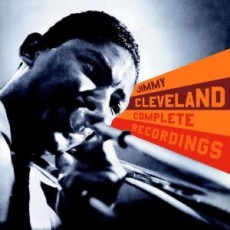
Jimmy Cleveland was born May 3, 1926 in Wartrace, Tennessee but didn’t start playing the trombone until he was sixteen. His first important gig didn’t happen until 1950 with Lionel Hampton and a subsequent European tour.
Leaving Hampton in 1953, Cleveland went to moved to New York and became a successful freelance musician recoding with the likes of Dizzy Gillespie, Gil Evans, Oliver Nelson, Antonio Carlos Jobim, Sarah Vaughan, Gigi Gryce, Oscar Pettiford, Lucky Thompson, James Moody and Gerry Mulligan.
As a leader Jimmy recorded a series of albums for EmArcy/Mercury records in the ‘50s and later in the decade toured Europe once again this time with Quincy Jones and in 1967 recorded with Thelonious Monk. He moved to Los Angeles to work with the Merv Griffin show and continued recording with Quincy.
Although he moved into a season of obscurity once he moved to the West coast, he continued to play till shortly before his death on August 23, 2008 in Lynwood, California at age 82. Jimmy Cleveland remains one of the most technically skilled of the bop-based jazz trombonists.

More Posts: trombone
Daily Dose Of Jazz…
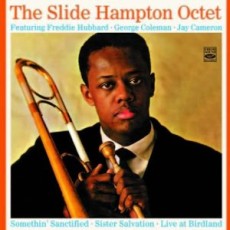
Slide Hampton was born Locksley Wellington Hampton on April 21, 1932 in Jeannette, Pennsylvania, one of twelve children born to Laura and Clarke Hampton, who taught them to play instruments. One of the few left-handed trombonists, not naturally having received a left-handed trombone from his father, by age twelve the Hamptons were living in Indianapolis and Slide was playing in the Duke Hampton Band, led by his father.
Just eight years later Slide was on stage at Carnegie Hall playing with Lionel Hampton in 1952. Throughout the 1950s Slide played with Buddy Johnson, played and arranged for Maynard Ferguson, and recorded with master trombonist Melba Liston. As his reputation grew he began working with Art Blakey, Tadd Dameron, Barry Harris, Thad Jones, Mel Lewis, and Max Roach, contributing both original compositions and arrangements. In the early Sixties he formed an octet with Freddie Hubbard, Booker Little and George Coleman that toured and recorded throughout the U.S. and Europe.
Over the course of fifty plus years Hampton has played with Woody Herman, lived in Europe for ten years, taught at Harvard, University of Massachusetts, DePaul University and Indiana State. He has led a nine trombone 3 rhythm band – World Of Trombones, co-led a quintet with Jimmy Heath called Continuum and freelanced as a writer and player.
This gifted jazz musician has been inducted into the Indianapolis Jazz Hall of Fame, is a two-time Grammy winner, and was honored in 2005 with the NEA Jazz Masters Award. Trombonist, bandleader, educator, master composer, arranger Slide Hampton, who is among the most distinguished assembly of careers in music, passed away on November 18, 2021 in Orange, New Jersey.

More Posts: trombone
Daily Dose Of Jazz…
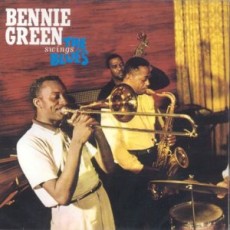
Bennie Green was born on April 16, 1923 in Chicago, Illinois. After playing locally around Chicago, at nineteen he teamed up with the Earl Hines Orchestra alongside Dizzy Gillespie and Charlie Parker from 1942-1948, gained some fame for his work with Charlie Ventura, played with Gene Ammons-Sonny Stitt, Charlie Ventura then joined Earl Hines’ small group in the early Fifties.
Following this last tenure with Hines, Bennie led his own groups for the rest of the decade. In the Sixties he played with sidemen Charlie Rouse, Paul Chambers, Louis Hayes, Sonny Clark, Jimmy Forrest and many others. He recorded as a leader for Decca, Blue Note, Bethlehem, Jazzland, Vee-Jay and Prestige during this same period.
By the end of the 60s, Green worked with Duke Ellington but then moved to Las Vegas where he spent his final years playing in hotel bands emerging only to play the Newport Jazz Festival and New York jam sessions. He was one of the few trombonists of the 1950s who played in a style not influenced by J.J. Johnson. He possessed a witty sound and full tone that was reminiscent of the swing era phrasing with an influence of R&B.
It has been speculated that Green was the first trombonist to consort with beboppers and whose ear enabled him to adopt aspects of their harmonic approach. On March 23, 1977 swing and bop trombonist Bennie Green passed away in San Diego, California at age 53.
More Posts: trombone