

Daily Dose Of Jazz…
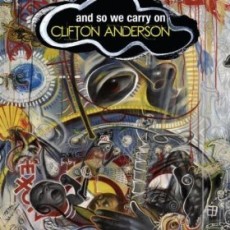
Clifton Anderson was born October 5, 1957 in Harlem, New York City, grew up surrounded by music and exhibited an affinity for music at an early age. His father was a church organist/choir director, his mother a singer and pianist. When he was just seven years old he got his first trombone, a gift from his uncle Sonny Rollins.
Clifton attended the prestigious Fiorello LaGuardia High School of Music and Art followed by a year at SUNY – Stony Brook in 1974, then matriculating through the Manhattan School of Music, along with his friends Angela Bofill and Kenny Kirkland. It was during this tenure that he became involved in jazz organizations, ensembles and workshops that led to his first recording date with Carlos Garnett in 1976.
By the time he graduated Anderson was established as one the young “in demand” trombonists on the New York scene. He became a part of Slide Hampton’s “World of Trombones” and played alongside folks like Steve Turre, Clifford Adams, Papo Vazquez, Frank Lacy, Conrad Herwig and Robin Eubanks among others. However, it was J.J. Johnson who remained Clifton’s greatest influence.
The early 1980’s found Clifton working with a “who’s who” of diverse musical giants: from Frank Foster, McCoy Tyner, Clifford Jordan, Stevie Wonder, Dizzy Gillespie, Merv Griffin and The Mighty Sparrow to Lester Bowie, Paul Simon, Muhal Richard Abrams, T.S. Monk and Dionne Warwick among others. During this period Clifton also played on the Broadway shows Dreamgirls and Nine.
In 1983 Anderson got the call to join his uncle, Sonny Rollins, touring worldwide and appearing on his recordings. As a leader he has recorded three albums “Landmarks”, “Decade” and “And So We Carry On”. Between musical and administrative duties, running Sonny’s merchandising company, he has given academia much, teaching both privately and publicly and as an artist in residence at Duke University. He continues to perform, tour and record.
More Posts: trombone
Daily Dose Of Jazz…
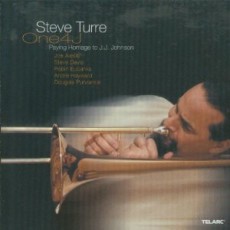
Steve Turre was born September 12, 1948 in Omaha, Nebraska but was raised in San Francisco, California to Mexican American parents. He began studying the violin but switched to trombone by age ten, later studying at the University of North Texas. By 1968 he was playing with Rahsaan Roland Kirk, went on to gig with Carlos Santana and toured with Ray Charles in 1972.
In 1970, encouraged by Kirk, Turre started playing conch and other seashells as musical lip-reed instrument. He has a collection of shells of various sizes, which he has picked up during his travels around the world. Turre leads “Sanctified Shells,” which is a “shell choir” made up of brass players who double on seashell releasing their first album in 1993.
Steve has had a long experience with Latin jazz he has become a skilled cowbell and Venezuelan maracas player. The internationally renowned trombonist, recording artist, arranger, and educator has won the Down Beat Reader’s poll for best trombonist in 1998, 1999, 2001, 2002 and 2006. He has been the trombonist for the Saturday Night Live band since 1985 and has taught jazz trombone at the Manhattan School of Music since 1988.
Turre has recorded 18 albums as a leader and has worked as a sideman on another 206 sessions with such luminaries as Monty Alexander, Carl Allen, Art Ensemble of Chicago, Frank Wess, Ray Barretto, Andy Bey, Art Blakey, Lester Bowie, Don Braden, Cecil Bridgewater, McCoy Tyner and Kenny Burrell among others. He continues to perform, record and tour.
Daily Dose Of Jazz…
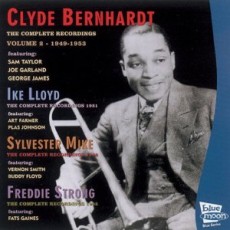
Clyde Bernhardt, born July 11, 1905 in Gold Hill, North Carolina, grew up in Harrisburg, Pennsylvania. He started playing trombone at 17 and in the Twenties performed in a series of lesser-known ensembles such as Bill Eady’s Ellwood Syncopators, Tillie Vennie, Odie Cromwell’s Wolverine Syncopators and The Whitman Sisters to name a few. In 1931 he worked with King Oliver and throughout the thirties played with Alex Hill, The Alabamians, Billy Fowler, Ira Coffey’s Walkathonians and Vernon Andrade.
In 1937 he joined the orchestra of Edgar Haye until 1942 then worked with Jay McShann, Cecil Scott, Luis Russell, Leonard Feather, Pete Johnson, Wynonie Harris, Claude Hopkins and the Bascomb brothers. He led his own ensemble, called the Blue Blazers, before returning to play with Russell from 1948-51. He recorded as a leader between 1946 and 1953, and on some of the recordings he sings under the pseudonym Ed Barron.
From 1952 to 1970 he played part-time with Joe Garland’s Society Orchestra followed with his leading the Harlem Blues and Jazz Band from 1972 and 1979 with sidemen Doc Cheatham, Charlie Holmes, Happy Caldwell, Tommy Benford and Miss Rhapsody. Shortly before his death he published his autobiography “I Remember” co-written with Sheldon Harris. As Bernhardt’s health began to fail in 1979, he gave up band leadership but played in Barry Martyn’s Legends of Jazz until his death on May 20, 1986 in Newark, New Jersey.
More Posts: trombone
Daily Dose Of Jazz…
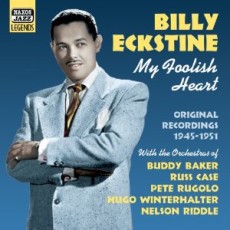
William Clarence Eckstine was born on July 8, 1914 in Pittsburgh, Pennsylvania but grew up in Washington, DC of Prussian and African American heritage. He began singing at the age of seven, entering amateur talent shows while dreaming of a football career that was sidelined when he broke his collarbone. Focusing on music he worked his way west to Chicago, joining Earl Hines’ Grand Terrace Orchestra as vocalist and occasionally trumpeter from1939 – 1943. During his tenure he made a name for himself through the Hines band’s radio shows with such jukebox hits as “Stormy Monday Blues” and his own “Jelly Jelly”.
Eckstine formed the first bop big band in 1944 making it a fountainhead for young musicians who would reshape jazz by the end of the decade, including Dizzy Gillespie, Dexter Gordon, Miles Davis, Art Blakey, Charlie Parker, Fats Navarro and Sarah Vaughn, with Tadd Dameron and Gil Fuller were among the band’s arrangers. Billy hit the charts often during the mid-’40s, with Top Ten entries including “A Cottage For Sale” and “Prisoner of Love”.
Breaking down barriers throughout the Forties as a leader of the original bop big band and as the first romantic black male in popular music, Mr. B, as he was affectionately known, went solo in 1947. His seamless transition to string-filled balladry saw him recording more than a dozen hits by the end of the decade and winning numerous awards from Esquire, Down Beat and Metronome magazines. His 1950 appearance at New York’s Paramount Theatre greatly surpassed Sinatra’s audience draw at the same venue.
Over the course of the next two decades Billy appeared on every major television variety show from Ed Sullivan to Nat King Cole, Jack Paar, Steve Allen, Joey Bishop, Flip Wilson and Playboy After Dark. After a long series of hit tunes and recordings by the 70’s Billy’s recordings came sparingly although he still performed before adoring audiences throughout the world. He made his final Grammy-nominated recording singing with Benny Carter in 1986.
Billy Eckstine, vocalist, bandleader, trumpeter, valve trombonist and guitarist passed away on March 8, 1993, at age 78, in his hometown of Pittsburgh.
More Posts: bandleader,guitar,trombone,trumpet,vocal
Daily Dose Of Jazz…
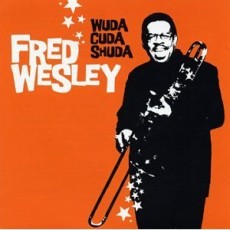
Fred Wesley was born July 4, 1943 in Columbus, Georgia and raised in Mobile, Alabama. The son of a high school teacher and big band leader as a child he took piano and later trumpet lessons. At around the age of twelve his father brought a trombone home, whereupon he switched.
During the 1960s and 1970s Wesley went to R&B as many jazz musicians did to earn a living and became a pivotal member of James Brown’s bands, playing on many hit recordings including “Say It Loud – I’m Black and I’m Proud”, “Mother Popcorn” and co-writing tunes such as “Hot Pants”. His slippery riffs and pungent, precise solos, complementing those of saxophonist Maceo Parker, gave Brown’s R&B, soul, and funk tunes their instrumental punch.
In the 1970s he also served as bandleader and musical director of Brown’s band The J.B.’s and did much of the composing and arranging for the group. His name was credited on ‘Fred Wesley & the J.B.’s’ recording of “Doing It To Death” which sold over one million copies, and was awarded a gold record 1973. Leaving Brown’s band in 1975, Wesley spent several years playing with George Clinton’s Parliament-Funkadelic projects, even recording a couple of albums as the leader of a spin-off group, The Horny Horns.
Wesley became a force in jazz in 1978 when he joined the Count Basie Orchestra. He released his first jazz album as a leader, “To Someone” in 1988, followed by “New Friends”, Comme Ci Comme Ca, and the live album “Swing and Be Funky” and “Amalgamation”.
In the early nineties Fred toured with former JB colleagues Pee Wee Ellis and Maceo Parker, as the JB Horns. When Ellis left, the band became The Maceo Parker Band with Wesley as the featured trombonist until 1996 when he formed his own band, The Fred Wesley Group, now known as Fred Wesley and the New JBs.
Wesley’s 35-year career includes playing with and arranging for a wide variety of other artist such as Ray Charles, Lionel Hampton, Randy Crawford, Vanessa Williams, The SOS Band, Cameo, Van Morrison, Socalled and rappers De La Soul, to name a few, while many other artists have sampled his work.
He has written an autobiography “Hit Me, Fred: Recollections of a Sideman”. Wesley served as an adjunct professor in the Jazz Studies department of the School of Music at the University of North Carolina at Greensboro from 2004 to 2006, and now works with students as a visiting artist at numerous other schools including Berklee College of Music and Columbia College of Chicago.
More Posts: trombone