

Daily Dose Of Jazz…
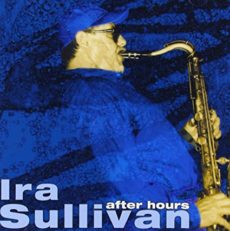
Ira Sullivan was born May 1, 1931 in Washington, D.C. and was taught trumpet by his father, saxophone by his mother and played both in the 1950s Chicago, Illinois with Charlie Parker, Lester Young, Wardell Gray and Roy Eldridge, garnering a reputation as a fearsome bebop soloist. After playing briefly with Art Blakey in 1956, he mastered alto and baritone saxophone before moving south to Florida and out of the spotlight in the early Sixties.
Sullivan was reluctant to travel which limited his opportunities to play with musicians of the first rank, but he continued to play in the Miami area, often in schools and churches. Hanging out with local younger players Jaco Pastorius and Pat Metheny, led to teaching and to broadening of his own musical roots to include the lessons of John Coltrane’s music and elements of jazz rock.
Adding flute and soprano saxophone to his armoury, Ira moved to New York City and in 1980 formed a quintet with legendary bop trumpeter Red Rodney where they worked on new material and fostered young talent to produce some fresh and stimulating music. He and his longtime friend and collaborator jazz pianist and vibraphonist Stu Katz, co-led a multi-night performance with at Joe Segal’s Jazz Showcase in Chicago.
Ira has performed and/or recorded with Red Rodney, Erin McDougald, Rob Block, Art Blakey, Frank Catalano, Kelly Sill, Charles Heath, Eddie Harris, Roland Kirk, Marc Berner, Lin Halliday, J. R. Monterose, Rita Reys and Billy Taylor and numerous others.
Trumpeter, flugelhornist, flautist, saxophonist, and composer Ira Sullivan has recorded as a leader and taught at the Young Musicians Camp each summer at the University of Miami passed away on September 21, 2020, of metastatic pancreatic cancer in his Miami, Florida home at age 89
Sponsored By

Voices From The Community

#preserving genius
More Posts: bandleader,flugelhorn,flute,history,instrumental,jazz,music,saxophone,trumpet

Daily Dose Of Jazz…
Ken Gregory was born on April 26, 1950 in Atlanta, Georgia and began playing trumpet at age nine, playing in the Northside Highlander Concert Band for three years beginning in 1960. After four years of private training, during his time in high school he sat 1st chair trumpet in the concert band from 1963 to 1968. He went on to work as conductor and lead trumpeter for the Six Flags Over Georgia orchestra until 1971, then learned to play guitar, electric bass and keyboards.
Gregory started playing the nightclub circuit in 1971 for the next nine years. By the Eighties as performance venues transitioned from clubs to private parties, he partnered with an electronics technician and moved into the professional studio business.
As a composer he has been commissioned to write for Warner Bros. Films, CNN, the Weather Channel, numerous radio and television advertisers, songwriters and lyricists. He has added trombone to his arsenal of instruments and has been recorded on thousands of studio sessions and has engineered audio and MIDI programming.
He performs original compositions with his band Solid State and has been featured on some of Atlanta’s best radio stations, on PBS Television’s Jazz Atlanta, and has performed at the Montreux Jazz, Atlanta Jazz and Inman Park festivals. Trumpeter and engineer Ken Gregory continues to be active in the professional music and record business in Atlanta.
Sponsored By

#preserving genius
More Posts: electric bass,guitar,keyboards,trombone,trumpet
Daily Dose Of Jazz…
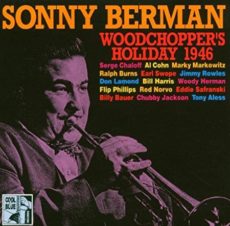
Saul “Sonny” Berman was born on April 21, 1925 in New Haven, Connecticut. He began touring at age sixteen and went on to work with Louis Prima, Harry James and Benny Goodman but is perhaps best known for his later work with Woody Herman.
Berman was distinguished by his passionate and innovative soloing and his versatility of tone, ranging from bold and emotional to sweetly muted. He also had a sense of humor which often made its way into a playfulness and joyfulness found in his solo work.
Trumpeter Sonny Berman died at the age of 21 in New York City from a drug overdose on January 16, 1947.
Sponsored By

#preserving genius
More Posts: trumpet
Daily Dose Of Jazz…
Theodore “Wingie” Carpenter was born on April 15, 1898 in St. Louis, Missouri. He lost his left arm as the result of an accident during his early teens, with the amputation performed by a noted surgeon who was an uncle of jazz musician Doc Cheatham. Sometime later, he took up the trumpet and by 1920 he was working in traveling carnival shows, and in 1921 he toured with Herbert’s Minstrel Band.
By 1926 he had settled in Cincinnati, Ohio and worked with Wes Helvey, Clarence Paige, Zack Whyte, and Speed Webb. In 1927, Wingie played in Buffalo, New York, with Eugene Primus. Off and on from late 1926 through 1928, he was featured on the Whitman Sisters’ Show with pianist Troy Snapp’s band.
During the early 1930s the trumpeter was featured with Smiling Boy Steward’s Celery City Serenaders and another Florida band led by Bill Lacey. In the mid-1930s, he became a touring regular with bandleaders including Jack Ellis, Dick Bunch, and Jesse Stone. By the late 1930s, Carpenter settled in New York City, where he worked with Skeets Tolbert and Fitz Weston.
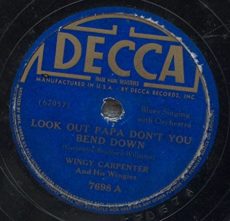
From 1939 on, Wingie worked as the leader of his own band through the 1960s, playing occasional dance dates and working for periods at well-known clubs such as The Black Cat, The New Capitol, Tony Pastor’s The Yeah Man, and other venues. He composed several works not limited to Look Out Papa Don’t You Bend Down, Preachin’ Trumpet Blues, Put Me Back In The Alley, Rhythm of The Dishes and Pans, and Team Up.
Trumpeter, vocalist and bandleader Wingie Carpenter, who was one of several one-armed trumpeters who worked in the music business, including similarly nicknamed Wingy Manone, passed away on July 21, 1975 in New York City.
Sponsored By

Bronze Lens
#preserving genius
Daily Dose Of Jazz…
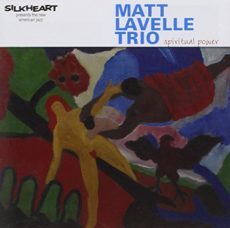
Matt Lavelle was born on April 11, born 1970 in Paterson, New Jersey and began his music career with a high school big band tour of the Soviet Union in 1988. He followed this with a five-year period of study with Hildred Humphries, a Swing era veteran who played with Count Basie, Billie Holiday and others.
During this period of study he played trumpet in Hildred’s band, then made his move on New York City and played straight-ahead jazz until 1995 when he relocated to Kingston, New York and studied the bass clarinet. Four years later Lavelle returned to New York seeking out what is known as the Downtown community. He has studied with Ornette Coleman adding alto clarinet to his instrumental arsenal.
Lavelle has played and toured with William Parker, Sabir Mateen, as well as with his own trio, an improvisation collective known as Eye Contact. He was key in the resurgence and return of avant jazz man Giuseppi Logan, helping him return to playing after a 45-year absence, and recording a new record released in spring 2010.
trumpet, flugelhorn and bass clarinet player Matt Lavelle, who has released a dozen albums as a leader or in duo and has recorded another ten as a sideman, continues to perform, record and tour.

#preserving genius
More Posts: clarinet,flugelhorn,trumpet