

Daily Dose Of Jazz…
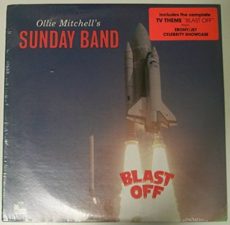
Ollie Mitchell was born Oliver Edward Mitchell in Los Angeles, California on April 8, 1927. His father, Harold Mitchell, lead trumpeter for MGM Studios, taught his son to play the trumpet.
His career would see him playing in the big bands of Harry James, Buddy Rich and Pérez Prado, among others, as well as the NBC Symphony Orchestra. In the 1960s, Mitchell joined The Wrecking Crew, a group of studio and session musicians who played anonymously on many records for popular singers of the time, as well as television theme songs, film scores, advertising jingles.
An original member of Herb Alpert’s Tijuana Brass, Ollie would go on to lead his own bands under the names of Ollie Mitchell’s Sunday Band and the Olliephonic Horns. It was in 1995 that he moved from to Puako, Hawaii and founded the Horns.
Mitchell recorded some two dozen albums over the course of his career with Chet Baker, Harry James, Stan Kenton, Irene Kral, Shorty Rogers, Pete Rugolo, Dan Terry and Gerald Wilson, among others.
In 2010, Ollie published his memoir, Lost, But Making Good Time: A View from the Back Row of the Band. Around this time he stopped playing the trumpet, due to macular degeneration, hand problems from an automobile accident and complications from cancer. Trumpeter and bandleader Ollie Mitchell passed away on May 11, 2013 in Puako, Hawaii at the age of 86.
Sponsored By


#preserving genius
More Posts: trumpet
Daily Dose Of Jazz…
Sonny Cohn was born George T. Cohn on March 14, 1925 in Chicago, Illinois and started playing in small groups in his hometown with King Fleming while still a teenager. He sat in with Red Saunders’ group in 1945, while Saunders was out of the Club DeLisa and working with a sextet instead of his usual mid-sized band.
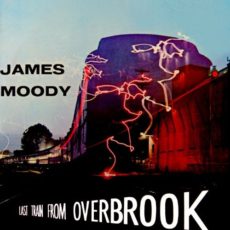
Fresh out of military service, on a recommendation from Leon Washington Sonny joined the Saunders group at the Capitol Lounge in Chicago. He was featured on Saunders’ first recordings as a leader for Savoy, Sultan, and behind Big Joe Turner on National. He performed on the records that Saunders made for OKeh Records from 1951–1953 and for Parrot and Blue Lake 1953–1954. In 1958 he was apart of the James Moody recording session on the Last Train From Overbrook on the Argo label.
Sonny Cohn survived several downsizings of the Red Saunders band, as well as the closure of the Club DeLisa, but eventually accepted an offer from Count Basie, with whom he worked from 1960 through 1984, and recording twenty-eight albums with the band..
After Basie’s death, he returned home and remained active for another two decades. Trumpeter Sonny Cohn, who never recorded as a leader, passed away on November 7, 2006 in Chicago at the age of 81.

#preserving genius
More Posts: trumpet
Daily Dose Of Jazz…
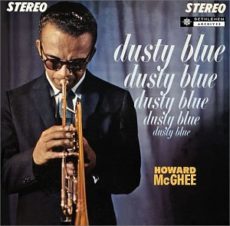
Howard McGhee was born on March 6, 1918 in Detroit, Michigan and originally played clarinet and tenor saxophone before taking up trumpet when he was 17. By 1941 he was playing in the territory bands led by Lionel Hampton, Andy Kirk being featured on McGhee Special, then with Count Basie and landing with Charlie Barnet from 1942-43. Participating in the fabled bop sessions at Minton’s Playhouse and Monroe’s Uptown House, he modernized his style away from Roy Eldridge, moving towards Dizzy Gillespie. However, it was in a club listening to the radio when he first heard Charlie Parker and became one of the early adopters of the new style, to the disapproval by older musicians like Kid Ory.
In 1946 a new label, Dial Records, organized some record sessions in Hollywood with Charlie Parker and the Howard McGhee combo. Joining these two were pianist Jimmy Bunn, bassist Bob Kesterson and Roy Porter on drums. He continued to work as a sideman for Parker playing on titles like Relaxin’ at Camarillo, Cheers, Carvin the Bird and Stupendous. Racial prejudice cut his California stay short when it became particularly vicious towards McGhee as half of a mixed-race couple.
Back in New York Howard he recorded for Savoy Records and had a historic meeting on record with Fats Navarro in 1948 on the Blue Note label. For much of the Fifties drug problems sidelined Howard but he resurfaced in the 1960s, appearing in many George Wein productions. His career sputtered again in the mid-1960s and he did not record again until 1976. He led one of three big jazz bands trying to find success in New York in the late 1960s. While the band did not survive, a recording was released in the mid-1970s.
He taught music through the 1970s, both in classrooms and at his Manhattan apartment. He was as much an accomplished composer and arranger as he was a performer. He recorded fifteen albums as a leader and held down sessions as a sideman with Dexter Gordon, Johnny Hartman, James Moody, Don Patterson, Joe Williams. Over the course of his career he would record for Felsted, Bethlehem, Contemporary, Hep, Black Lion, Sonet, SteepleChase, Jazzcraft, Zim, and Storyville record labels. Trumpeter Howard McGhee, known for his fast fingers and very high notes, passed away on July 17, 1987.
Sponsored By

Voices From The Community
#preserving genius
More Posts: trumpet

Daily Dose Of jazz…
John E. Carisi was born on February 23, 1922 in Hasbrouck Heights, New Jersey. A self-taught musician early in his career began when he became a member of Babe Russin’s band, then from 1938 to 1943 he was a member of Herbie Fields’s Orchestra before becoming a part of Glenn Miller’s Army Air Force Band. After the war he left Miller he studied with acclaimed composer Stefan Wolpe and worked with Ray McKinley, Claude Thornhill, Charlie Barnet and Benny Goodman, among others.
His minor-blues composition Israel was quickly recognized as a unique jazz classic after it was recorded by Miles Davis at the sessions which later became known as the Birth of the Cool. Other notable versions have been recorded by Bill Evans, and the Gerry Mulligan Concert Jazz Band. Another well known Carisi piece, Springsville, was also recorded by Miles Davis and arranged by Gil Evans on the classic album, Miles Ahead.
In 1957 he arranged the music for Urbie Green’s album, All About Urbie Green and in 1959 with the music for a set by Harry Galbraith’s Guitar Choir. 1960 saw the trumpeter on a State Department tour of South East Asia and the Middle East. Visiting the Taj Mahal became the inspiration for an album he shared with Cecil Taylor that was released as Into the Hot under Gil Evans‘ name for Impulse! in 1961, and then Carisi arranged Marvin Stamm’s 1968 album Machinations.
Johnny continued to perform and arrange in both the jazz and classical fields with occasional forays into ballet and pop music. He composed and scored music for Jerry Lewis’s television show on the other. In 1969 he joined the faculty of the Manhattan School of Music, but continued to play jazz off and on until 1984. Trumpeter and composer Johnny Carisi passed away October 3, 1992 in New York City, New York.
Sponsored By

#preserving genius
More Posts: trumpet

Daily Dose Of Jazz…
Leroy Jones was born on February 20, 1958 in New Orleans, Louisiana and began playing trumpet at the age of ten. By the time he was 12 he was leading the Fairview Baptist Church Marching Band, a group of young musicians organized by guitar and banjo player Danny Barker.
The musicians’ union forced Barker to disband the group in 1974, so Leroy became a union musician and took over the running of the group, renaming it the Hurricane Brass Band. By 1976 he had left the group, touring for a time with Eddie Vinson and Della Reese before forming his own group, the Leroy Jones Quintet.
In 1991 Jones joined the big band of Harry Connick, Jr., and that exposure with the band, including the opportunity for the Leroy Jones Quintet to open for Connick. This in turn led to him releasing his first album under his own name titled Mo’ Cream From The Crop on the Columbia Records in 1994. Trumpeter Leroy Jones, who has ten albums as a leader, has also appeared with the Preservation Hall Jazz Band and Dr. John and continues to tour and record with his quintet.
Sponsored By
Voices From The Community
#preserving genius
More Posts: trumpet