

Daily Dose Of Jazz…
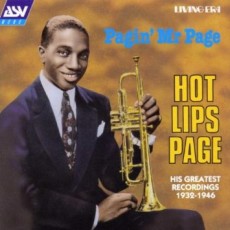
Hot Lips Page was born Oran Thaddeus Page on January 27, 1908 in Dallas, Texas. His main trumpet influence was Louis Armstrong as well as early influence from Harry Smith and Benno Kennedy. In his early teens he moved to Corsicana, Texas and traveled across the Southwest and toured as far East as Atlanta and north to New York City. He played in circuses and minstrel shows and backed blues singers Ma Rainey, Bessie Smith and Ida Cox.
In 1926 he caught the eye of the bassist Walter Page (no relation) who had recently assumed leadership of the Oklahoma City Blue Devils and by 1928 was playing and touring. In 1931 he left to join the Bennie Moten Orchestra in Kansas City.
Hot Lips went on to occasionally appear as vocalist, emcee and trumpet soloist with Count Basie’s Reno Club orchestra after Moten’s sudden death disbanded the group. It was during this period that Page embarked upon a solo career, playing with small pick up bands from Kansas City. At the behest of Armstrong’s manager Joe Glaser, he moved to New York City in 1936.
His career as a bandleader got off to an auspicious start in 1937 with sold-out appearances and an extended run at Harlem’s Smalls Paradise, but struggling by 1939 he was struggling to maintain a regular working band, he led small combos and bands on 52nd Street through the Fifties. Page was known as “Mr. After Hours” to his many friends for his ability to take on all comers in late night jam sessions, recorded for the Mezzrow-Bechet Septet in 1945, as Pappa Snow White, with Mezz Mezzrow, Sidney Bechet, Pops Foster, Chu Berry, Sid Catlett and vocalist Pleasant Joe.
Over the course of his short career Hot Lips made over 200 recordings, most as a leader, for Bluebird, Vocalion, Decca and Harmony Records, among others. He toured extensively throughout the southern and northeast states and Canada, led as many as thirteen different big bands, appeared with Bud Freeman and Artie Shaw, recording over 40 sides with the latter. His band backed the singer Wynonie Harris was the leader of the Apollo Theater, recorded duets with Pearl Bailey on The Hucklebuck and Baby It’s Cold Outside and twice toured Europe.
Known as Hot Lips to the public and Lips by fellow musicians, the bandleader and trumpeter heralded as one of the giants of the Swing Era and a founder of what became rhythm and blues, passed away due to mysterious circumstances in New York on November 5, 1954 at the age of 46.

Inspire A Young Mind
Daily Dose Of Jazz…
Talib Ahmad Dawood, formerly Alfonso Nelson Rainey, was born on January 26, 1923 on Antigua. He first took lessons from his father, a trumpeter who played in marching bands; his mother was a singer who accompanied him on piano. He also learned to play the banjo and the pipe organ.
His further education came in the United States at from his high school and music school experiences at the end of the 1930s in New York. Because of the support he received fromof the Barrymore Foundation, Talib first took the stage name Barrymore Rainey. After studying at the Juilliard School in 1940, he played with Tiny Bradshaw, Louis Armstrong, Benny Carter, Andy Kirk, Jimmie Lunceford, Roy Eldridge and other swing orchestras.
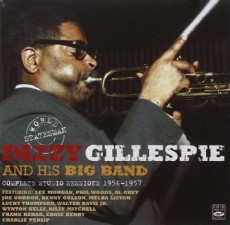
In Philadelphia he met Sheikh Nasir Ahmad, an Ahmadiyya missionary, through whom he converted to Islam and took the name Talib Dawud. In the second half of the 1940s and again in 1956 he was a member of the Dizzy Gillespie Big Band, performing with in 1957 at the Newport Jazz Festival.
1958 saw Dawud married to singer Dakota Staton who was no longer actively working since 1959 and the two operated an Africa-Import Shop in New York City. As a member of the Ahmadiyya Muslim sect, which distanced itself from the Nation of Islam, he wrote numerous articles in the African-American Chicago daily New Crusader on the controversy between Elijah Muhammad and Malcolm X.
Trumpeter Talib Dawud never had the opportunity to record as a leader, and on July 9, 1999 he passed away in New York City.
Dose A Day – Blues Away
More Posts: trumpet
Daily Dose Of Jazz…
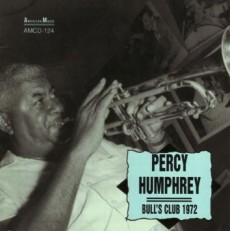
Percy Gaston Humphrey was born January 13, 1905 in New Orleans, Louisiana. He was the son of clarinetist Willie Eli Humphrey and the younger brother of clarinetist Willie and trombonist Earl. He learned the musical basics of New Orleans jazz from his grandfather “Professor” Jim Humphrey.
For more than thirty years he was leader of the Eureka Brass Band founded by trumpeter Willie Wilson and played alongside Willie Parker, John Casimir and George Lewis. After Wilson got ill, Alcide Landry, Joseph “Red” Clark and Dominique “T-Boy” Remy each temporarily led the group until 1946 when Percy took over until the demise of the band in 1975. He also played in the band of pianist Sweet Emma Barrett.
For years he led his own jazz band Percy Humphrey and His Crescent City Joymakers. He played regularly at Preservation Hall from its opening in the early Sixties until shortly before his death. He traveled and performed internationally with the Preservation Hall Jazz Band as well as his own bands.
As a leader and sideman of the various groups he recorded prolifically with Pax, Alamac, Folkways, Jazzology and Sounds of New Orleans. A 1951 album, New Orleans Parade, features Humphrey with trombonists Charles “Sunny” Henry and Albert Warner and saxophonist Emmanuel Paul. Their 1962 sessions, Jazz at Preservation Hall, Volume 1: the Eureka Brass Band of New Orleans, on Atlantic Records with his borhter Willie, Kid Sheik Cola, Pete Bocage, Alber Warner and Oscar “Chicken” Henry, Emanuel Pail, Wilbert “Bird” Tilman, Josiah “Cie” Frazier and Robert “Son Fewclothes” Lewis.
After 1975, Percy revived the name occasionally for festival performances and other appearances. Trumpeter and bandleader Percy Humphrey continued to lead his own band until his passing in New Orleans on July 22, 1995 at the age of ninety .His last gig was at the annual New Orleans jazz festival in April, three months before his death.
Inspire A Young Mind
More Posts: trumpet

Daily Dose Of Jazz…
Roger Guérin was born on January 9, 1926 in Saarbrücken, Germany and initially studied violin, followed by cornet and trumpetat the Paris Conservatory. It was there as a teenager that he won first prize.
Roger began working professionally in 1947, playing with Aime Barelli, Django Reinhardt, Don Byas, Hubert Fol, James Moody, Benny Golson, Bernard Peiffer, Fats Sadi, Lucky Thompson, Kenny Clarke, Blossom Dearie, Martial Solal, Michel Legrand and Andre Hodeir.
Playing at the 1958 Newport Jazz Festival l with a youth ensemble, Guérin also played in Les Double Six in 1959, later returning to this group. He replaced Clark Terry in Quincy Jones’s Big Band in 1960. He worked on the soundtrack to the film Paris Blues in 1961 with Duke Ellington and went on to work extensively as a vocalist for Michel Legrand.
He has over 150 album credits to his name including recording with the Kenny Clarke/Francy Boland Big Band, and has won the Prix Django Reinhardt in 1959. Trumpeter and vocalist Roger Guérin passed away on February 6, 2010 in Nimes, France.
Put A Dose In Your Pocket
Daily Dose Of Jazz…
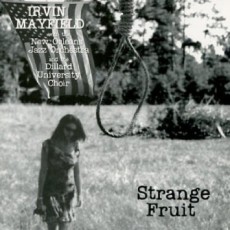
Irvin Mayfield, Jr. was born on born December 23, 1977 in New Orleans, Louisiana, the youngest of five brothers, three half-brothers and a half-sister. He received his first trumpet when he was in the fourth grade, asking his father for one after seeing the success a friend of his was having with girls by playing the instrument. Early in his public school education, he befriended fellow schoolmate Jason Marsalis. As a young man he attended and graduated from New Orleans Center for Creative Arts, declined a scholarship to Juilliard School of Music to attend the University of New Orleans, then dropped out during his first semester.
Mayfield began his musical career during the latter half of the 1980s, playing with the Algiers Brass Band, shared a New York City apartment with Wynton Marsalis for a brief period and helped found Los Hombres Calientes with Bill Summers, Jason Marsalis, Victor Atkins III, David Pulphus, and Yvette-Bostic Summers. Signing with Basin Street Records, the groups debut album garnerd much success and Irvin received national recognition.
As an educator Mayfield would go on to be an artist-in-residence and establish the Institute of Jazz Culture at Dillard University, found the sixteen-piece New Orleans Jazz Orchestra, accept a one-year appointment as Artistic Director of Jazz at Orchestra Hall, the five-concert jazz series of the Minnesota Orchestra, received The Chancellor’s Award from the University of New Orleans, and awarded an Honorary Doctorate from Dillard University,
Over the course of his still vibrant career, Mayfield has been a part of the Higher GroundHurricane Relief Benefit Concert in the aftermath of Katrina, and was nominated to the National Council on the Arts by President George W. Bush and was subsequently appointed to the post by President Obama in 2010, serving through 2014. He has performed at the White House and festivals around the country, was made a Cultural Ambassador of the City of New Orleans, has a club named after him in the Royal Sonesta Hotel and has recorded to date, twenty-five albums.
Grammy and Billboard Award-winning trumpeter Irvin Mayfield currently serves as Jazz Artist in Residence for the Apollo Theater, is Artistic Director of the New Orleans Jazz Orchestra and continues to perform, record and tour with his small groups and occasionally with Los Hombres Calientes.
More Posts: trumpet