

Daily Dose Of Jazz…
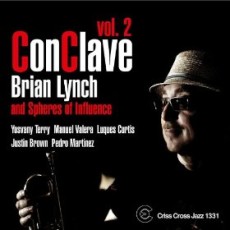
Brian Lynch was born September 12, 1956 in Urbana, Illinois but grew up in Milwaukee, Wisconsin. The young trumpeter apprenticed with pianist Buddy Montgomery and organist Melvin Rhyne while earning a degree from the Wisconsin Conservatory of Music. While living in San Diego 1980-81, he gained further valuable experience in the group of alto master Charles McPherson.
Moving to New York in late 1981 Brian was soon hired by Bill Kirchner, performing and recording with Kirchner’s nonet, then Horace Silver, and the Toshiko Akiyoshi Jazz Orchestra while simultaneously on the Latin scene with salsa bandleader Angel Canales, Hector LaVoe and Eddie Palmieri. By 1988 he was a part of the final edition of Art Blakey’s Jazz Messengers followed by Phil Woods and Benny Golson.
In recent years Lynch has worked with the Buena Vista Social Club, co-led bands and Latin sessions with Conrad Herwig, with Eddie Palmieri won best Latin Jazz Album of the Year Grammy for Simpatico, has immersed himself in the Afro-Cuban culture with “Spheres of Influence” collaborating with the likes of Edsel Gomez, Luis Perdomo, Robby Ameen, Ernesto Simpson, Richie Flores and Pedro Martinez to name a few.
As an educator he is a faculty member at the University of Miami, New York University and the North Netherlands Conservatory, has taught at the Stanford Jazz Workshop, Eastman School of Music, Dartmouth College, University of North Texas and Columbia University among others. Trumpeter Brian Lynch continues to perform, record and tour worldwide.

Jazz Is Global – Share
More Posts: trumpet
Daily Dose Of Jazz…
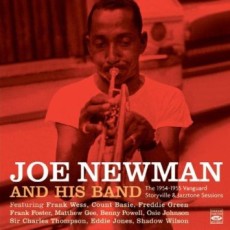
Joseph Dwight Newman was born on September 7, 1922 in New Orleans, Louisiana. A child of a pianist father, he had his first music lessons from David Jones. He continued his study of trumpet at Alabama State College where he also played, led and toured the school band, the Bama State Collegians.
By 1941 Joe joined Lionel Hampton for two years, before signing with Count Basie, a relationship that lasted for a total of thirteen years resulting in a number of small group recordings as leader, spent time with Illinois Jacquet, and then with J.C. Heard. He also played on Benny Goodman’s 1962 tour of the Soviet Union.
Leaving the Basie band in 1961, Newman helped found Jazz Interactions, of which he became president in 1967. Jazz Interactions was a charitable organization which provided an information service, brought jazz master classes into schools and colleges, and later maintained its own Jazz Interaction Orchestra, for whom Newman wrote.
In the 1970s and 1980s Newman toured internationally, recorded for various major record labels. He suffered a stroke in 1991, however, which seriously disabled him. Joe Newman, trumpeter, composer and educator best known for his years with Count Basie passed away on July 4, 1992.
Inspire A Young Mind
More Posts: trumpet
Daily Dose Of Jazz…
Paul Webster, born August 24, 1909 in Kansas City, Kansas attended Fisk University and worked as an embalmer before switching to music. He played in bands led by George E. Lee, Bennie Moten, Tommy Douglas and Eli Rice through the 1920s.
In 1931 he joined Jimmie Lunceford’s outfit, left and then returned to play from 1935 to 1944. It was here he took over Tommy Stevenson’s spot and the high-note trumpet player found his fame during this period of his career. It has been noted that he had a big influence on a young Stan Kenton, who later featured high note trumpeters in many of his bands.
Following this Webster played lead trumpet in bands led by Cab Calloway, Charlie Barnet, Sy Oliver, Ed Wilcox, and Count Basie through the war years to the end of the decade. After 1953 he played trumpet only part-time, contributed to ‘Paul Curry Presents the Friends of Fats’ LP in 1959 on the Golden Crest Label, but still occasionally played with Sy Oliver’s band into the 1960s. Jazz trumpeter of the big band era, Paul Webster passed away 0n May 6, 1966.
Inspire A Young Mind
More Posts: trumpet
Daily Dose Of Jazz…
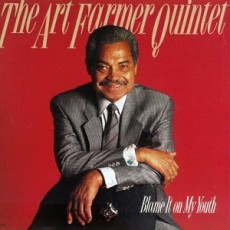
Arthur Stewart Farmer was born August 21, 1928, an hour before his twin brother, in Council Bluffs, Iowa. Their parents, James Arthur Farmer and Hazel Stewart Farmer, divorced when the boys were four, and their steelworker father was killed in a work accident not long after. He moved with his grandfather, grandmother, mother, brother and sister to Phoenix, Arizona when he was still four. He began playing piano while in elementary school, then moved on to bass tuba and violin before settling on cornet and then trumpet at the age of thirteen. He taught himself to read music and practiced his new main instrument, the trumpet.
Farmer and his brother moved to Los Angeles in 1945, attending the music-oriented Jefferson High School where they got music instruction and hung out with other developing musicians such as Sonny Criss, Ernie Andrews, Big Jay McNeely and Ed Thigpen. By sixteen he was playing trumpet professionally, performing in the Horace Henderson, Jimmy Mundy and Floyd Ray bands, among others.
Art left school to tour with a group led by Johnny Otis, but this job lasted for only four months, as Farmer’s lip gave out, becoming lacerated through underdevelopment of his technique. He then received technique training in New York, auditioned unsuccessfully for Dizzy Gillespie and returned to the West Coast in 1948 as a member of Jay McShann’s outfit.
Farmer played and toured with Benny Carter, Wardell Gray, Roy Porter and Gerald Wilson in the early 50s.He would record his first studio session with Big Joe Turner and Pete Johnson, and gained great attention with his piece titled “Farmer’s Market”. He joined Lionel Hampton’s orchestra, toured Europe, became a member of Teddy Charles’ New Directions band, relocated to New York and in 1953, had his first recording session as leader for Prestige titled The Art Farmer Septet.
Over the course of his career he has worked with Quincy Jones, Gigi Gryce, Horace Silver, Gerry Mulligan, Thelonious Monk, and Charles Mingus, appeared on the Steve Allen show, Newport Jazz Festival, and two films – I Want To Live and The Subterraneans. As a member of Jazz at the Philharmonic he toured Europe again, that helped him gain an international reputation. He formed the Jazztet with Benny Golson, assited the careers of McCoy Tyner and Granchan Moncur, appeared in the photo Great Day In Harlem, recorded prolifically and led groups through the Sixties, and took a job in the orchestra pit on Broadway as jobs in jazz dried up.
He would settle in Vienna and divide his time between Europe and New york, revive the Jazztet with Golson, form a quintet with Clifford Jordan as a member, lost 30 pounds, quit smoking and drinking, avoided drugs, performed regularly, was awarded the Austrian Gold Medal of Merit, and was selected as a National Endowment for the Arts Jazz Master in 1999. A few months later on October 4, 1999 bebop trumpeter, flugelhorn and flumpet player and bandleader Art Farmer passed away of a heart attack at his New York Manhattan home. He was 71.
Jazz Is Global – Share
More Posts: flugelhorn,flumpet,trumpet
Daily Dose Of Jazz…
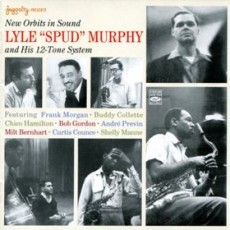
Lyle Stephanovic was born Miko Stefanovic to Serbian émigré parents in Berlin, Germany on August 19, 1908. Better known in the jazz world as Spud Murphy, he grew up in Salt Lake City, Utah where he took the name of a childhood friend. Murphy studied clarinet and saxophone when young and took trumpet lessons from Red Nichol’s father.
He worked with Jimmy Joy in 1927-28 and with Ross Gorman and oboist Slim Lamar in 1928. He worked the early 1930s as saxophonist-arranger for Austin Wylie, Jan Garber, Mal Hallett and Joe Haynes, and then became a staff arranger for Benny Goodman from 1935 to 1937. At the same time he also contributed charts to the Casa Loma Orchestra, Isham Jones, Les Brown and many others.
From 1937 to 1940 Murphy led a big band and recorded for Decca and Bluebird Records in 1938-39. In the 1940s he relocated to Los Angeles where he did work in the studios and with film music, in addition to authoring and teaching the 1200-page “System of Horizontal Composition” also known as the “Equal Interval System”. The Equal Interval System is a modern system of music composition, developed by Murphy over a lifetime of research.
Spud recorded two jazz albums in the 1950s, but his later career was focused on classical and film music. In 2003, orchestra leader Dean Mora, a close friend of Murphy’s, recorded some two dozen of his arrangements in a tribute CD, “Goblin Market”.
Multi-instrumentalist, bandleader and arranger Spud Murphy died in Los Angeles, two weeks short of his 97th birthday on August 5, 2005.
Give The Gift Of Knowledge