

Daily Dose Of Jazz…
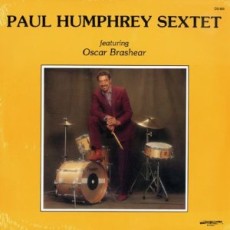
Oscar Brashear was born August 18, 1944, in Chicago, Illinois. After studying at trumpet and music at DuSable High School and Wright Jr. College under John DeRoule, he worked briefly with Woody Herman before going on to join Count Basie from 1968-69, then returning to freelance in Chicago. There her worked with Sonny Stitt, Gene Ammons, Dexter Gordon and James Moody.
A move to Los Angeles in 1971, he worked with Gerald Wilson, Harold Land, Oliver Nelson, Shelly Manne, Quincy Jones, Horace Silver and Duke Pearson.
To date Brashear has contributed to more than five-dozen recording sessions with Teddy Edwards, Jimmy Smith, Sonny Rollins, Benny Golson, Bobby Hutcherson,, B.B. King, Bobby Bland, Freddie Hubbard, Joe Farrell, The Crusaders, McCoy Tyner, Gene Harris, Earth Wind and Fire, Carole King, Ry Cooder and Frank Sinatra among many others. He continues to perform and record as a session player.

Take A Dose On The Road
More Posts: trumpet
Daily Dose Of Jazz…
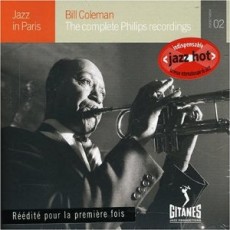
Bill Coleman was born William Johnson Coleman on August 4, 1904 in Paris, Kentucky. In 1909 his family moved from Kentucky to Cincinnati and his first musical explorations were on clarinet and C melody saxophone, but he eventually settled on trumpet. He studied with Cincinnati trumpeter Theodore Carpenter and played in an amateur band led by trombonist J.C. Higginbotham. He began professional work in Cincinnati with bands led by Clarence Paige, Wesley Helvey and then Lloyd and Cecil Scott.
In 1927 he traveled to New York City and played with the Scott brothers to New York City, and continued to work with them until 1929, when he joined the orchestra of pianist Luis Russell. His first recording session was with Russell and he soloed on the tune “Feelin’ the Spirit”. Over the next couple of years he floated between Russell and Scott participating in recording sessions with each of them. By 1933 Bill was on his first European tour with Lucky Millinder, then in October returned to New York, worked with the bands of Benny Carter and Teddy Hill and sat in on a recording session with Fats Waller and laying down a number of memorable sides.
Coleman returned to Europe, played a residency in Paris with entertainer and vocalist Freddy Taylor, recorded with guitarist Django Reinhardt and made several freelance sessions under his own name. In late 1936 he traveled to Bombay, India playing with Leon Abbey’s Orchestra, then back to Paris to join saxophonist William T. Lewis. Returning to the States found him playing with Benny Carter, Teddy Wilson, Andy Kirk, Ellis Larkins, Mary Lou Williams, Sy Oliver, John Kirby, Lester Young, Billie Holiday and Coleman Hawkins.
Due to racial segregation Bill Coleman returned to France in 1948 and lived out his days there touring and performing in clubs and concert halls all over Europe. In 1974 he received the Ordre National du Merite and in 1978, he performed at the first Jazz in Marciac festival (along with tenor saxophonist Guy Lafitte, later becoming an honorary president of the festival organization.
Jazz trumpeter Bill Coleman passed away in Toulouse, France on August 24, 1981. His sound and phrasing were immediately recognizable with a style of the swing era musicians.
Dose A Day – Blues Away
More Posts: trumpet
Daily Dose Of Jazz…
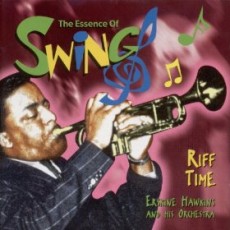
Erskine Ramsay Hawkins was born on July 26, 1914 in Birmingham, Alabama and was named after a local industrialist who was rewarding parents with savings accounts for doing so. He played trumpet in the Industrial High School band directed by Fess Whatley, a teacher who trained numerous African-American musicians that went on to populate the orchestras of Duke Ellington, Lucky Millinder, Louis Armstrong and Skitch Henderson.
Dubbed “The 20th Century Gabriel”, Hawkins composed the jazz standard “Tuxedo Junction” in 1939 with saxophonist and arranger Bill Johnson. It became a hit during World War II rising on the national charts to #7 performed by his orchestra and #1 played by Glenn Miller’s. While a bandleader Erskine featured several female vocalist like Ida James, Delores Brown and Della Reese.
From 1967 to 1989 Hawkins played the lobby bar and show nightclub at The Concord Resort Hotel in Kiamesha Lake, New York. He was inducted in 1978 into the Alabama Jazz Hall of Fame. Erskine Hawkins, trumpeter and bandleader, died in Wilmington, New Jersey on November 11, 1993, at the age of 79.
Give A Gift Of Jazz – Share
Daily Dose Of Jazz…
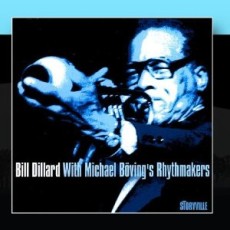
Bill Dillard was born on July 20, 1911 in Philadelphia, Pennsylvania and started playing the trumpet at age 12. He established his early reputation on recording sessions with jazz pioneer Jelly Roll Morton and at the age of 18, Dillard went on to record with Spike Hughes, Henry “Red” Allen, Bill Coleman, Coleman Hawkins, Roy Eldridge, Dizzy Gillespie and Django Reinhardt.
He made his theater debut in “Carmen Jones” and sang in several other Broadway productions, including “Regina,” “Beggars Holiday,” “A Temporary Island” and “Lost in the Stars.” He also appeared on television as Joe the bartender in the soap opera “Love of Life,” and as the King of Babylon in “Green Pastures.”
Dillard was well known for his work with the big bands of Benny Carter, Luis Russell and Teddy Hill. He also had a prolific acting career on Broadway. The trumpeter and vocalist imported to Denmark the sounds of early 20th century New Orleans but it wasn’t until he was 79 that he released his only album as a solo improviser that released in 1991 with the Michael Boving’s Rhythmakers.
Swing jazz trumpeter, actor and vocalist passed away just four years later on the Martin Luther King Jr. holiday, January 16, 1995.
Dose A Day – Blues Away
More Posts: trumpet
Daily Dose Of Jazz…
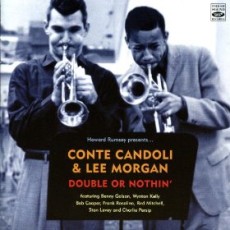
Secondo “Conte” Candoli was born on July 12, 1927 in Mishawaka, Indiana. Following in the footsteps of his older brother Pete, he learned to play the trumpet at a young age. By the summer of 1943 just before entering his junior year he sat in for the first time with the Woody Herman First Herd.
After graduation in 1945, he joined the band full-time where he sat side by side with brother Pete in the trumpet section. Conte immediately went on the road, where he stayed for the next ten years, with Woody as well as with the legendary bands of Stan Kenton, Benny Goodman and Dizzy Gillespie.
In 1954, after leaving Stan Kenton, Candoli formed his own group with sidemen Chubby Jackson, Frank Rosolino and Lou Levy. Moving to Los Angeles and for four years was a member of the Lighthouse All-Stars with Shorty Rogers, Bud Shank and Bob Cooper.
His Dizzy-inspired playing brought him many performing and recording opportunities with major jazz names and the top names in show business, such as Gerry Mulligan, Shelly Manne, Terry Gibbs, Teddy Edwards, Frank Sinatra, Bing Crosby, Sammy Davis Jr. and Sarah Vaughan.
Conte’s long relationship with The Tonight Show began in 1967 and he became a permanent fixture in the orchestra’s trumpet section when Johnny Carson moved the show to Burbank, California in 1972.
Trumpeter Conte Candoli was inducted into The International Jazz Hall of Fame in 1997. He died at the age of 74 on December 14, 2001 at Monterey Palms Convalescent home in Palm Desert, California following a long battle with prostate cancer.
Inspire A Young Mind
More Posts: trumpet