

Daily Dose Of Jazz…
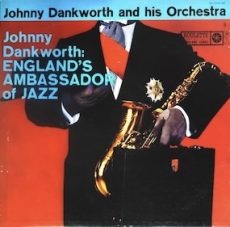
Leon Calvert was born on June 26, 1927 in Westcliffe-on-Sea, England and learned to play the trumpet in his childhood. His family moved to Manchester, England while he was very young. His first professional job was with Jack Nieman’s Band at the Plaza in Manchester and by 1945 he was on the London circuit. From late 1947 he performed on the ocean liner Mauretania with Paul Lombard.
Joining Oscar Rabin’s band in 1948, that year he was one of the ten musician co-founders of Club Eleven in Great Windmill Street, and later Carnaby Street. While at the club he played with the house band led by John Dankworth. During the late Forties and into the Fifties Calvert worked with the Ambrose band (1949), the Steve Race Bop Band (1949), Tito Burns (1950–1951) and then for four years with Carroll Gibbons. In the mid-1950s he had stints with Ken Moule, Buddy Featherstonhaugh, the London Jazz Orchestra and Denny Boyce. In the late 1950s he worked with Tony Crombie and Vic Lewis.
The 1960s saw Calvert operating a jazz label at Lansdowne Studios with drummer Barry Morgan, Monty Babson and Jerry Allen. In 1967 the group founded Morgan Sound Studio which ventured outside the jazz idiom and became the location for rock recordings by Joan Armatrading, Black Sabbath, The Cure, Donovan, Jethro Tull, The Kinks, Paul McCartney, Cat Stevens, Rod Stewart, and numerous more.
In 1961 he took over from Dick Hawdon as lead trumpeter for the John Dankworth Orchestra. He can be heard on many Ken Moule and Dankworth recordings of this period, his style influenced by the early work of Miles Davis. He was featured on Johnny Scott’s London Swings in 1966.
The 1970s saw Calvert recording with Richard Rodney Bennett on his Jazz Calendar Suite and on Tony Kinsey’s Thames Suite. He worked mostly as a freelance musician for radio, television and film. As a session trumpeter he recorded with John Baryy, and The Beatles. In the 1980s, Calvert sometimes played as a duo with pianist Jack Honeybourne, and he continued playing at small jazz venues into the 1990s, with the Sounds of Seventeen, Jazz Spell and George Thorby’s Band.
Bebop jazz trumpeter Leon Calvert, who was one of the co-founders of Club Eleven, died on May 1, 2018 in Hatfield, Hertfordshire, England at the age of 90.

More Posts: bandleader,history,instrumental,jazz,music,trumpet
CHIEF XIAN ADJUAH
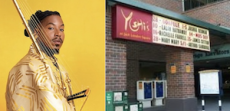
Chief Xian aTunde Adjuah [formerly Christian Scott] is a two-time Edison Award-winning, six-time Grammy Award-nominated, Doris Duke Award in the Arts awardee. He is a sonic architect, trumpeter, multi-instrumentalist, composer, producer, designer of innovative technologies and musical instruments including The Stretch Music app, Adjuah Trumpet, Siren, Sirenette, Chief Adjuah’s Bow and Chief Adjuah’s N’Goni.
He is the founder and CEO of the Stretch Music App and Recording Company. Adjuah is Chieftain and Oba of the Xodokan Nation as well as the current Grand Griot of New Orleans. He is the grandson of Louisiana luminary and legend, the late Big Chief Donald Harrison Sr., Guardians Institute founder and Grand Griot, Herreast Harrison. And is the nephew of Jazz innovator and NEA Jazz Master saxophonist-composer, Big Chief Donald Harrison Jr. Adjuah and his twin brother Kiel joined his grandfather’s Guardians of the Flame banner in 1989 at the age 5.
Since 2001, Adjuah has released thirteen critically acclaimed studio recordings, four live albums, and one greatest hits collection. He is widely recognized as the progenitor of the “Stretch Music,” style. A 21st-century approach that asserts genre blindness and an ethnomusicological approach to limitless fusion that heralded NPR to hail him as “Ushering in a new era of Jazz” and JazzTimes Magazine to mark him as “Jazz’s young style God.” and “the architect of a commercially viable fusion”.
He has collaborated with a number of notable artists, including Prince, Thom Yorke, McCoy Tyner, Marcus Miller, Flea, Eddie Palmieri, Robert Glasper, rappers Mos Def (Yasin Bey), Talib Kweli, as well as heralded poet and musician Saul Williams. Adjuah scores music for his identical twin brother’s, writer/director and visual artist Kiel Adrian Scott, filmic works. Scott is a Directors Guild of America Award recipient whose works have been honored with The Peabody Award and an NAACP Image Award.
Cover: $36.00 ~ $84.00
More Posts: adventure,bandleader,club,genius,instrumental,jazz,music,preserving,travel,trumpet
Daily Dose Of Jazz…
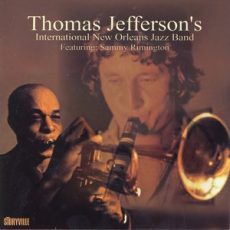
Thomas Jefferson was born on June 20, 1920 in Chicago, Illinois. He played drums and French horn while young before switching to trumpet and was strongly influenced by Louis Armstrong. His professional career began when he was 14 playing with Billie and De De Pierce.
He played with Papa Celestin’s orchestra in 1936, as well as with New Orleans jazz musicians Sidney Desvigne and Armand “Jump” Jackson. The 1950s saw him working with Johnny St. Cyr, Santo Pecora, and George Lewis. In 1966, Andrew Morgan recruited Jefferson to play lead trumpet for the Young Tuxedo Brass Band. Subsequently, Jefferson led a jazz band which performed at the New Orleans jazz club Maison Bourbon.
Thomas recorded sparingly as a leader; sessions include dates for Southland Records in the 1960s and Maison Bourbon Records in the 1970s. Jefferson had a cameo as a jazz musician in the 1975 film Hard Times.
Trumpeter Thomas Jefferson, who recorded six albums as a leader and played Dixieland, died in New Orleans, Louisiana on December 13, 1986.
More Posts: bandleader,history,instrumental,jazz,music,trumpet
JOE GRANSDEN
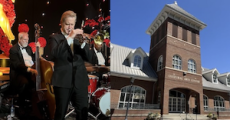
Joe Gransden celebrates The Good Life: A Musical Tribute to the Artistry of Tony Bennett!
Joe and the band as they take you on a swingin’ stroll through the life and career of Tony Bennett! One of the greatest performers of the American Songbook, Tony Bennett’s tone, phrasing and feel set him apart from other vocalists of his era.
Tickets: $40.50
More Posts: bandleader,genius,instrumental,jazz,music,preserving,trumpet,vocal
Daily Dose Of Jazz…
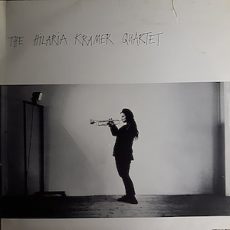
Hilaria Kramer was born on June 1, 1967 in Frauenfeld, Switzerland and began playing the trumpet when she was ten years old. Beginning in 1983 she attended the vocational school department of Jazz School St. Gallen, where she studied under Benny Bailey and Art Lande.
After graduating she went on to work in Italy with the Claudio Fasoli Quintet, with Gianluigi Trovesi. She performed with Steve Lacy, Enrico Rava, Joe Henderson, Bob Mover, Sal Nistico, Chet Baker and Sangoma Everett. 1988 saw her recording her debut album leading her own quartet. The album was released in the spring of the following year on Unit Records.
1991 had Hilaria performing on the TV program Ladies in Jazz with singers Nina Simone and Carmen McRae. Over the next few years, she performed with Uli Scherer in Vienna and also toured around Europe.
In 2014, Kramer was awarded the Jazz Prize of the Fondation Suisa for her services as a musician, composer and band leader as well as her work in various organizations that support Swiss jazz.
Trumpeter and composer Hilaria Kramer, who has a discography of eighteen albums as a leader and sidewoman, continues to record, perform and tour.
More Posts: bandleader,composer,history,instrumental,jazz,music,trumpet