

Daily Dose Of Jazz…
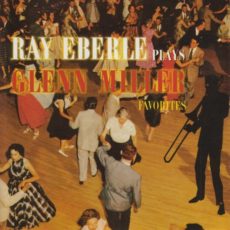
Raymond Eberle was born January 19, 1919 in Mechanicville, New York and followed in his elder brother Bob’s footsteps who fronted Jimmy Dorsey’s orchestra as a Big Band singer. With no formal training he started singing in his teens and in 1938, when Glenn Miller, looking for a male vocalist asked Bob if he had any siblings at home who could sing, he answered yes, and Ray was hired on the spot.
Ray went on to find success with Miller deeming the songs for the 1942 film Orchestra Wives, such as the jazz standard At Last, to be among his favorites. He also appeared in the Twentieth Century Fox movies, Sun Valley Serenade in 1941. From 1940-43 he did well on Billboard’s College Poll for male vocalist.
Miller ran a tight ship and often fired people after one negative incident. When stuck in traffic one day during a Chicago engagement, Ray was late for a rehearsal and Miller fired him on the spot, and replaced him in 1942 with Skip Nelson. After his departure from Miller, Eberle briefly joined Gene Krupa’s band before launching a solo career. He appeared on numerous television variety shows in the 1950s and 1960s, and later joined former Miller bandmate Tex Beneke’s orchestra in 1970 for a national tour, and reformed his own orchestra later in the decade.
He made several Universal films, including Mister Big, making a cameo appearance as himself. Eberle mostly sang ballads. He led his own orchestra called, The Ray Eberle Orchestra as well as the Serenade In Blue Orchestra from 1943 and maintained his band until his death.
Vocalist and bandleader Ray Eberle died of a heart attack in Douglasville, Georgia on August 25, 1979, aged 60.

#preserving genius
More Posts: vocal
Daily Dose Of Jazz…
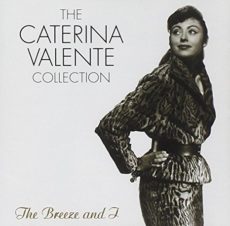
Caterina Valente was born on January 14, 1931 in Paris, France into an Italian artist family, her father, a well-known accordion player and her mother, a musical clown. In 1953, she made her first recordings with Kurt Edelhagen and soon afterwards achieved success with songs such as Malagueña, The Breeze and I,] and Dreh dich nicht um with the Werner Müller orchestra. In 1955, she was featured on The Colgate Comedy Hour with Gordon MacRae.
By the mid 1960s Valente was working with Claus Ogerman and recording his arrangements and compositions and sometimes conducted in both Italian and English on the Decca and London labels. She guest appearances on the NBC Kraft Music Hall television program and on the Dean Martin Show, the CBS variety series The Entertainers alongside Carol Burnett and Bob Newhart.
She has recorded some seven dozen albums around the world in the United States, Brazil, Peru, Argentina, Columbia, United Kingdom, Japan, Australia, Germany and South Africa. Caterina has been nominated for a Grammy and won 15 awards in Austria, Italy, the US, Italy, Brazil, France and Germany. She recorded Cole Porter’s I Love Paris, that sold nearly a million copies in 1954, her jazz album A Briglia Sciolta recorded in 1989 was her best selling album worldwide and has been reissued under the titles Fantastica and Platinum Deluxe and in 2001 released her album Girl Talk with harpist Catherine Michel..
Over the years of her career she has recorded or performed with Louis Armstrong, Chet Baker, Perry Como, Ella Fitzgerald, Benny Goodman, Woody Herman, the Tommy Dorsey Orchestra, Sy Oliver, Buddy Rich and Edmundo Ros.
Vocalist, guitarist, dancer and actress Caterina Valente who had yet to retire from show business at the age of 85, finally left the spotlight and is living a quiet life at 91.

Inspire A Young Mind

#preserving genius
Daily Dose Of Jazz…
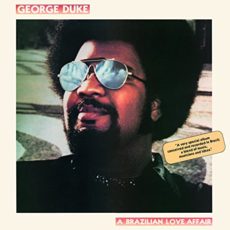
George Duke was born on January 12, 1946 in San Rafael, California and raised in Marin City. It was at the young age of 4 that he first became interested in the piano when his mother took him to see Duke Ellington in concert. He began his formal piano studies at the age of 7, at his local Baptist church. Attending Tamalpais High School in Mill Valley, he went on to earn a bachelor’s degree in trombone and composition with a minor in contrabass from the San Francisco Conservatory in 1967.
Initially he played with friends from garages to local clubs, George quickly eased his way into session work, before getting his master’s degree in composition from San Francisco State University. Although starting out playing classical music, his musician cousin Charles Burrell convinced him to switch to jazz and improvise what he wanted to do.
1967 saw Duke venturing into jazz fusion, playing and recording with violinist Jean-Luc Ponty, as well as performing with the Don Ellis Orchestra, and Cannonball Adderley’s band, and recorded with Frank Zappa and The Mothers of Invention on a number of albums through the 1970s. He also played with Ruth Underwood, Tom Fowler, Bruce Fowler from Zappa’s Overnite Sensation band that he was a part of, along with Johnny “Guitar” Watson and jazz guitarist Lee Ritenour. Lynn Davis and Sheila E recorded with him on his late-1970s solo albums Don’t Let Go and Master of the Game.
During the 1980s he collaborated with bassist Stanley Clarke and produced the Clarke/Duke Project that released three albums, he served as a record producer and composer on two instrumental tracks on the Miles Davis albums Tutu and Amandla, worked with a number of Brazilian musicians, including singer Milton Nascimento, percussionist Airto Moreira and singer Flora Purim, and in the 1992 film Leap of Faith featured gospel songs and choir produced by him and choir master Edwin Hawkins.
Duke was musical director for the Nelson Mandela tribute concert at Wembley Stadium in London, temporarily replaced Marcus Miller as musical director of NBC’s late-night music performance program Sunday Night during its first season, and was a judge for the second annual Independent Music Awards to support independent artists’ careers. He worked with Jill Scott on her third studio album, The Real Thing: Words and Sounds Vol. 3; and put together a trio with David Sanborn and Marcus Miller for a tour across the United States.
His educator side had him teaching a course on Jazz And American Culture at Merritt College in Oakland, California. He was nominated for a Grammy as Best Contemporary Jazz Performance for After Hours in 1999, was inducted into The SoulMusic Hall Of Fame in 2012, and was honored with a tribute album My Old Friend: Celebrating George Duke, produced by long-time friend and collaborator Al Jarreau, that received a NAACP Image Award for Outstanding Jazz Album in 2015.
As leader he recorded some four dozen albums and as sideman he worked with such artists as Third World, The Keynotes, Gene Ammons, Billy Cobham, Eddie Henderson, Alphonse Mouzon, Michael Jackson, Deniece Williams, Miles Davis, Dianne Reeves, John Scofield, Chanté Moore, Joe Sample, Phil Collins, Regina Belle, Teena Marie, Joe Williams, Gerald Wilson and Larisa Dolina among many others.
Keyboard pioneer, vocalist guitarist, trombonist, producer and composer George Duke passed away on August 5, 2013 in Los Angeles, California from chronic lymphocytic leukemia. He was 67. His songs have been sampled by Daft Punk, Kanye West and Ice Cube among numerous others.
Dose A Day-Blues Away
#preserving genius
More Posts: bass guitar,flute,keytar,piano,saxophone,synthesizer,trombone,vocal
Review: Allan Harris | Nobody’s Gonna Love You Better
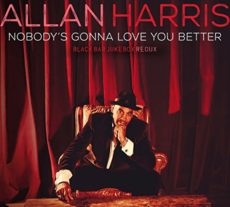
Choice, style and interpretation are the cornerstones of this vocalist who has an innate ability to proffer songs that allow him to eloquently emote. Having followed his career over the years there has been little he has been unable to do. Bringing four songs to the session that he penned, Allan deftly selected seven additional tunes composed by music’s elite that crosses all genres. Coupled with this, is his choice of musicians who pull off this roundhouse of songs that will definitely knock your socks off, if not off your feet. After numerous listening sessions and dancing around myself, I warn you now and it is my suggestion that you prepare to move about unabashedly through a variety of tempos. What is truly amazing is that Harris pulls this off without the use of any brass or wind instruments, producing not the sound but the feel of a Sixties rock and roll rhythm section.
This latest offering, Nobody’s Gonna Love You Better is evidence of that fact. An accomplished composer and lyricist, Allan kicks off this compendium of music with the uptempo wisdom of Mother’s Love, the formal name of the title track. Ever the griot, Harris plants thoughts worthy of rumination without being preachy but more of a gentle reminder for every son. He returns with Steely Dan’s brotherly advice by telling us Any Major Dude Will Tell You, giving the listener another lesson in keeping it real.
Covering a hit song is always a tribute to the original artist and requires it be performed just as well if not better. If you were around in 1969 then you remember a quintet called the Spiral Staircase who made More Today Than Yesterday popular for a couple of generations coming of age. Putting the right amount of swing in the mix he stays in the pocket with a big scoop of organ that will have you patting you foot and snapping your fingers, if not dancing around the house.
Giving us the opportunity to breathe a little lighter he drops down to ballad tempo to deliver a heartfelt rendition of the Johnny Mercer/Victor Schertzinger tune I Remember You. Love lost is not love forgotten and Mercer penned this song to Judy Garland, reminiscing over their short-lived romance when she was just 19. For those who may ask has Harris gone through this heartache himself given his superb delivery or like the bass keeping the heartbeat alive, does he just understand the emotional distress in the words, as does pianist Pascal Le Boeuf, who mirrors the sentiment throughout. Be comforted that he is just that good.
Rising up from the samba of Bahia, the bossa nova craze of Rio took the world by storm when the movie Orfeu Negro (Black Orpheus) hit the silver screen. Out of that explosion was birthed a host of composers, musicians and singers that included Dorival Caymmi and Antonio de Almeida who wrote Doralice. Fluently beautiful in the Portuguese language, Allan transports easily us to the side of her lover who is in strife because he loves her so but wants no wife, so he asks her what are they to do. For Brazil and bossa nova, it is nearly always about love. The rhythm is deceptive in its lightness for these star-crossed lovers.
Time has no meaning when one searches for the right song to add to their playlist and the Fields/McHugh tune I’m In The Mood For Love fit the bill perfectly. It was, however, refreshed with an improvised solo on the 1935 melody by James Moody and the lyrics by Eddie Jefferson, we add to the Great American Songbook the tune Moody’s Mood For Love. Harris stays away from the original rendition of performing the woman’s response in a high voice, delivering his version in ballad and taking the woman’s response to a mid-tempo beat and finishing his final words with brashness befitting someone who is smitten and confident and laying his emotions on the table.
Swing says it all in the title and having penned this one himself, Allan celebrate the big band era when teenagers and young adults all over America filled ballrooms like the Savoy, Palomar and Trianon and danced to jazz by Ellington, Goodman and Basie. A fitting tribute to the country’s most popular music between the Depression and a World War.
Hollywood is not off limits for this purveyor of song as he takes the theme song composed by Heinz Roemheld for the film Ruby Gentry. The lyrics by Mitchell Parish were added long after the tune had received wide acclaim. With a tempo suitable for dancing cheek to cheek, Harris speaks to the heart of the Ruby lyric and exposes the anguish, love and futility for this beauty that only the unloved would know. One will notice the bass line quietly captures the mood, with guitars in tow.
Your toes will tap once more as you are introduced to a swinging version of Jimi Hendrix’s Up From The Skies. This exemplifies Harris’ true talent in taking a rock song and giving it new life in jazz. The arrangement features the Hammond B3 gives it the punch need to get you on the floor or at the very least bopping in your seats and leaving you exhausted.
Blue Was Angry comes from the musical Cross That River that he wrote about the Black contributions, trials and accomplishments in the expansion of the West. Closing out this concert with a final ballad that he penned Secret Moments, he leaves us with a bit more wisdom about love and life.
I would be remiss if I didn’t pay my respects to the band that put in the hours to make this a winning project. Joining Allan Harris on Vocals, Acoustic Guitar, Resonator Guitar, D’Angelico Electric Guitar are Russell Hall – Acoustic Bass, Electric Bass; Pascal Le Boeuf – Piano, Fender Rhodes, Hammond B3; Shirazette Tinnin – Drums, Cajon; and Freddie Bryant playing Electric Guitar and Classical Guitar. Listening to them perform I can only surmise they truly had fun putting this one in the can and look forward to hearing them live. You chose well Mr. Harris.
What caught my eye at first glance were the classic songs that were chosen and the order in which they were placed. Introducing new songs, especially those you pen yourself, can often be a difficult task, but he does it well mixing them into the lineup. Next my ear was put to task to stay with a song to see developmental possibilities. As a deejay, I look for order and I will give any artist one opportunity to delight me. The song order in which Harris chose to present was pleasantly received having no inclination to skip a song or change the order. I was taken through all the emotions these composers and lyricists put into their compositions and felt buoyant and fully entertained. I heard versions of classics that were unexpected but fresh in their arrangements. If this is his brand, and I believe it is, he is not to be typecasted but embraced for the pioneering spirit that pushes his envelope to include all genres in this tapestry we call jazz.
For in this disposable world of short attention spans, where music is in your pocket, sold by the track, a click away from changing a song and one cannot listen longer than thirty seconds, there is no more getting up or walking across the room to the turntable, lifting the needle, moving to the next song or having to flip to the B side. I recognize the amount of thought that went into the order of his lineup and hopefully you will also. It may be a rollercoaster ride of emotions that begins on the downhill side of the first climb, winds around all the emotional twists and turns the music offers as it flows smoothly to a halt and we see just what has influenced his life and made him the superior musician and vocalist who has carved out his own niche in this world.
carl anthony | notorious jazz | january 3, 2017
Give A Gift Of Jazz ~ Share
#preserving genius
More Posts: bandleader,guitar,history,instrumental,jazz,music,review,vocal
Daily Dose Of Jazz…
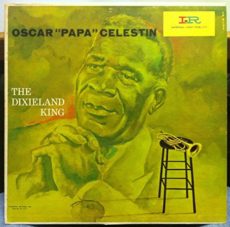
Oscar “Papa” Celestin was born on January 1, 1884 in Napoleonville, Louisiana to a Creole family. As a youth he worked on rural Louisiana plantations but eager for a better life, he worked as a cook for the Texas & Pacific Railroad, saved up money and bought used musical instruments. He played guitar and trombone before deciding on cornet as his main instrument. He took music lessons from Claiborne Williams, who traveled down the Bayou Lafourche from Donaldsonville.
Celestin played with the Algiers Brass Band by the early 1900s, and with various small town bands before moving to New Orleans in 1904, at age 20. There he played with the Imperial, Indiana, Henry Allen senior’s Olympia Brass Band, and Jack Carey’s dance band. Early in his career he was sometimes known as Sonny Celestin. Around 1910 he landed a job as leader of the house band at the Tuxedo Dance Hall on North Franklin St. at the edge of Storyville.
Keeping the name Tuxedo as the band’s name after the Dance Hall closed, they dressed in tuxedos and became one of the most popular bands hired for society functions, both black and white. He co-led the Tuxedo Band with trombonist William Ridgely and made their first recordings during the Okeh Records field trip to New Orleans in 1925. Following a fallout with Ridgely, the two led competing Tuxedo bands for about five years. Celestin’s Original Tuxedo Orchestra had Louis Armstrong, Bill Mathews, Octave Crosby, Christopher Goldston, Joe Oliver, Mutt Carey, Alphonse Picou and Ricard Alexis as a members over the years and made an additional series of recordings for Columbia Records through the 1920s. He also led the Tuxedo Brass Band, one of the top brass bands in the city.
Forced out of the business by depression economics, Papa worked in a shipyard until putting together another band after the World War II. The new Tuxedo Brass Band was tremendously popular and became a New Orleans tourist attraction. By 1953 he appeared in the travelogue Cinerama Holiday, became a regular feature at the Paddock Lounge on Bourbon Street and gave a command performance for President Eisenhower at the White House. He made regular radio broadcasts, television appearance, and more recordings with his last recording was singing on Marie LaVeau in 1954.
Bandleader, trumpeter, cornetist and vocalist Papa Celestin passed away in New Orleans, Louisiana on December 15, 1954, amassing 4000 people who marched in his funeral parade. The Jazz Foundation of New Orleans had a bust made and donated to the Delgado Museum in New Orleans, in honor of his contributions to the genre. #preserving genius
Give A Gift Of Jazz – Share