

Daily Dose Of Jazz…
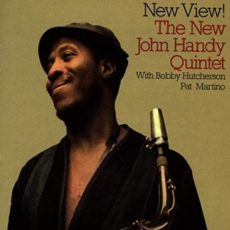
John Richard Handy III was born on February 3, 1933 in Dallas, Texas and first came to prominence while working with Charles Mingus in the 1950s. By the 1960s, he was leading several groups, among them a quintet with violinist Michael White, Jerry Hahn on guitar, Don Thompson on bass, and drummer Terry Clarke. This group’s performance at the 1965 Monterey Jazz Festival was recorded and released as an album and he received Grammy nominations for jazz performance of Spanish Lady and jazz composition for If Only We Knew.
As an educator Handy has taught music history and performance at San Francisco State University, Stanford University, the University of California, Berkeley, the San Francisco Conservatory of Music, and other schools.
The 1980s saw John working on the Mel Martin project Bebop & Beyond, recording tribute albums to Dizzy Gillespie and Thelonious Monk. He has recorded some eighteen albums as a leader for Roulette, Columbia, Impulse!, Warner, MPS, Milestone, Koch Int’l and Boulevard record labels. He has had one compilation released of selections from In The Vernacular and No Coast Jazz, and and has recorded two albums with Brass Fever, as well as, five albums during his time with Mingus.
Alto saxophonist John Handy, who also plays tenor and baritone saxophone, saxello, clarinet, oboe and sings, continues to perform and record.
Sponsored By


#preserving genius
Daily Dose Of Jazz…
Beverly Kenney was born on January 29, 1932 in Harrison, New Jersey and her life saw her working for Western Union as a telephone birthday singer. After moving to New York City in 1954, she recorded a demo with Tony Tamburello and by the end of the year she had moved to Miami, Florida where she landed a recurring engagement at the Black Magic Room. Jimmy and Tommy Dorsey heard her and for several months she toured with the orchestra they co-led.
Moving back to New York, Beverly worked in clubs with George Shearing, Don Elliott and Kai Winding. After a short tour of the Midwest with Larry Sonn, she signed to Roost Records and released her first album in 1956. This recording, Beverly Kenney Sings for Johnny Smith with the quartet of the jazz guitarist Johnny Smith. The album was a success and as a result she secured a residency at the Birdland jazz club, where she was accompanied by the Lester Young Quintet. Her second release was Come Swing with Me with Jimmy Jones led an ensemble behind her for her third and final release for Roost in 1957.
She moved to Decca Records and released three further albums with them, including Beverly Kenney Sings For Playboys in 1958, Born to Be Blue and Like Yesterday in 1959. Beverly Kenney Sings For Playboys featured liner notes by Steve Allen, in which he praised her vocal style and stated, “A word to Playboys: I would not recommend this album as Music to Make the Romantic Approach By. You’re apt to get more interested in Beverly than the girl you’re trying to impress”.
Kenney was a critically acclaimed musician, but she saw little widespread acceptance, due at least in part to the burgeoning rock & roll movement. She had an intense personal dislike for this music, even going so far as to compose a song called “I Hate Rock and Roll”, which she performed on The Steve Allen Show in 1958.
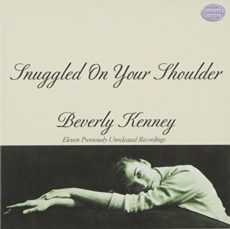
On April 13, 1960, vocalist Beverly Kenney committed suicide with an overdose of alcohol and seconal. She was 28 years old. She remains a cult figure in Japan, where all of her albums have been reissued to CD and have remained in print on a relatively steady basis. Japan’s SSJ Records have released three collections of unreleased Beverly Kenney material between 2006 to 2009: Snuggled on Your Shoulder, Lonely and Blue and What Is There To Say?, culminating in a dozen albums.
Sponsored By

#preserving genius
More Posts: vocal
Daily Dose Of Jazz…
Barbara Carroll was born Barbara Carole Coppersmith on January 25, 1925 in Worcester, Massachusetts. She began her classical piano training at age eight, but by high school decided to become a jazz pianist. She attended the New England Conservatory of Music for a year, but left it as it conflicted with working for bands.
In 1947 Leonard Feather dubbed her “the first girl ever to play bebop piano”. The following year her trio, which featured guitarist Chuck Wayne and Clyde Lombardi on bass, worked briefly with Benny Goodman. Personnel changes would occur later with Charlie Byrd replacing Wayne and Joe Shulman replaced Lombardi. After Byrd’s departure, Carroll decided to have it be a drums, bass, and piano trio.
The 1950s saw Barbara and her trio working on Me and Juliet by Rodgers and Hammerstein. Then the decade saw her career ebb due to changing musical tastes and personal concerns. However, by 1972 she revived her career due to a renewed interest in her work. In 1975 she worked on an A&M recording session with Rita Coolidge and by 1978 she was touring with Coolidge and Kris Kristofferson. In the following two decades she became known as a cabaret performer.
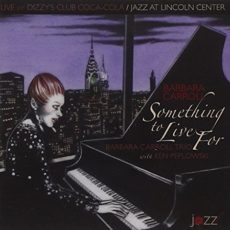
She has recorded for DRG, Venus, Harbinger and Birdland record labels, with her latest of eight albums, Barbara Carroll Plays At Birdland, released in 2016. Pianist and vocalist Barbara Carroll, who received a MAC Lifetime Achievement Award and the Mary Lou Williams Women in Jazz Award, she continues to perform and record until she passed away on February 12, 2017.

Daily Dose Of Jazz…
José James was born on January 20, 1978 in Minneapolis, Minnesota and combines jazz, soul, drum’n’bass, and spoken word into his own unique brand of vocal jazz. Though his main influences are John Coltrane, Marvin Gaye, and Billie Holiday, his sound is reminiscent of ’70s jazz-soul icon Terry Callier, and his music feels more like an update of Gil Scott-Heron’s approach, but he makes it distinctly his own.
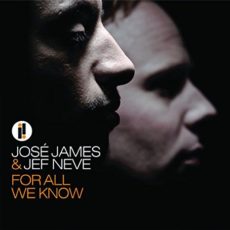
José attended The New School for Jazz and Contemporary Music and in 2008 debuted his first album, The Dreamer, on the Brownswood label. Blackmagic followed in 2010, as well as, For All We Know on the Impulse! Label, the latter becoming the winner of both the Edison Award and L’Académie du Jazz Grand Prix for best Vocal Jazz Album of 2010.
Signing to Blue Note Records in 2012 James issued Trouble, his first single for the label, with his fourth album, No Beginning, No End released the following year. New compositions brought the release of 2014’s While You Were Sleeping, a collection that reflected rock alongside R&B and jazz.
In commemoration of the 100th birthday of his musical mother, Billie Holiday, José recorded nine songs written by or associated with her on Yesterday I Had the Blues. He fronted a band that included pianist Jason Moran, bassist John Patitucci, and drummer Eric Harland.
Vocalist and bandleader José James, who blends modern jazz and hip-hop, continues to perform globally both as a leader and with other groups.
Sponsored By

#preserving genius
More Posts: vocal
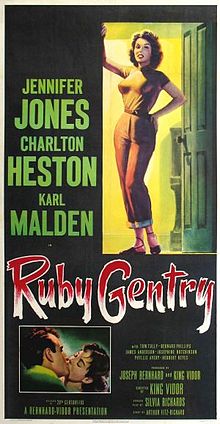
Hollywood On 52nd Street
The song Ruby was composed by Heinz Eric Roemheld as the theme for the 1952 film Ruby Gentry. It subsequently became a jazz and pop standard, both as an instrumental and with lyrics by Mitchell Parish. The film was directed by King Vidor and starred Jennifer Jones as Ruby Corey/Gentry, Charlton Heston played Boake Tackman and Karl Malden held down the role of Jim Gentry. At the time of the film’s release the theme enjoyed much popularity in an orchestration by Les Baxter with harmonica solo by Danny Welton.
The Story: Ruby, a poor backwoods girl living in the small North Carolina town of Braddock, is still in love with Boake Tackman. During high school, Ruby had rebuffed his aggressive advances, and was taken in for a couple of years by kind wealthy businessman and his wife, who protected her and taught her the skills a lady would need. She moves back home when her father needed her help. Boake’s family used to be wealthy, but after generations of profligacy all he has left is the land he has had drained and farmed. He starts a relationship with her but plans to marry a local woman with a rich family. When Ruby hears the news, she marries her former benefactor, Mr. Jim Gentry, whose invalid wife recently died, despite not loving him.
Her background keeps her from being accepted by most of Jim’s peers, most of whom decline to attend their after-wedding party. Insecure, Jim becomes jealous of her relationship with Boake, has a fight, calls her a tramp and she leaves in tears. Apologies ensue and while sailing she admits her lack of loving him, while a loose rope results in Jim being knocked overboard by the boom, leaving Ruby widowed and distraught. Now she becomes the local gold-digger and murderess, the town rebuffs her and she gets harassing phone calls.
Retaliating, Ruby uses Jim’s money to begin a campaign against everyone who slighted her, calling in debts to close down people’s businesses as well as the newspaper that slandered her. Still holding a soft spot for Boake she returns his promissory note but again he rebuffs her kindness as a way to buy him and her out of the swamp. Once again, woman scorned and she floods Boake land, ruins his crop and once calm, apologizes. However, her estranged brother Jewel begins shooting at them, killing Boake and in turn Ruby kills her brother and then laments her decisions that have caused so much pain. Now alone, Ruby becomes the skipper of a fishing boat, forever looked down upon by the townspeople.
Sponsored By

www.whatissuitetabu.com
#preserving genius