

Daily Dose Of Jazz…
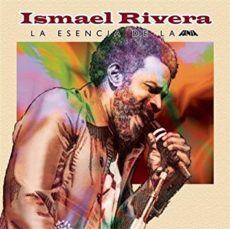
Ismael Rivera also known as Maelo was born on October 5, 1931 in the Santurce sector of San Juan, Puerto Rico. The oldest of five children he was always singing and banging on cans with sticks. He received his primary education at the Pedro G. Goyco Elementary School and then went on to learn carpentry at a vocational school. He also shined shoes to help his family financially and when he was 16 years old, he worked as a carpenter. During his free time he would hang around the corner with his best friend Rafael Cortijo and sing songs. In 1948, he and Cortijo joined El Conjunto Monterrey, where he played the conga and Cortijo the bongos, but was unable to work full-time as a musician because of his work as a carpenter.
In 1952, Ismael joined the U.S. Army but was quickly discharged, because he didn’t speak English. He returned to Puerto Rico and went to work as the lead singer with Orquesta Panamericana, recording and scoring his first hits with the songs El charlatán, Ya yo sé, La vieja en camisa and La sazón de Abuela. However, an incident between Rivera and another band member, over a girl, led to his departure from the popular band. In 1954, he joined Cortijo’s Combo and recorded songs, such as, El Negro Bembón, El Yayo, María Teresa and Yo Soy del Campo, which soon became hits in the Latin community in America
With Cortijo’s Combo continuing to gain fame, so did Rivera’s reputation as a lead singer. Rivera was named sonero mayor by Cuban producer Ángel Maceda, owner of club Bronx Casino in New York and played the band went to New York City and played in the famed Palladium Ballroom.
By 1959, Rivera, together with Cortijo and his Combo were casted in the Harry Belafonte movie titled Calipso. He toured with the combo that included Rafael Ithier and Roberto Roena, throughout Europe, Central and South America. Arrested for drug possession after a trip to Panama with the Cortijo combo, he took the fall to spare the other band members. After his release he formed his own band called Ismael Rivera and His Cachimbos, becoming quite successful for eight years. He reunited with Cortijo and recorded Juntos otra vez. Eventually going solo, he did well with the recordings of El Sonero Mayor, Volare and scored his greatest hit with Las Caras Lindas (de mi gente negra).
1974 saw Ismael in a recording in concert at Carnegie Hall and four years later was in Paris, France opening for Bob Marley in 1978. The death of his childhood friend, Rafael Cortijo in 1982, affected him emotionally to the point that he couldn’t sing in the tribute, and was actively involved in the creation of a historical museum which depicts the contributions made to the cultural life of Puerto Rico by the black Puerto Ricans.
Composer and vocalist Ismael Rivera passed away on May 13, 1987 in the arms of his mother Margarita, from a heart attack. He recorded eleven albums as a leader and has had some thirty compilations released. Posthumously in 2008 Puerto Rico’s governor Aníbal Acevedo Vilá signed a proclaim stating that every anniversary of Rivera’s birth will be celebrated as Día Conmemorativo del Natalicio de Ismael Rivera, the Puerto Rican Senate declared October 5 as Ismael Rivera Day, has a plaza named for him Plaza de los Salseros that has a statue and plaque dedicated to him.

Take A Dose On The Road

More Posts: vocal

Daily Dose Of Jazz…
Patti Cathcart was born on October 4, 1949 in San Francisco, California. She is one half of the jazz duo Tuck & Patti. She grew up singing and was performing with The Brides of Funkenstein when she met guitarist Tuck Andress at an audition in Las Vegas in 1980.
After relocating to Patti’s hometown of San Francisco, the two worked as members of a Bay Area rock-cover band. Needing to make some real money they learn some songs as a duo, put together a band, started performing as a duo, and catching on. Their fame as Tuck & Patti around the Bay Area grew and finding themselves declining recording offers to focus on polishing their unique sound.
In 1987 they signed with Windham Hill Records, recorded their breakout album Tears of Joy and received airplay on both jazz and pop radio stations around the U.S. They recorded several more albums for the label before signing with Epic Records for an album in 1995. They followed this with more releases on the Windham Hill and 33rd Street Records labels. Ultimately they established their own label, T&P Records, which licenses their recordings for worldwide distribution.
Married since 1983, Patti and her husband Tuck Andress, who hails from Tulsa, Oklahoma, plays a 1953 Gibson L-5 guitar because it was the model played by his idol Wes Montgomery. The duo continues to record and perform at concerts and festivals around the world. In between gigs the two are educators, holding vocal and guitar workshops and teach privately.
Sponsored By

More Posts: vocal
Daily Dose Of Jazz…
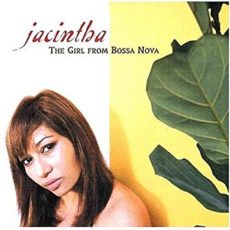
Jacintha Abisheganaden also known as Jacintha or Ja was born on October 3, 1957 in Singapore of Sri Lankan and Chinese parentage, her mother and played piano. Educated at Marymount Convent School, Raffles Institution and the National University of Singapore, where she graduated with an honor degree in English. She then went to America where she studied creative writing at Harvard University. She studied piano and voice from her early teens and also sang in the Singapore Youth Choir, where she met her future collaborator Dick Lee. Growing up she listened to vocal jazz and traditional pop, Stevie Wonder, Joni Mitchell, Miriam Makeba, Barbra Streisand.
She first came to prominence in 1976 winning a local television talent contest, Talentime, singing jazz. Continuing this winning streak in 1981, Jacintha nabbed the Best Female Performer award for her role as Nurse Angamuthu in General Hospital at the Drama Festival. She has worked as arts reporter, an actress, as well as a vocalist recording her debut album Silence in 1983 and two years later released her second album and played a series of live jazz shows at The Saxophone.
In 2004, Jacintha performed her own cabaret jazz show, The Angina Monologues at the Old Parliament House, Singapore. Since her debut album she has recorded eleven albums, dedicated a few to Ben Webster, Julie London, Johnny Mercer and Hollywood, and has released a compilation album in 2008. Vocalist Jacintha Abisheganaden continues to perform, acting and recording.
Give The Gift Of Knowledge
More Posts: vocal
Daily Dose Of Jazz…
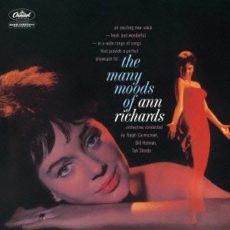
Ann Richards was born Margaret Ann Borden on October 1, 1935 in San Diego,California. She began taking singing lessons at ten and was self-taught on the piano. Appearing on the West Coast music scene in 1954, she had a short stint with Charlie Barnet’s band only to be later brought to the attention of Stan Kenton by songwriter Eddie Beal.
Richards was only with Kenton’s band for a few months in 1955 before the two were married. Kenton helped her secure a contract with Capitol Records and she was paired with conductor Brian Farnon and arranger Warren Baker for her 1958 debut album, I’m Shooting High. A duet album with Kenton, Two Much, was released in 1961.
The two separated in 1961 after she created scandal posed for the June 1961 issue of Playboy. She subsequently signed a contract with the Atco Records division of Atlantic Records. She released seven albums as a leader, two of them with Kenton. The cover of her 1961 album Ann, Man! was taken from the shoot. Vocalist Ann Richards committed suicide from a gunshot on April 1, 1982 in Hollywood, California, passing away at age 46.
Sponsored By

Double Impact Fitness
More Posts: vocal
Daily Dose Of Jazz…
Rio De Gregori was born on September 22, 1919 in Zurich, Switzerland. He began taking classical piano lessons at the age of seven and at fourteen he began buying records by Duke Ellington and other jazz musicians. Although his parents wanted to make him a classical pianist, his interest were leaning towards jazz.
Rio first played with Willie Mac Allen in 1939, then with James Boucher, The Lanigiros, Jo Grandjean and René Weiss during the early to mid Forties. He was with the big band of Fred Böhler until 1945 when he founded his own dance orchestra bringing with him some of the best Swiss jazz musicians, Stuff Combe, Bob Jaquillard, Jean Pierre Dupuis, Luc Hoffmann, Raoul Schmassmann and Kurt Weil. He also featured Glyn Paque as a guest soloist.
He disbanded his big band and worked in a trio setting or as a soloist. Performing in Ascona, Switzerland, he met vocalist Suzanne Doucet and composed and arranged for her. Moving to Munich, Germany De Gregori played under the name Rio Gregory and opened a nightclub.
Because of his harmonious flair De Gregori enjoyed an excellent reputation as a pianist recordings. As an arranger he was commissioned by Fred Böhler and other orchestral conductors. He recorded four albums as a leader over the course of his career. Pianist and vocalist Rio De Gregori passed away on May 22, 1987 in Munich, Germany.
Sponsored By