

Daily Dose Of Jazz…
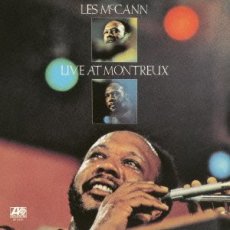
Les McCann was born on September 23, 1935 in Lexington, Kentucky. He first gained notoriety in the early Sixties with his trio while recording for Pacific Jazz Records and working with Ben Webster, Richard “Groove Holmes, Blue Mitchell, Stanley Turrentine, Joe Pass, the Jazz Crusaders, and the Gerald Wilson Orchestra.
In 1969, Atlantic Records released Swiss Movement recorded with saxophonist Eddie Harris at the Montreux Jazz Festival. The album featured trumpeter Benny Bailey and contained the tune “Compared To What” which took the album and the single to the top of the Billboard charts, bringing worldwide recognition to the musician even though it contained political criticism of the Vietnam War.
After the success of Swiss Movement the pianist began to emphasize his rough-hewn vocals more becoming an innovator in the soul jazz style, merging jazz with funk, soul and world rhythms; much of his early 1970s music prefigures the great Stevie Wonder albums of the decade. He was among the first jazz musicians to include electric piano, clavinet, and synthesizer in his music.
Les discovered Roberta Flack, obtained an audition that resulted in a recording contract with Atlantic Records and the 1969 release of her album First Take. In 1971, he and Harris were part of a group of soul, R&B, and rock performers that included Wilson Pickett, The Staple Singers, Santana and Ike & Tina Turner who flew to Accra, Ghana for a historic 14-hour concert before more than 100,000 Ghanaians.
He continued a long and moderately successful career for the next two decades until a stroke in the mid 1990s sidelined McCann for a while but in 2002 he released a new album Pump it Up. The soul jazz piano player and vocalist found success both in the jazz arena and as a crossover artist into R&B and soul. Pianist and vocalist Les McCann died from pneumonia in a Los Angeles hospital on December 29, 2023, at age 88.

Take A Dose On The Road
Hollywood On 52nd Street
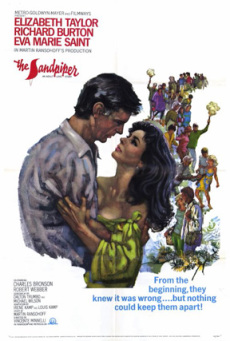
The Shadow Of Your Smile also known as the love theme from the 1965 film The Sandpiper“, is a popular song whose music was written by Johnny Mandel with the lyrics written by Paul Francis Webster.
The song was introduced in the 1965 film The Sandpiper with a trumpet solo by Jack Sheldon and later became a minor hit for Tony Bennett. Johnny Mandel arranged and conducted his version as well). It won the Grammy Award for Song of the Year and the Academy Award for Best Original Song.
The Story: Vincente Minnelli directed the film’s stars Richard Burton and Elizabeth Taylor. Laura Reynolds (Taylor) is a free-spirited, unwed single mother living with her young son Danny (Morgan Mason) in an isolated California beach house. She makes a modest living as an artist and home-schools her son out of concern that he will be compelled to follow stifling conventional social norms in a regular school. Danny has gotten into some trouble with the law through two minor incidents, which are in his mother’s eyes innocent expressions of his natural curiosity and conscience rather than delinquency. Now with a third incident a judge orders her to send the boy to an Episcopal boarding school where Dr. Edward Hewitt (Burton) is headmaster, and his wife Claire (Eva Marie Saint) teaches. Edward and Claire are happily married with two young sons, but their life has become routine and their youthful idealism has been tamed by the need to raise funds for the school and please wealthy benefactors.
Sponsored By

www.whatissuitetabu.com
More Posts: comedy,dance,drama,hollywood,instrumental,jazz,musical,suite ta bu,vocal
Daily Dose Of Jazz…
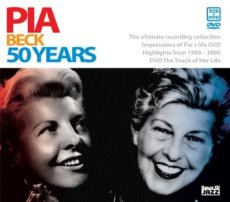
Pia Beck was born Pieternella Beck on September 18, 1925 in Den Haag, Netherlands. She was a natural on the piano without significant musical training. In 1945 she joined the Miller Sextet taking the piano chair and vocalist slot touring Belgium, Germany, Sweden and the Dutch East Indies.
By 1949 she started her own combo and her first composition, Pia’s Boogie, became an instant hit, though she never learned to read sheet music. 1952 saw her first visit the United States, toured the jazz club circuit – an annual event until 1964, was nicknamed “The Flying Dutchess” by Time Magazine who also gave her the cover, and was bestowed honorary citizenship of New Orleans and Atlanta.
In 1965 Beck emigrated to Costa de Sol with her life partner and three children, opened a piano bar and when it went bankrupt she opened a real estate firm and wrote travel guides. By 1975 she was on the comeback trail in Scheveningen, Netherlands and once again enjoyed a successful career, albeit, openly exposing her homosexuality during her U.S. tours by resisting against the anti-gay activist Anita Bryant during the late Seventies.
Pia Beck said goodbye to the general public in 2003. The pianist who Oscar Peterson called the best jazz pianist in the world, died at age 84 of heart failure on November 26, 2009 in Malaga, Spain.
Daily Dose Of Jazz…
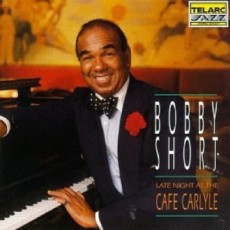
Bobby Short was born Robert Waltrip Short on September 15, 1924 in Danville, Illinois. With his mother’s permission he left home for Chicago and began performing as a busker at the age of eleven.
He started working in clubs in the 1940s and in 1968 he was offered a two-week stint at the Café Carlyle in New York City’s Carlyle Hotel, a relationship that lasted until 2004. His seemingly effortless elegance and vocal phrasing were perfected at the feet of Mabel Mercer and Ethel Waters. Bobby’s presentation of unknown songs worth knowing and his infectious good cheer made him tremendously popular and earned him great respect.
He became best known for his interpretations of songs composed by Rodgers and Hart, Cole Porter, Jerome Kern, Harold Arlen, Vernon Duke, Noel Coward and the Gershwin brothers but was equally adept at championing the works of Duke Ellington, Billy Strayhorn, Eubie Blake, James P. Johnson, Andy Razaf, Fats Waller and Bessie Smith.
Bobby Short, the pianist and cabaret singer, recorded 22 albums from 1955 to 2001, appeared in ten movies and 3 television shows and who was instrumental in spearheading the construction of the Ellington Memorial in his beloved New York City, passed away on March 21, 2005.
Dose A Day – Blues Away
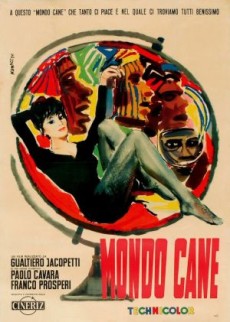
Hollywood On 52nd Street
Riz Ortolani and Nino Oliviero composed the theme song More that found its place in the pantheon of jazz classics. It was a part of the score for the 1962 film Mondo Cane. The film title translates to Dog’s World, or as the soundtrack album states, “a world gone to the dogs”.
Some melodies are used repeatedly, in different styles, each named for the part of the movie where the music is used. Of the 15 music tracks on the soundtrack album, one melody is presented 6 times, another melody 2 times. The melody which became known as “More” is presented 4 times, named “Life Savers Girls”, “The Last Fight/L’Ultimo Volo”, “Models In Blue/Modelle in Blu”, “Repabhan Street/Repabhan Strasse”, in styles ranging from lush to march and 3/4 waltz.
Originally composed as an instrumental and titled “Ti guarderò nel cuore”, lyrics were later provided by Marcello Ciorciolini, which were adapted into English by Norman Newell. At that point, “Theme from Mondo Cane” became “More” (not to be confused with an earlier pop song of the same name).
The Story: The movie Mondo Cane is filmed as a documentary and uses a variety of music to accompany various segments. The film uses a series of stories that take place in different cities around the world, i.e. dog pound, Rudolph Valentino statue, bikini-clad girls wooing sailors, pigs being slaughtered, and a manhunt among various others.
More Posts: comedy,dance,drama,hollywood,instrumental,jazz,musical,suite ta bu,vocal